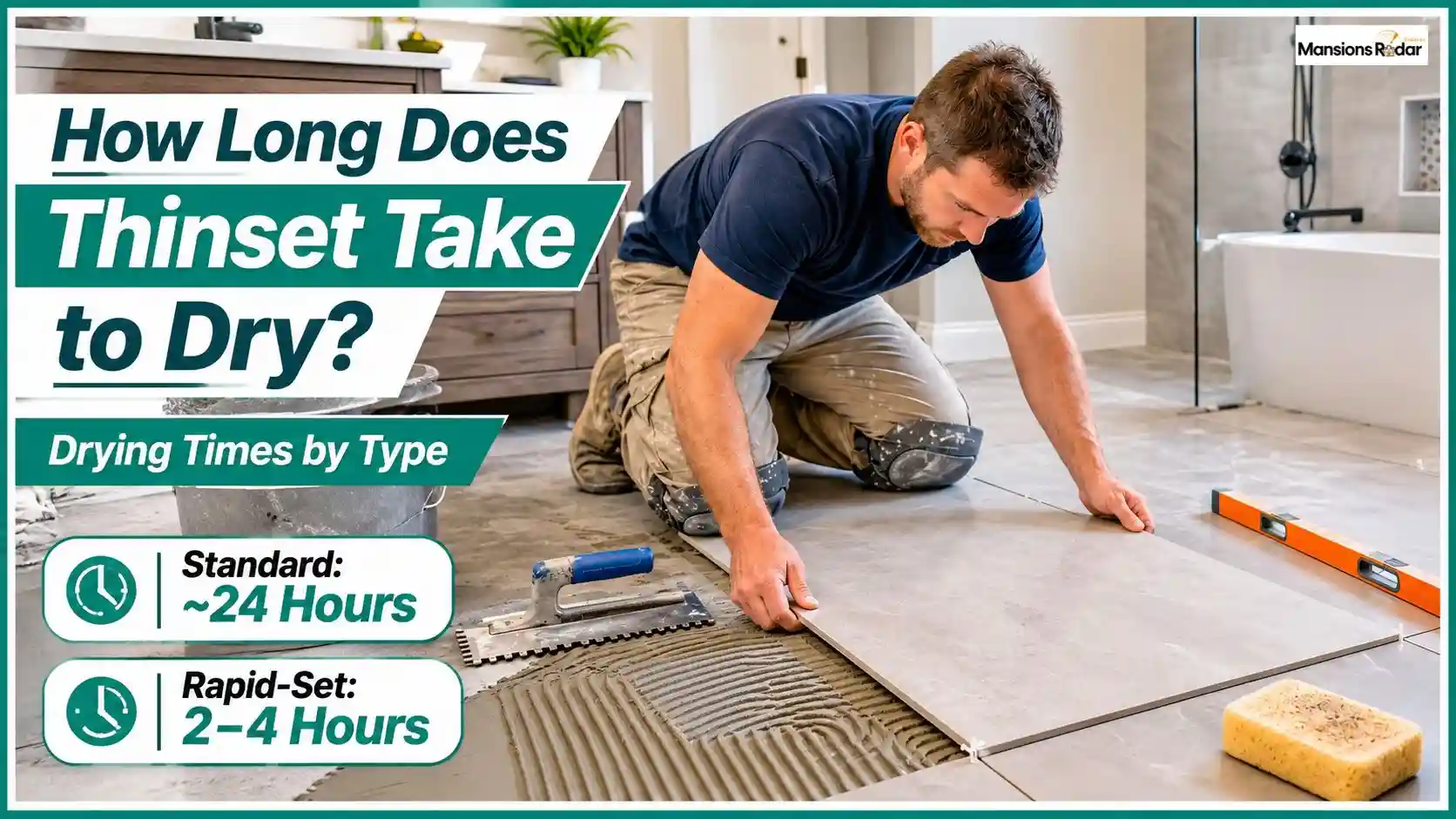
Most standard thinset mortar needs about 24 hours before grouting. However, the exact time depends on the mortar type, tile size, substrate, temperature, humidity, and installation conditions. Rapid-setting products may be ready for grout in 2 to 4 hours, while some specialty installations require 72 hours or longer.
Thinset needs enough time to set and develop a strong bond between the tile and the surface underneath. Grouting, walking on the floor, or exposing a shower to water too soon can disturb that bond and affect the finished installation.
If you are planning a bathroom renovation or a new tile floor, use the mortar manufacturer’s instructions as your main guide. The times below are general references, not a replacement for the product’s technical data sheet.
Thinset Drying Time at a Glance
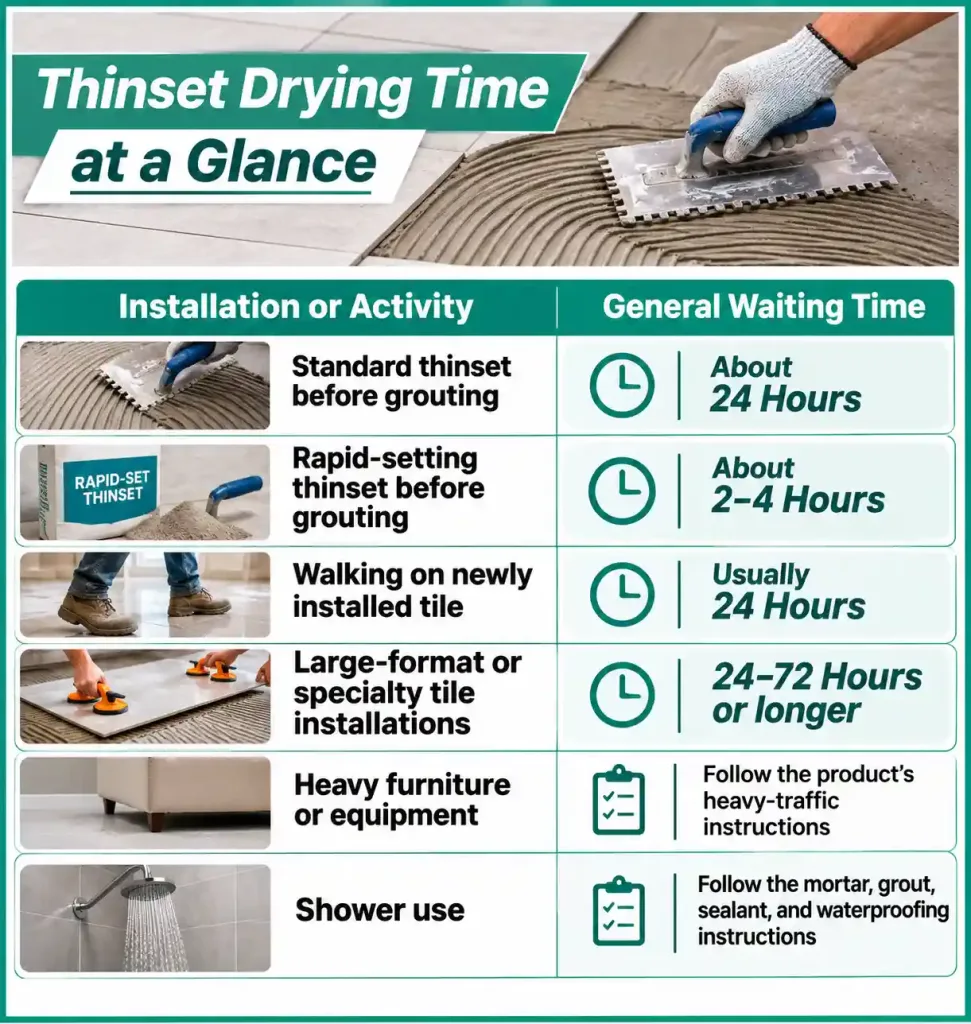
These are common planning estimates. Some products have shorter or longer requirements. Always check the instructions for the exact mortar and tile system you are using.
How Long Does Thinset Take to Dry Before Grouting?
Most standard cement-based thinset mortars need approximately 24 hours before grouting. This waiting period allows the mortar to set and develop enough strength to support the tile without movement during grout application.
Rapid-setting thinset can shorten this waiting period. Depending on the product, grouting may begin in 2 to 4 hours. Some specialty tile installations require longer curing periods.
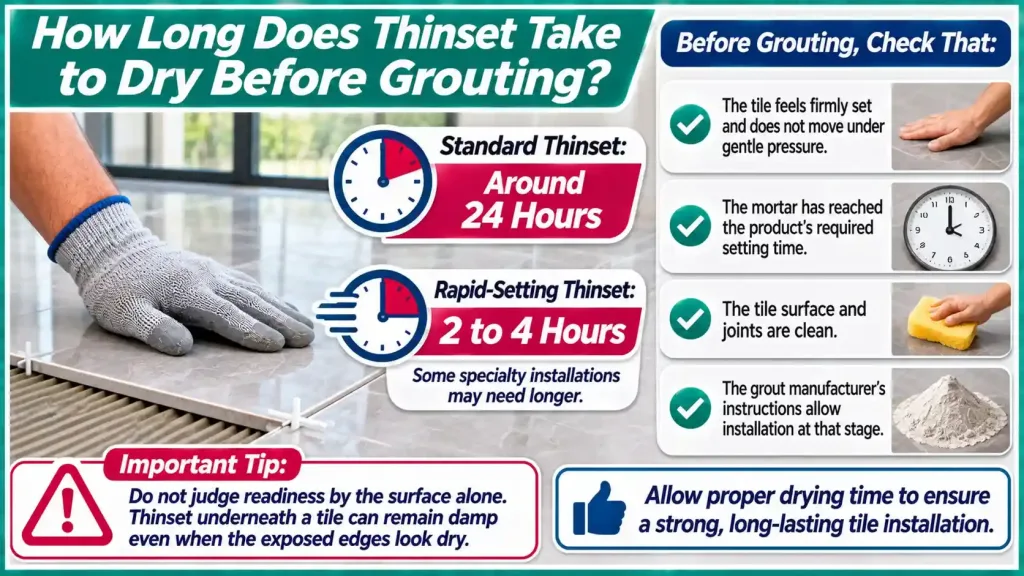
Before grouting, check that:
- The tile feels firmly set and does not move under gentle pressure.
- The mortar has reached the product’s required setting time.
- The tile surface and joints are clean.
- The grout manufacturer’s instructions allow installation at that stage.
Do not judge readiness by the surface alone. Thinset underneath a tile can remain damp even when the exposed edges look dry.
Thinset Setting Time vs. Drying Time vs. Curing Time
These terms describe different stages of the installation. Understanding the difference helps prevent early grouting and other avoidable problems.
| Term | What it means |
| Setting time | The mortar begins to firm up and hold the tile in place. |
| Drying time | Moisture leaves the mortar as it hardens. |
| Curing time | The mortar develops strength through its cement-based chemical reaction and moisture-related processes. |
Cement-based thinset does not harden only because water evaporates. It also gains strength through hydration, a chemical reaction between cement and water.
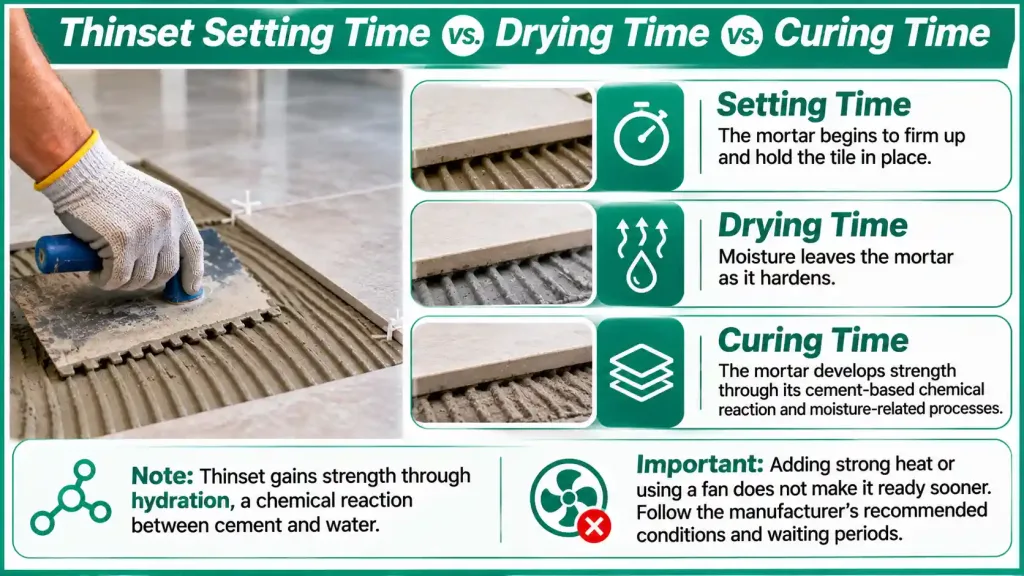
That is why adding strong heat or directing a fan at the tile does not automatically make the installation ready sooner. Follow the manufacturer’s recommended conditions and waiting periods.
Thinset Drying Time by Product Type
Different mortars have different formulas and performance targets. A standard mortar, a rapid-setting product, and a large-and-heavy-tile mortar should not be treated as interchangeable.
| Thinset product or type | Published or typical time before grouting |
| Standard cement-based thinset | About 24 hours |
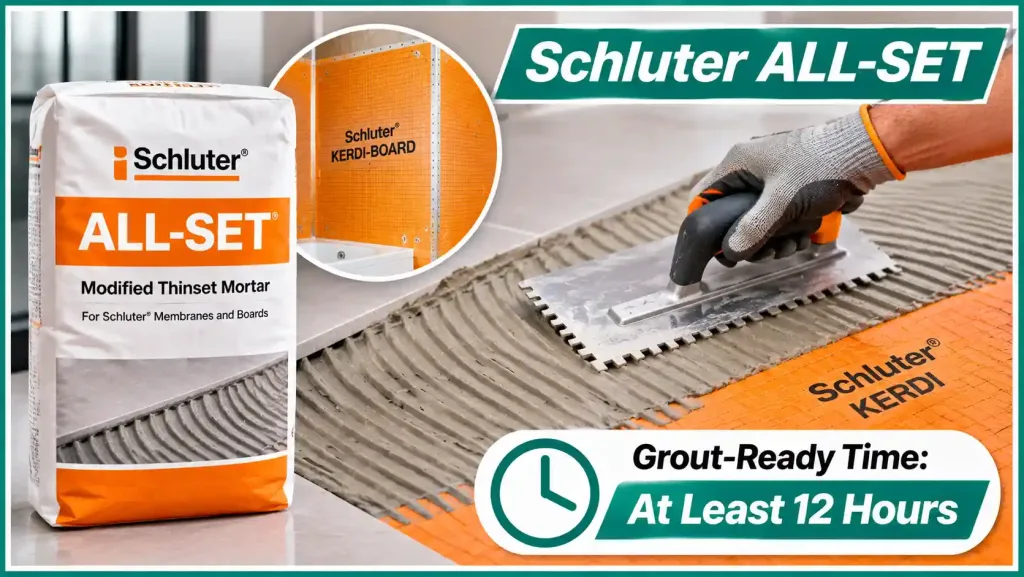
| Schluter ALL-SET | At least 12 hours |
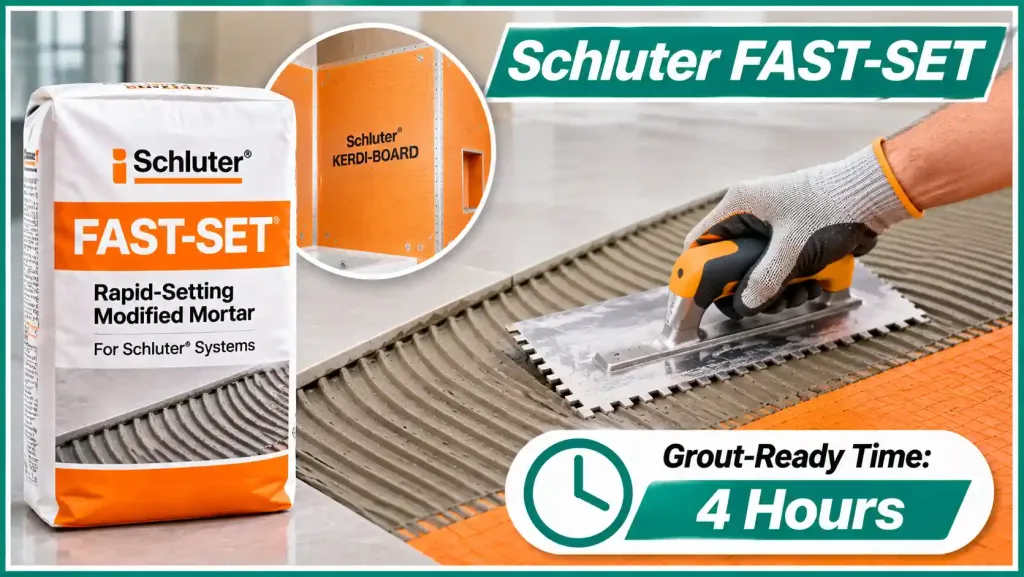
| Schluter FAST-SET | 4 hours |
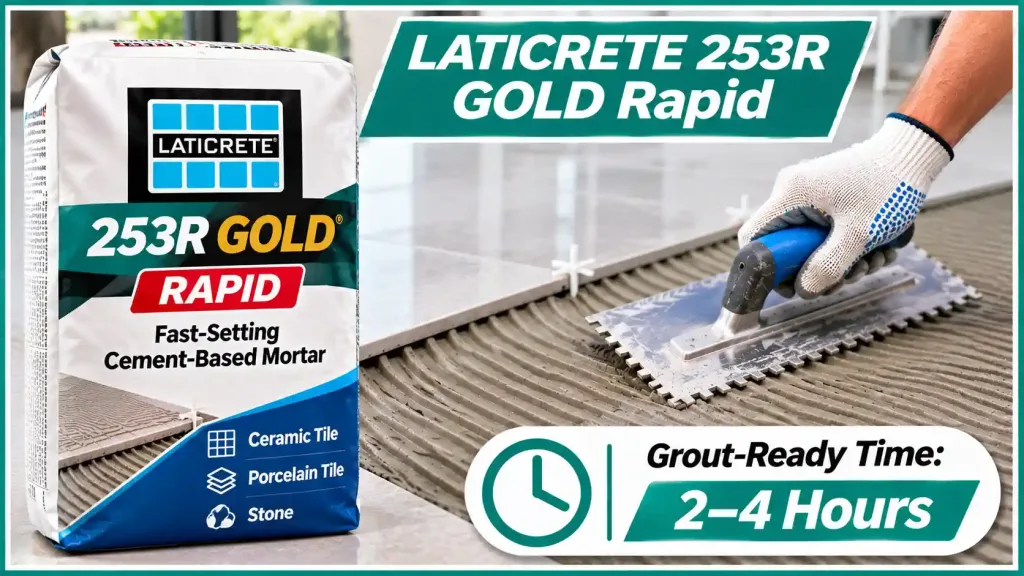
| LATICRETE 253R GOLD Rapid | 2–4 hours |
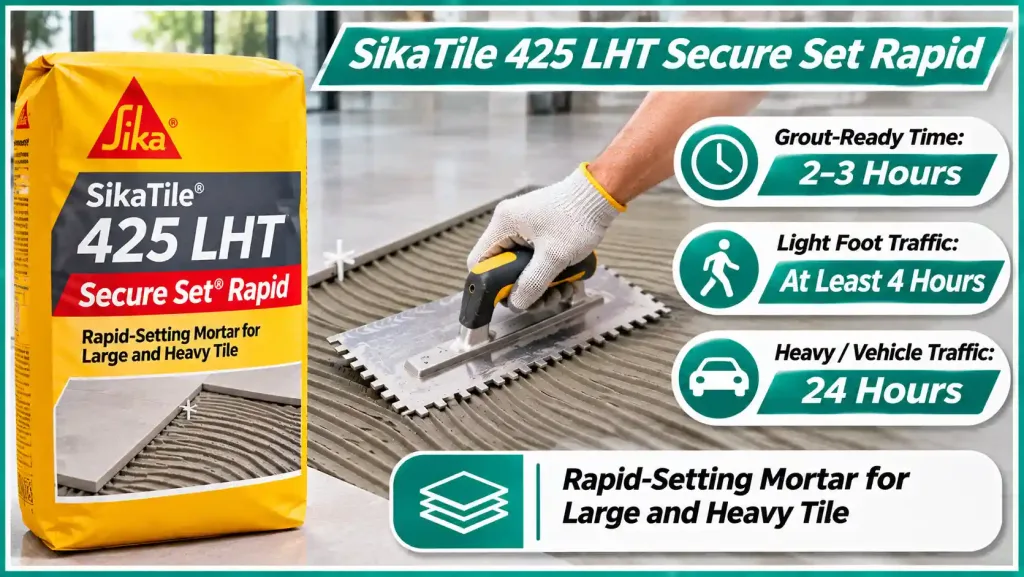
| SikaTile 425 LHT Secure Set Rapid | 2–3 hours |
| Large-format tile mortar | Follow the product data sheet; often around 24 hours or longer |
Important: Product times refer to specific installation conditions and may not represent the time for light foot traffic, heavy traffic, full curing, or shower use.
Schluter ALL-SET
Schluter ALL-SET is a modified thinset mortar designed for use with Schluter membranes and boards. Its grout-ready time is generally listed as at least 12 hours. Check the current product instructions for the exact installation and traffic requirements.
Schluter FAST-SET
Schluter FAST-SET is a rapid-setting modified mortar formulated for Schluter systems. The manufacturer lists a 4-hour waiting period before grouting. It is designed for projects where a shorter installation schedule is important.
LATICRETE 253R GOLD Rapid
LATICRETE 253R GOLD Rapid is a fast-setting cement-based mortar for ceramic tile, porcelain tile, and stone. The manufacturer lists a grout-ready time of 2 to 4 hours. Actual timing can vary with jobsite conditions.
SikaTile 425 LHT Secure Set Rapid
SikaTile 425 LHT Secure Set Rapid is a rapid-setting mortar for large and heavy tile. Sika lists 2 to 3 hours before grouting and at least 4 hours before light foot traffic. The manufacturer also advises protecting the installation from heavy or vehicle traffic for 24 hours. SikaTile 425 product details.
Always use the latest technical data sheet for the product you purchase. Product formulas and instructions can change.
What Factors Affect Thinset Drying Time?
Thinset does not set at the same speed in every room or installation. Several conditions can change how long it takes to become ready for grout or traffic.
1. Temperature
Temperature affects how quickly cement-based mortar sets and cures. Cool conditions can slow the process, while high temperatures may shorten working time and cause the mortar to lose moisture too quickly.
Follow the product’s temperature range during installation and curing. Do not use heaters to force the mortar to set faster.
2. Humidity
High humidity can slow moisture loss from the mortar. A room with limited ventilation may also take longer to dry than a space with normal air movement.
However, drying is not the only part of cement mortar curing. Do not shorten the required waiting period just because the surface looks dry.
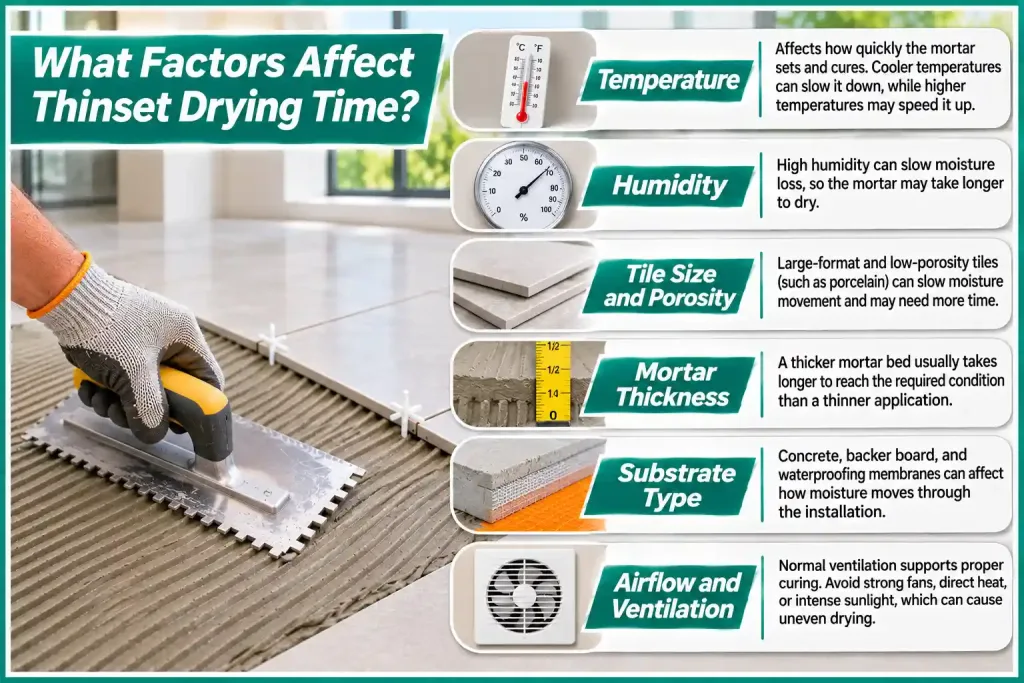
3. Tile Size and Porosity
Large-format and low-porosity tiles can affect moisture movement through the installation. Porcelain tile absorbs very little water, so some mortar installations between low-absorption surfaces may need additional time.
Tile size alone does not determine the waiting period. The mortar formula, substrate, installation method, and product instructions matter too. If you are comparing tile materials and finishes for a bathroom project, explore these bathroom floor tile ideas for additional inspiration.
4. Mortar Thickness
A thicker mortar bed may take longer to reach the required condition than a thinner application. Use the trowel size and mortar thickness recommended for the tile and substrate.
Do not add extra mortar to correct an uneven floor unless the product is approved for that application and thickness.
5. Substrate Type
Concrete, cement backer board, and waterproofing membranes can affect how moisture moves through the installation. Some substrates absorb moisture, while others are less absorbent.
Check that the substrate is suitable, properly prepared, and compatible with the selected mortar.
6. Airflow and Ventilation
Normal room ventilation supports a stable curing environment. However, strong fans, direct heat, or intense sunlight can cause uneven moisture loss and may affect mortar performance.
Maintain the conditions recommended by the manufacturer rather than trying to speed up the process.
How Long Does Thinset Take to Dry Under Large-Format Tile?
Large-format tiles can affect how moisture moves through a mortar bed, especially when the tile has low water absorption. Porcelain tiles are particularly dense, so some installations may need more time before grouting.
However, not every large tile installation needs 72 hours. The correct waiting period depends on the mortar, tile dimensions, substrate, installation conditions, and manufacturer instructions.
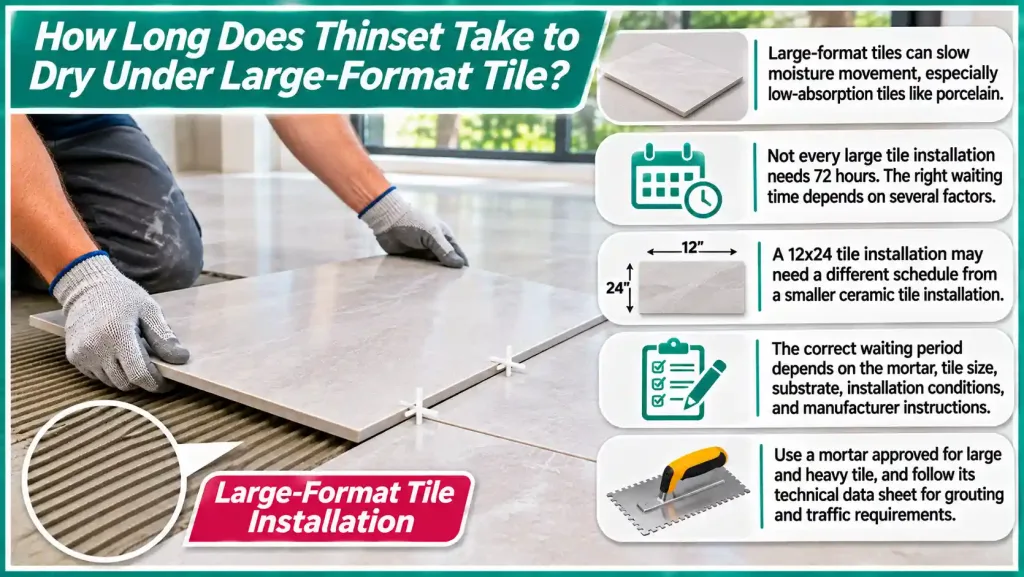
For example, a 12×24 tile installation may need a different schedule from a smaller ceramic tile installation. Your tile pattern also affects layout and installation planning, so review these 12×24 tile patterns before choosing a layout.
Use a mortar approved for large and heavy tile, and follow its technical data sheet for grouting and traffic requirements.
Does Modified Thinset Take Longer to Dry Than Unmodified Thinset?
Not always. Modified and unmodified thinset mortars use different formulations, so their setting and curing behavior can vary.
Unmodified thinset contains cement, sand, and water-retention ingredients. It is commonly used in applications where the tile system or membrane manufacturer specifies it.
Modified thinset includes additional ingredients, such as polymers, to improve bonding, flexibility, or performance. Some modified mortars may need extra drying time when installed between two surfaces that allow little moisture to escape.
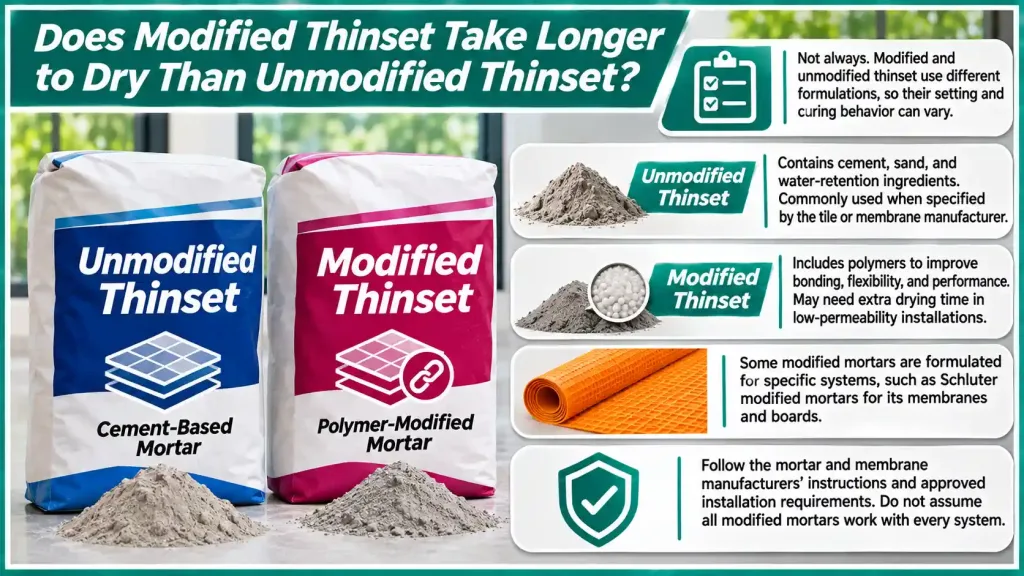
However, not every modified mortar takes longer. Some products are specifically formulated for use with particular waterproofing and uncoupling systems. For example, Schluter offers modified mortars designed for its own membranes and boards.
The safest approach is to follow the mortar manufacturer’s instructions and the membrane or substrate manufacturer’s approved installation requirements. Do not assume that all modified mortars are suitable for every tile system.
Thinset vs. Premixed Tile Adhesive: Is the Drying Time Different?
Yes. Cement-based thinset mortar and premixed tile adhesive do not set in the same way.
Thinset is usually supplied as a dry powder that you mix with water or an approved liquid additive. It hardens through cement hydration.
Premixed tile adhesive, often called mastic, is supplied ready to use. It generally hardens as moisture leaves the adhesive. Because of this, it can take longer to dry beneath large or non-porous tiles.
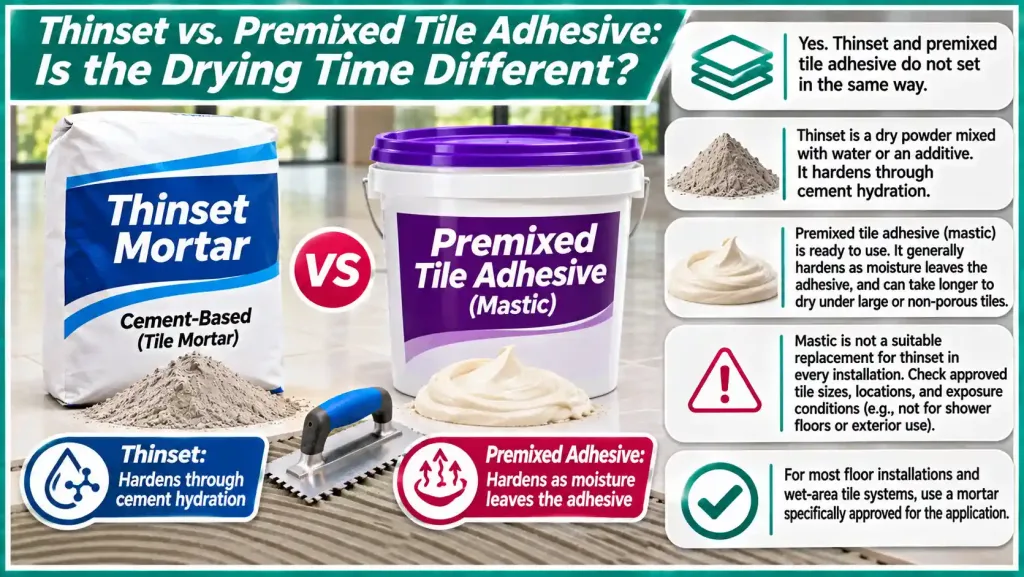
Mastic is not a suitable replacement for thinset in every installation. Check its approved tile sizes, locations, and exposure conditions. Many products are not approved for shower floors, continuously wet areas, or exterior installations.
For most floor installations and wet-area tile systems, use a mortar specifically approved for the application.
How Long Should You Wait Before Walking on Thinset?
For many standard thinset installations, wait at least 24 hours before walking on the tile. However, the exact time depends on the mortar and the installation conditions.
Rapid-setting products may allow light foot traffic sooner. For example, SikaTile 425 LHT Secure Set Rapid lists at least 4 hours before light traffic, but it also requires protection from heavy or vehicle traffic for 24 hours.
Keep these points in mind:
- Avoid walking on newly installed tile before the product allows it.
- Do not move furniture or heavy equipment across the floor too soon.
- Use protective boards when the product instructions recommend them.
- Avoid placing concentrated loads on fresh tile.
- Keep children and pets away from the installation until it is safe.
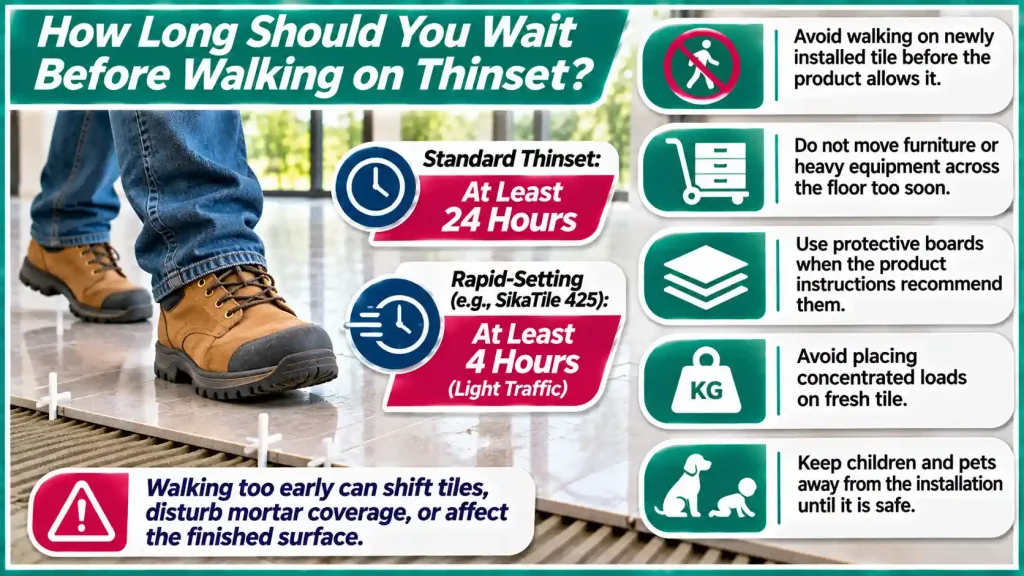
Walking too early can shift tiles, disturb mortar coverage, or affect the finished surface.
How Long Does Thinset Take to Dry Before Shower Use?
Do not use a newly tiled shower simply because the thinset has reached its grout-ready time. A shower installation includes several materials, and each one has its own curing requirements.
Before using the shower, confirm the required waiting time for:
- The thinset mortar
- The grout
- Any grout sealer, if used
- Silicone sealant around corners and changes of plane
- The waterproofing membrane or shower system
Some installations may need several days before water exposure. The exact period depends on the products and system instructions.
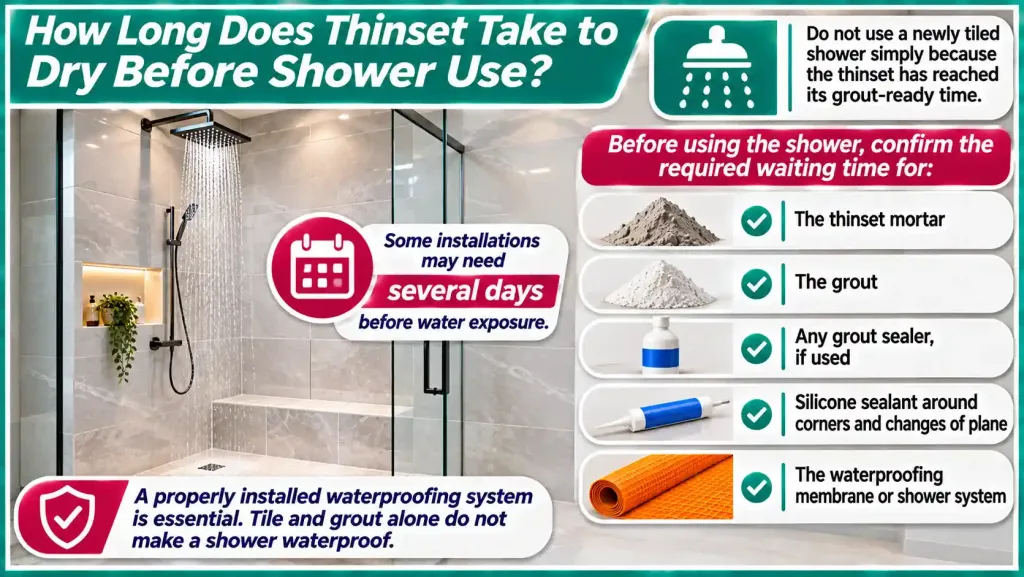
A properly installed waterproofing system is also essential. Tile and grout alone do not make a shower waterproof. If you are planning a bathroom renovation, these bathroom layout ideas can help you consider the placement of the shower and other fixtures before installation.
How Can You Tell When Thinset Is Ready?
There is no single visual test that can replace the manufacturer’s stated waiting period. Still, a few checks can help you assess the installation before moving to the next stage.
Use this checklist:
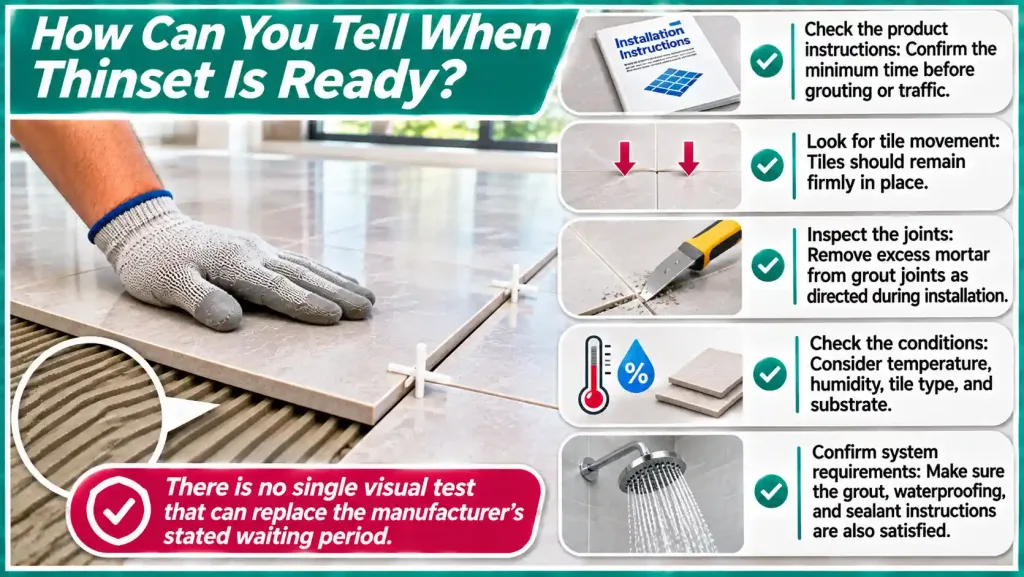
If the tile moves or the mortar still feels soft, stop and check the installation before grouting.
What Happens If You Grout Before Thinset Dries?
Grouting too early can create problems that may affect the appearance and performance of the tile installation.
Possible issues include:
- Tile movement: Fresh mortar may not hold the tile firmly enough during grouting.
- Uneven grout joints: Movement can change joint width and alignment.
- Weak bonding: Disturbing the mortar before it develops sufficient strength can affect adhesion.
- Trapped moisture: Moisture may remain beneath low-porosity tile or between less-absorbent surfaces.
- Discoloration or efflorescence: Excess moisture and installation conditions can contribute to appearance problems in some cement-based materials.
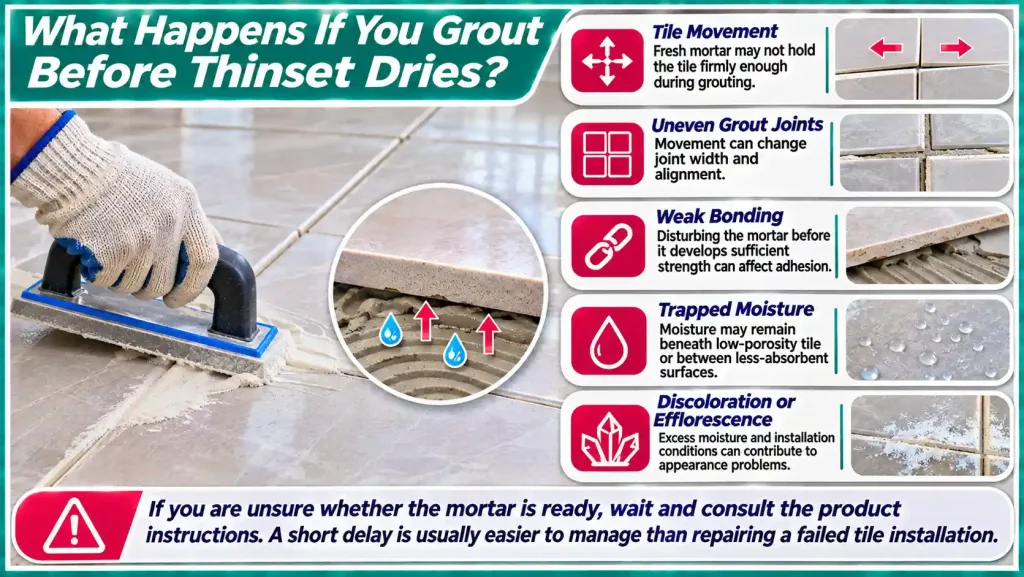
If you are unsure whether the mortar is ready, wait and consult the product instructions. A short delay is usually easier to manage than repairing a failed tile installation.
Tips for Helping Thinset Cure Properly
You cannot safely force every thinset mortar to cure faster. However, you can create suitable conditions that support a reliable installation.
- Follow the mixing instructions: Use the correct water amount and mixing method. Do not add extra water after the mortar begins to set.
- Prepare the surface: Remove dust, grease, loose material, and other contaminants before applying mortar.
- Use the correct trowel: Select a trowel that provides the required mortar coverage for the tile.
- Maintain suitable room conditions: Keep the installation within the temperature and humidity range stated by the manufacturer.
- Protect fresh tile: Prevent foot traffic, vibration, and heavy loads until the product allows them.
- Allow the full waiting period: Do not grout or expose the installation to water before the required time.
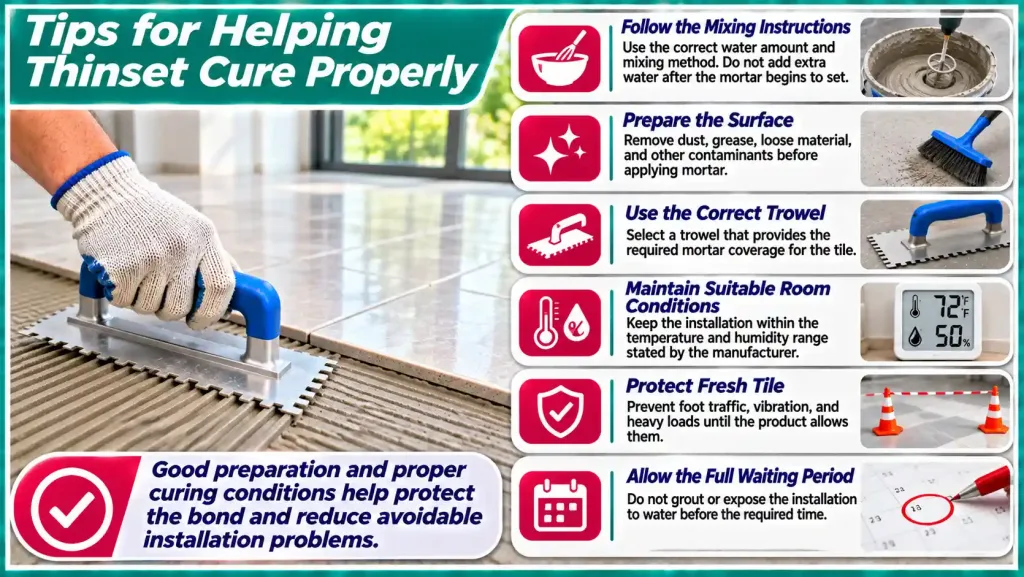
Good preparation and proper curing conditions help protect the bond and reduce avoidable installation problems.
Common Thinset Drying Mistakes to Avoid
Even a good mortar can perform poorly if the installation instructions are ignored. Avoid these common mistakes:
- Grouting before the stated waiting period.
- Walking on fresh tile too soon.
- Assuming every rapid-setting mortar has the same timing.
- Treating surface dryness as proof that the mortar is ready.
- Using a fan or heater to shorten the required cure time.
- Adding too much water during mixing.
- Using mastic in an application where it is not approved.
- Ignoring the instructions for membranes, grout, and sealants.
- Applying mortar outside its approved thickness range.
Following the product data sheet is more reliable than using a general drying-time estimate.
Final Thoughts
Most standard thinset mortar needs about 24 hours before grouting, but rapid-setting products can shorten that time. Large-format tile, low-porosity surfaces, and specialty membrane systems may require a different schedule.
Waiting can feel frustrating when you want to finish a bathroom or start using a newly tiled floor. Giving the mortar enough time helps protect the tile bond and reduces the risk of preventable repairs.
For the best result, follow the current technical data sheet for your mortar and check the instructions for grout, waterproofing, and sealant before using the finished area.
Frequently Asked Questions
How long does thinset take to dry completely?
Many standard thinset mortars need about 24 hours before grouting, but full curing can take longer. The exact time depends on the product, tile, substrate, and environmental conditions. Check the technical data sheet for the full curing requirements.
Can I grout after 12 hours?
Some products, including Schluter ALL-SET, list a minimum 12-hour period before grouting. Standard mortars often require around 24 hours. Use the waiting time specified for your exact product.
Can thinset dry in 4 hours?
Yes. Some rapid-setting mortars are designed to become ready for grouting in about 4 hours. Schluter FAST-SET lists 4 hours, while other rapid products may have a different schedule. Do not apply one product’s timing to another.
Does porcelain tile make thinset take longer to dry?
It can affect drying because porcelain absorbs very little moisture. However, porcelain tile does not automatically require a longer waiting period in every installation. The mortar type, tile format, substrate, and product instructions determine the correct timing.
Can I walk on tile after 12 hours?
Only if the mortar manufacturer allows it. Many standard installations require around 24 hours before foot traffic, while some rapid-setting mortars allow light traffic sooner. Check the product’s separate instructions for light and heavy traffic.
How long should thinset dry before installing grout?
Many standard thinset mortars need about 24 hours before grouting. Rapid-setting products may allow grouting in 2 to 4 hours, while specialty installations may require more time. Follow the mortar manufacturer’s instructions.
Can I use a fan to make thinset dry faster?
Normal ventilation can help maintain suitable room conditions, but a strong fan does not replace the required curing time. Avoid direct heat or forced drying unless the manufacturer specifically allows it.
Is premixed tile adhesive the same as thinset?
No. Thinset is generally a cement-based mortar mixed from powder, while premixed tile adhesive is often a mastic that hardens as moisture leaves it. Their approved uses and drying times are different.