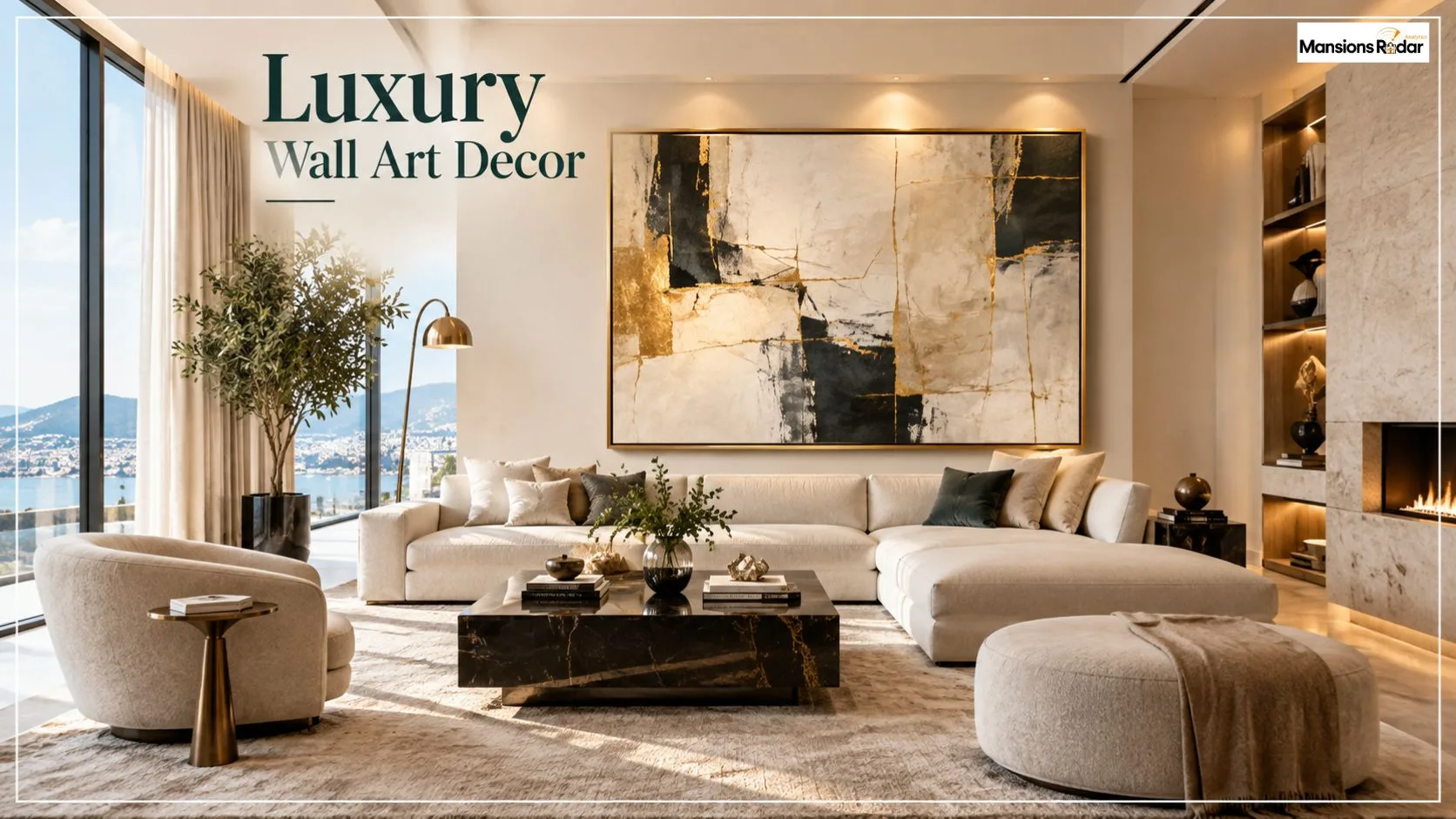
Walk into any high-end home and one thing stands out. The walls are never bare. An empty wall in a luxury space feels unfinished. The right piece of art can pull more attention than the sofa or the view. That’s not an accident. It’s a choice.
This guide looks at how a few well known collectors style their walls, and how you can borrow the same ideas at home. No celebrity budget needed. For more real examples, check our celebrity house tours.
Why a Bare Wall Ruins the Luxury Look
A room can have the best furniture money can buy. A soft rug. Warm lighting. But if the wall above the sofa stays empty, the room still feels half finished.
Art gives the eye somewhere to land. It’s the layer most people only notice when it’s missing. Without it, even an expensive room can feel flat, like something got skipped.

What a Few Well Known Collectors Get Right
Worth saying upfront: none of this is confirmed by the collectors themselves. It comes from interviews and home tours reported over the years. Still, the pattern is worth noticing.
- Alicia Keys and Swizz Beatz reportedly mix established names with newer artists, putting Basquiat and Warhol next to work from people you have probably never heard of. That mix keeps a room feeling lived in, not like a museum wing.
- Elton John went the other way. His home is said to lean heavily on photography, with names like Man Ray and Robert Mapplethorpe. One theme done properly tends to land harder than five done halfway.
- Leonardo DiCaprio’s collecting has often been tied to causes he cares about, including work linked to Oscar Murillo. For him, a piece on the wall reportedly carries a message, not just a look.
- Jay-Z and Beyoncé went bigger still. Their collection has been linked to names like Basquiat and Richard Prince, and their love of fine art made headlines when they filmed a music video inside the Louvre.

Four different people, four different approaches. But one thing stays true across all of them. Nothing goes on the wall by accident. So how do you bring that same thinking into your own home?
How to Choose Wall Art for Your Own Home
You don’t need a celebrity budget to get this right. A few simple rules do most of the work.
1. Size the Art to the Wall
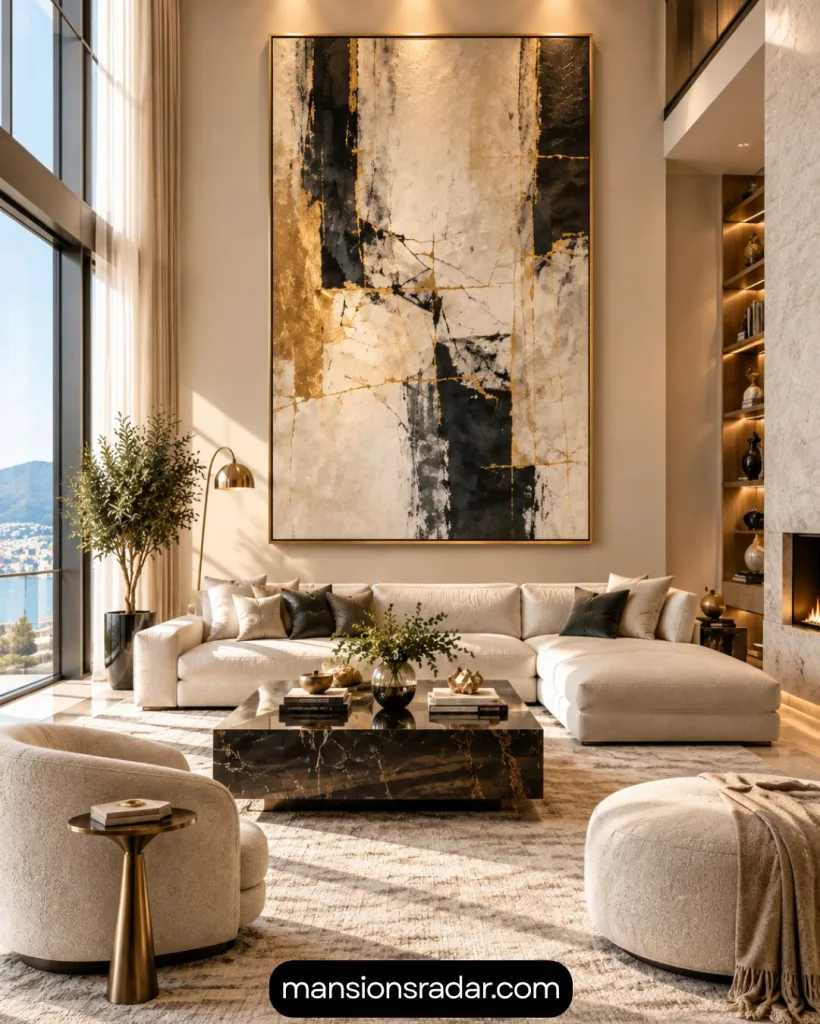
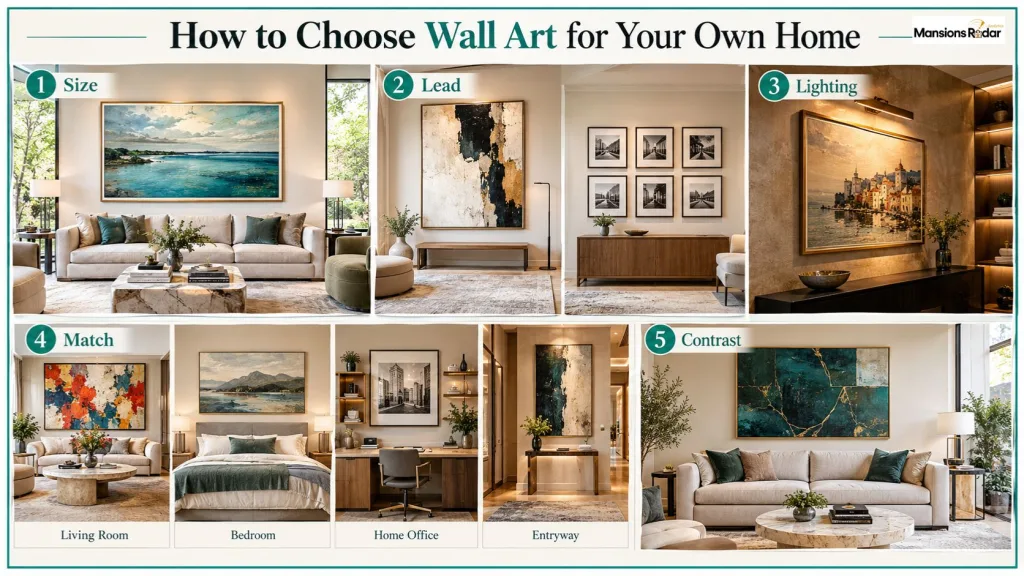
A good rule of thumb: your art should cover about two thirds of the furniture width sitting below it. A small frame on a big wall gets lost. An oversized piece in a small room can feel heavy.
2. Let One Piece Lead
One large statement piece usually beats five small frames scattered around. It gives the eye one clear place to land, and keeps the room feeling calm instead of busy.
If you’d rather go with a curated look, a gallery wall works too. Keep the spacing even, around 2 to 3 inches between frames for a tight grouping, or up to 5 inches for something looser. Pick one thing that ties the pieces together, like a color or a frame style.
3. Get the Lighting Right
A picture light or a track light angled at around 30 degrees brings out the texture in a piece. Keep valuable art out of direct sunlight for long stretches. Sunlight fades color faster than most people think, which is why museums follow strict light exposure guidelines to protect what’s on their walls.
4. Match the Art to the Room
- Living room: bold pieces that start a conversation.
- Bedroom: soft, calm tones that help you unwind.
- Home office: clean, structured art that looks sharp on video calls.
- Entryway: this is your first impression. Make it count.
5. Add a Little Contrast
Art that matches the sofa or rug too closely tends to disappear into the background. A slight difference in color or style makes it stand out instead. This is part of why many collectors go with neutral or white walls. It lets the art do the talking.
Original Art vs. Prints
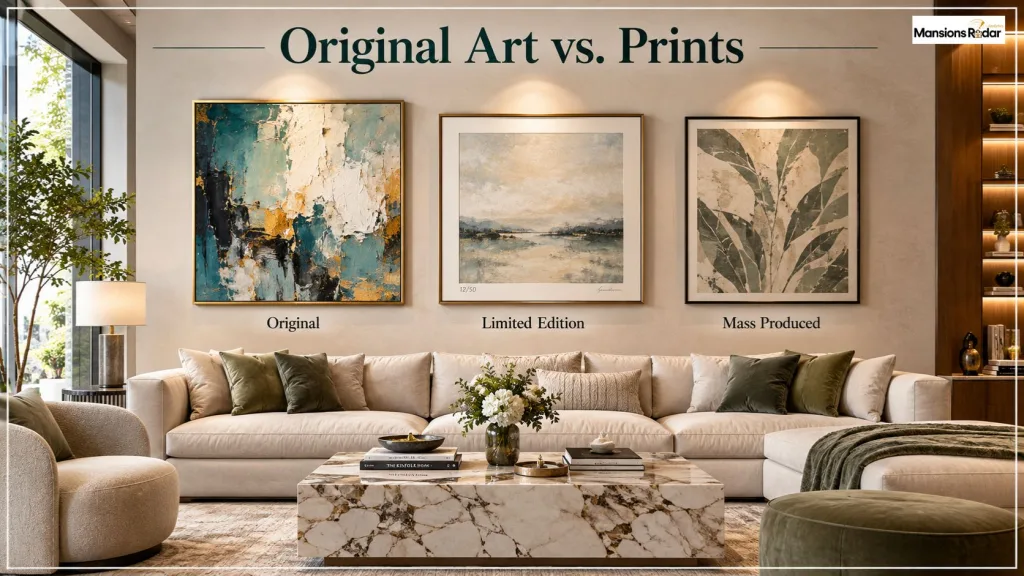
Most serious collectors go for original works or limited edition prints over mass produced canvas art. But high quality framed prints and photography can still give you that luxury look on a smaller budget. What matters more than the price tag is whether the piece feels chosen, not just picked in a rush to fill a gap.
Mistakes That Cheapen the Look
- Hanging art too high. Keep the center of the piece at eye level, around 57 to 60 inches from the floor.
- Overcrowding the wall. A bunch of small, random pieces usually reads as clutter, not style.
- Skipping proper lighting. Bad lighting can make even expensive art look dull.
- Matching everything too perfectly. A wall with zero contrast blends in instead of standing out.
Frequently Asked Questions
What size wall art fits a large living room?
Cover about 60 to 75 percent of the sofa width below it. This keeps things in proportion.
How high should wall art be hung?
Keep the center at eye level, around 57 to 60 inches from the floor.
Do celebrities buy original art or prints?
Most reports suggest they lean toward original works or limited editions over mass produced prints.
What works best in a small apartment?
One medium or large piece, rather than several small ones scattered around.
Is a large statement piece still a trend in 2026?
Yes. Oversized single pieces are still a top choice in luxury interior design.
What is a focal point in interior design?
It’s the first thing your eye lands on when you walk into a room, like a piece of art, a fireplace, or a standout piece of furniture.
The Bottom Line
Every home we looked at makes the same point differently. Art is not the last thing you add to a room. It is part of what makes the room feel like yours.
Bare walls are never really about missing decor. They’re about a piece that hasn’t found its way home yet. Pick the one that means something to you, size it right, light it well, and let it lead.
Want expert eyes on your own space? Book a virtual design consultation with our team and let us help you find that piece.