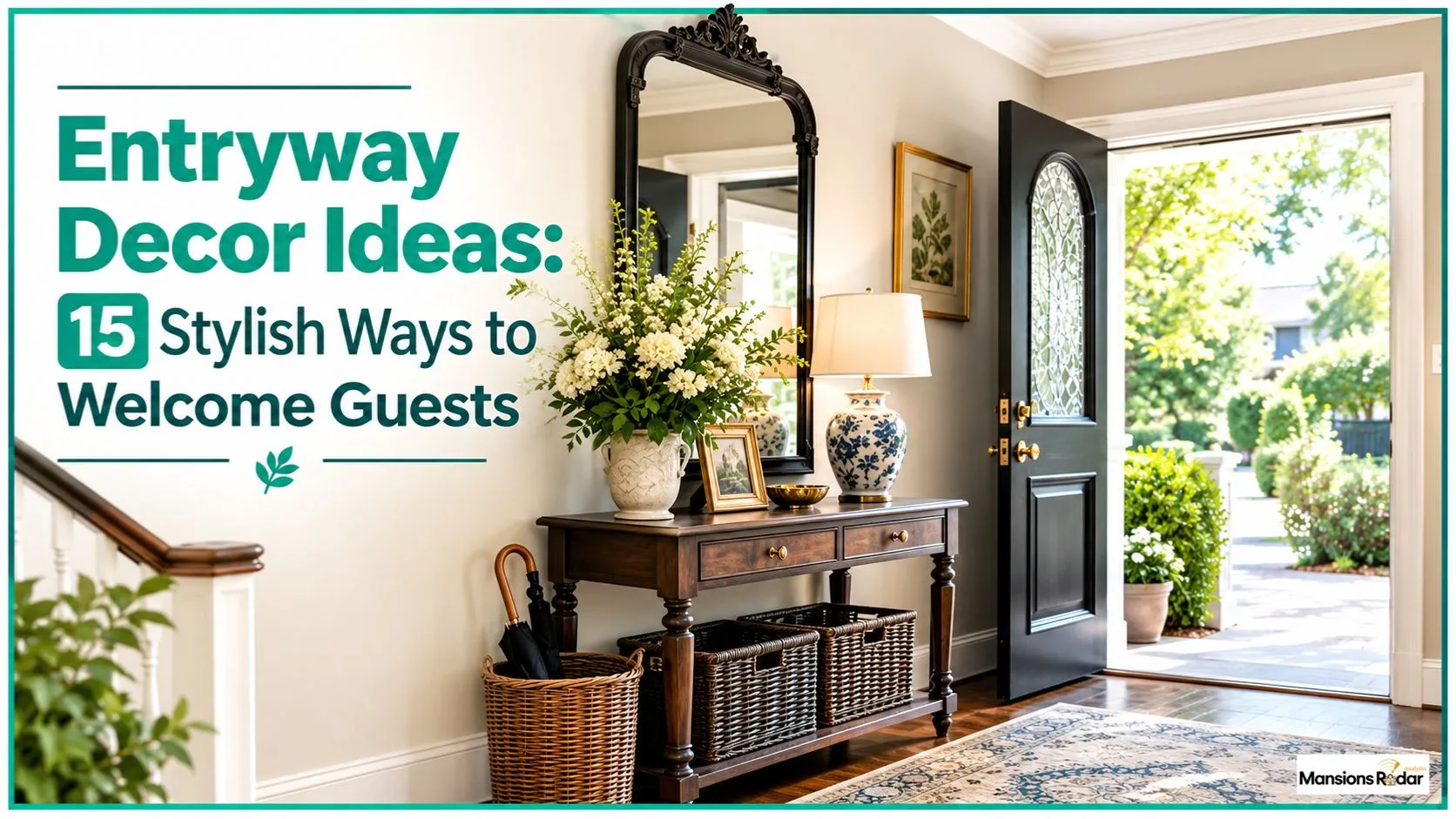
Your entryway creates the first impression of your home while giving family members a convenient place to leave keys, bags, and shoes. A well-planned entrance keeps everyday essentials organized and makes guests feel welcome.
These 15 entryway decor ideas combine style and practical storage to help you create an inviting, functional space. Explore simple ways to arrange entryway furniture, add lighting, choose colors, organize small entrances, and avoid common decorating mistakes.
What Makes a Well-Designed Entryway?
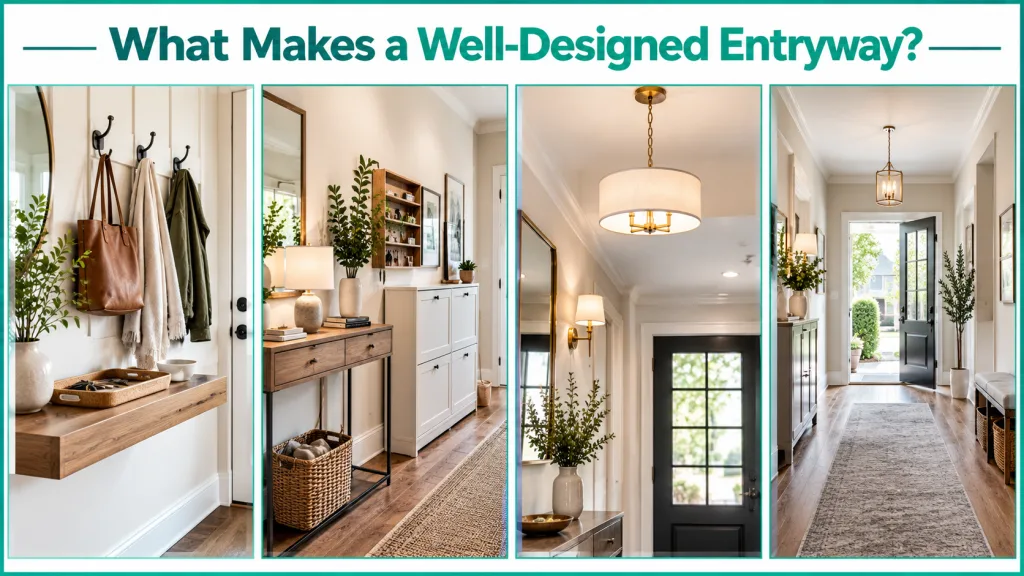
A functional entryway needs thoughtful furniture placement, suitable lighting, and enough room for daily movement. Consider these four elements when planning the layout:
- Defined drop zone: Use a small tray, wall hook, or narrow shelf to keep frequently used items within reach.
- Space-saving furniture: Choose slim console tables, compact shoe cabinets, or wall-mounted organizers that fit your available floor space.
- Layered lighting: Use a ceiling fixture or wall sconce to brighten darker corners and improve visibility.
- Comfortable clearance: Arrange furniture around the main walking route and aim for approximately 36 inches of clear space where possible.
15 Entryway Decor Ideas
Give your entrance a welcoming look with decor that balances style and everyday function. These ideas cover different furniture styles, wall treatments, lighting choices, colors, and finishing touches to suit both small and spacious entryways.
1. Decorate an Entryway Console Table
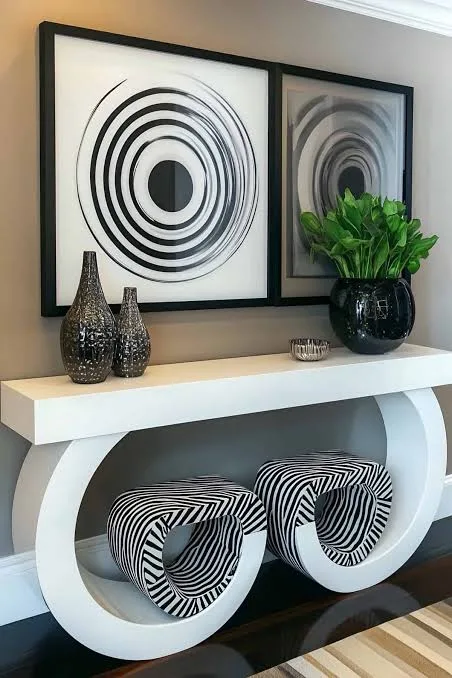
A console table creates a polished focal point for your entryway. Choose a slim design that fits comfortably against the wall, then style it with a ceramic vase, a decorative tray, or a small table lamp. Keep the arrangement simple so the furniture stays useful without crowding the entrance.
2. Make a Statement With a Large Entryway Mirror
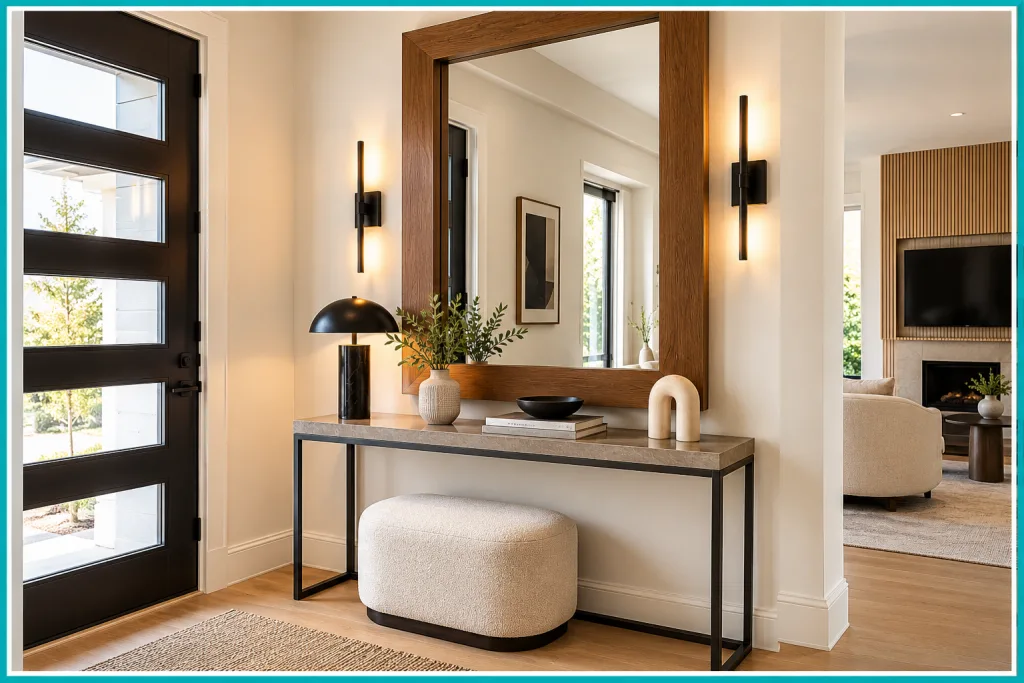
A large mirror adds depth and reflects natural or artificial light around the entrance. Hang it above a console table or place it on a suitable wall to create a balanced arrangement. Choose a round, rectangular, or arched frame that complements your home’s interior style.
3. Add a Stylish Entryway Bench
An entryway bench creates a comfortable spot for putting on shoes and setting down small belongings. A wooden bench adds natural warmth, while an upholstered option introduces softness and color. Select a size that fits your entrance and complements the surrounding furniture.
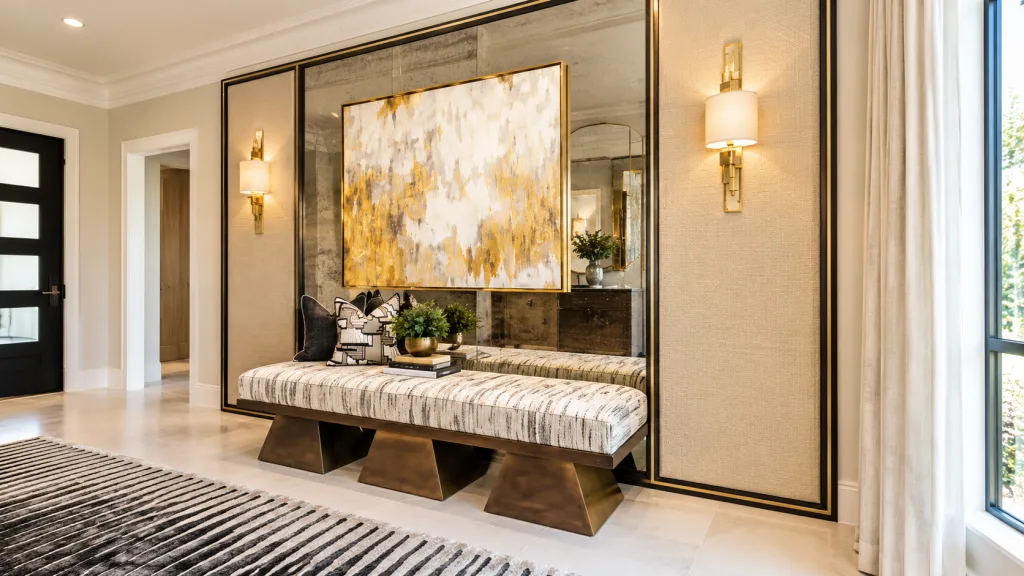
4. Organize Wall Space With Decorative Hooks
Wall hooks provide a simple way to hang everyday items such as coats, hats, and bags. Choose brass, matte black, or wooden finishes to match your decor. Arrange the hooks at convenient heights and leave enough space between them for easy access.
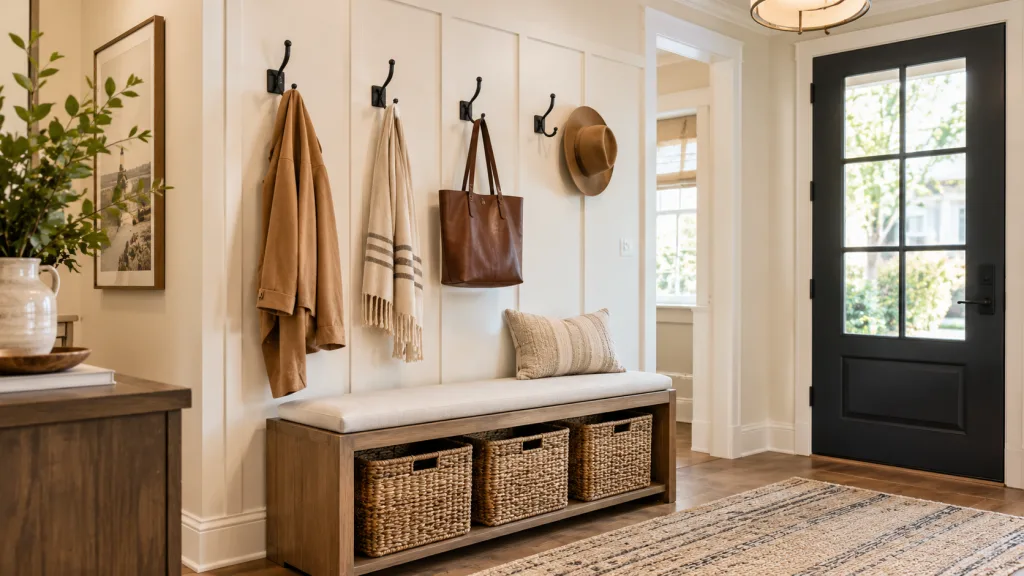
5. Brighten Your Entryway With Pendant Lighting
A pendant light adds character while providing useful illumination. Select a fixture that matches the entrance’s ceiling height and overall proportions. Glass pendants create a light, airy appearance, while metal or woven designs introduce more texture. Use a warm-white bulb for a comfortable atmosphere.
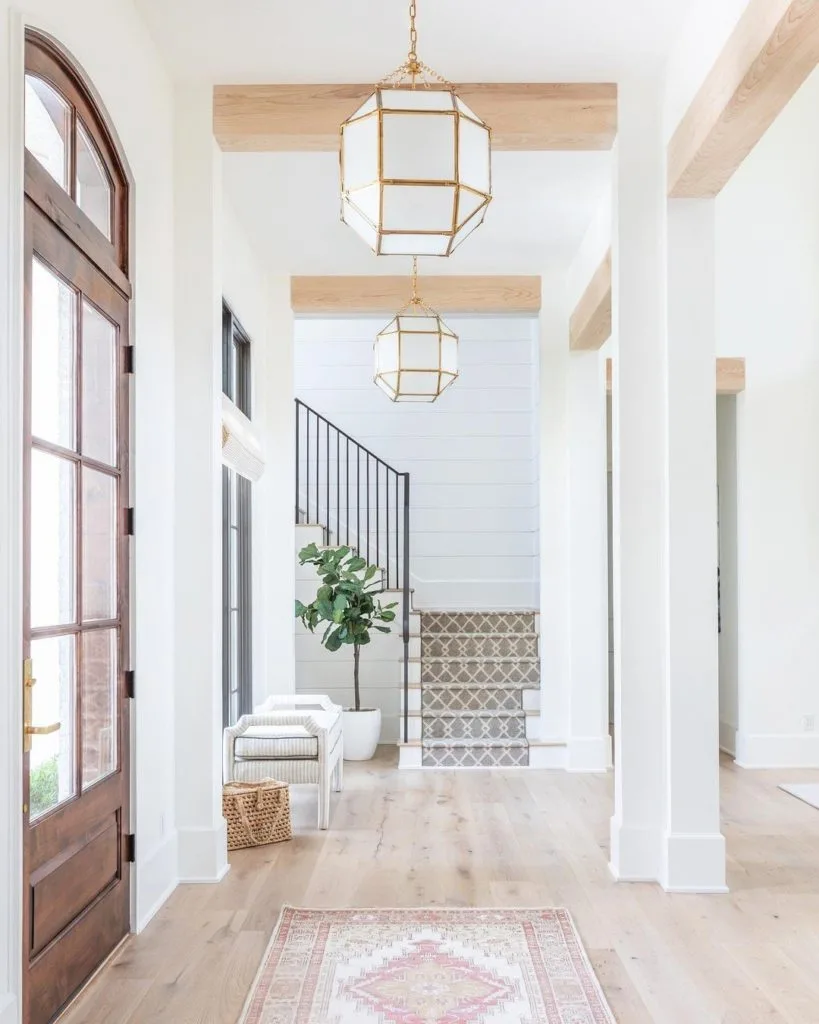
6. Create a Personalized Entryway Gallery Wall
A gallery wall makes your entrance feel more personal and inviting. Display family photographs, framed artwork, or prints that reflect your interests. Keep the frames within a consistent color palette or combine different sizes in a planned arrangement. Explore our luxury wall art decor ideas for more inspiration.
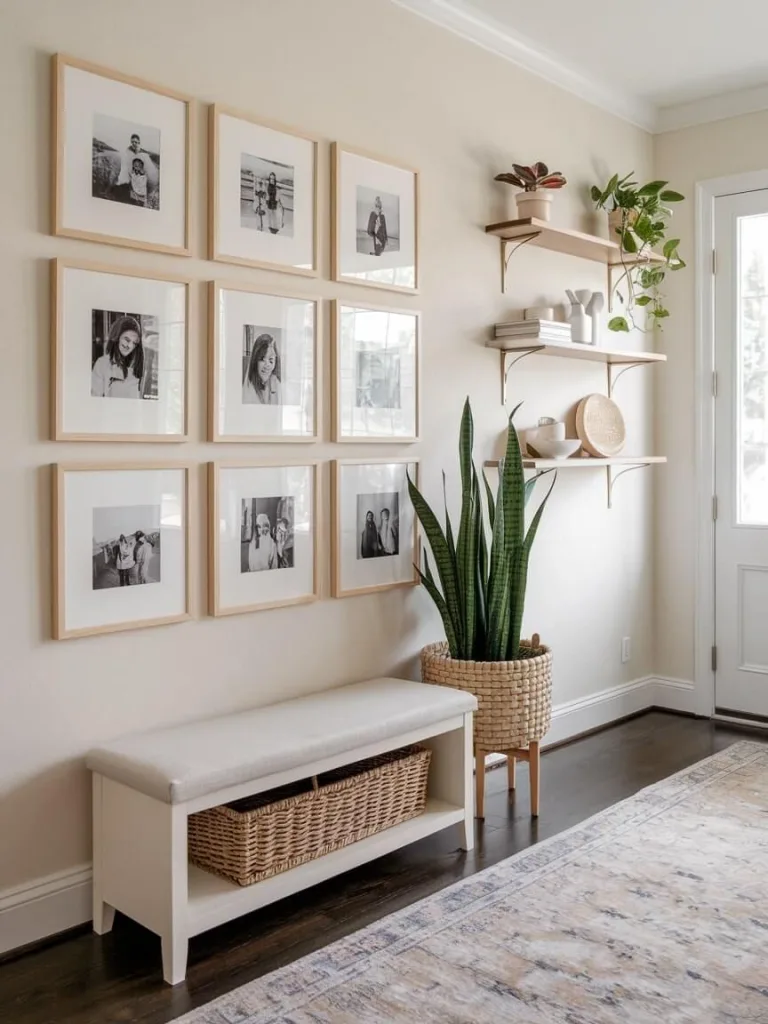
Source: @ Evinco Design
7. Add Texture With an Entryway Runner Rug
A runner rug introduces color, pattern, and softness to a long or narrow entrance. Choose stripes to emphasize the room’s length or a subtle geometric pattern for a decorative touch. Look for a durable, low-pile rug with a non-slip backing that suits everyday foot traffic.
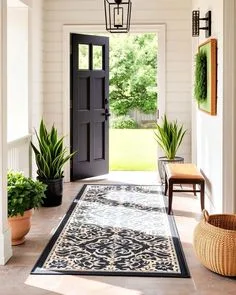
Source: @PlusMood
8. Refresh the Entrance With Flowers and Greenery
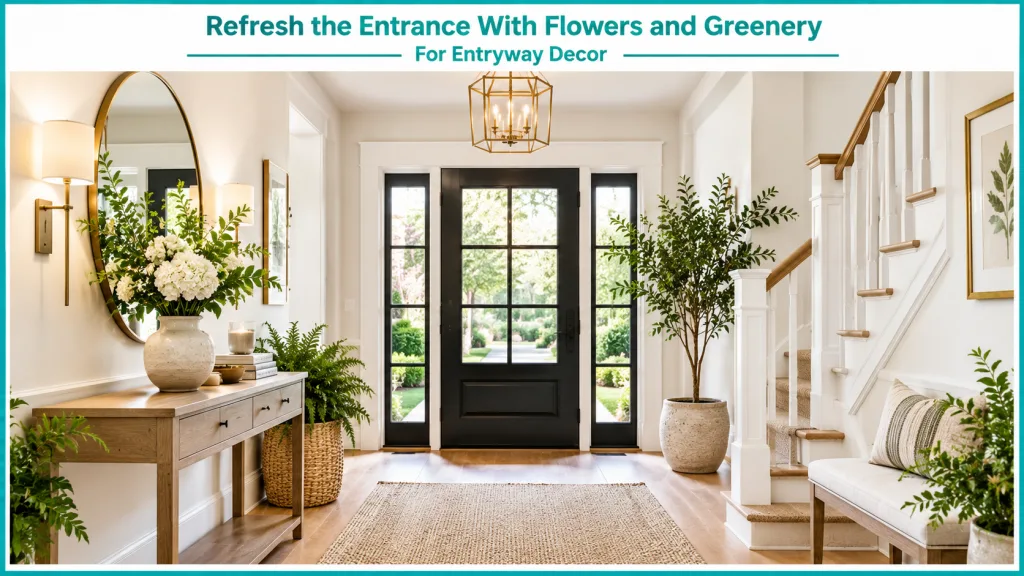
Fresh flowers and indoor plants bring natural color and texture to an entryway. Place seasonal flowers in a decorative vase or position a compact plant near a window. Snake plants and pothos can suit different indoor conditions, but check their light and watering needs before choosing a spot.
9. Save Space With a Floating Entryway Shelf
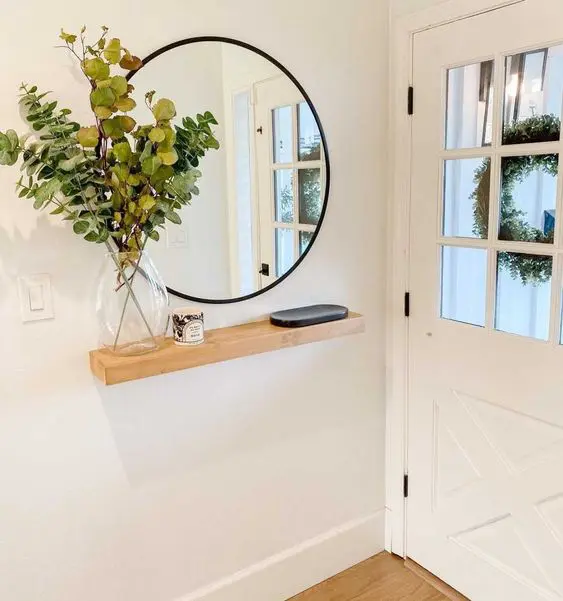
A floating shelf adds a decorative surface without taking up floor space. Use it to display a small framed picture, a ceramic bowl, or a favorite decorative object. Choose a shelf with enough depth for your display items and secure it properly to the wall.
10. Choose Statement Flooring for Your Entryway
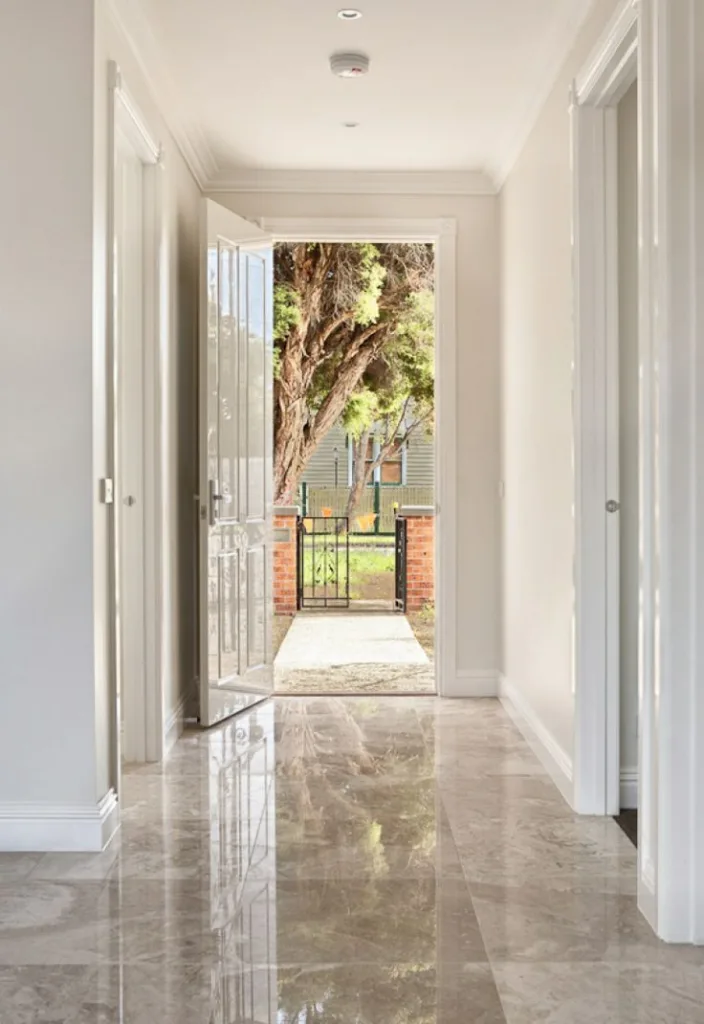
Entryway flooring can establish the style of your home from the moment guests arrive. Patterned tiles add visual interest, natural stone creates a timeless look, and wood-look porcelain offers the appearance of timber with a tile surface. Consider durability, cleaning requirements, and slip performance when comparing materials.
11. Add Architectural Detail With Wall Paneling
Wall paneling gives a plain entrance more structure and visual depth. Board-and-batten, vertical wood slats, and simple molding each create a different effect. Paint the panels in the same shade as the wall for a subtle finish or use a contrasting color to highlight the design.
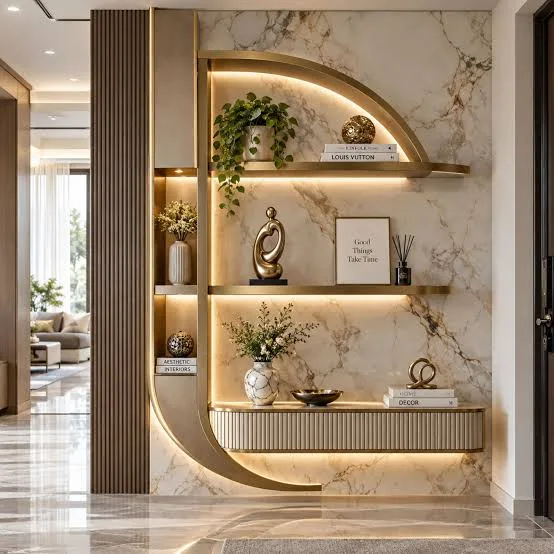
12. Introduce a Small Decorative Accent Stool
An accent stool adds a distinctive furniture detail without requiring much space. Choose a rounded upholstered stool for a soft appearance or a simple wooden design for a natural touch. A contrasting fabric, shape, or finish can make the stool stand out while keeping the overall decor balanced.
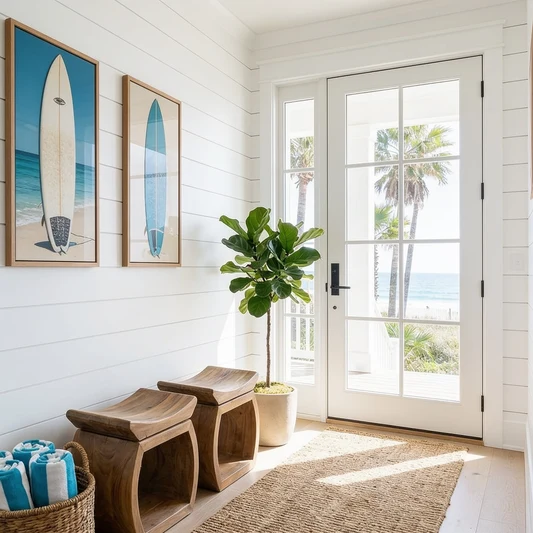
13. Keep Shoes and Belongings Out of Sight With Closed Storage
Closed storage helps maintain a tidy entrance by keeping shoes and everyday belongings behind cabinet doors. Select a slim shoe cabinet, a built-in unit, or a compact storage cupboard according to your available space. Check the cabinet depth and ventilation before choosing a design, and let damp shoes dry before storing them.
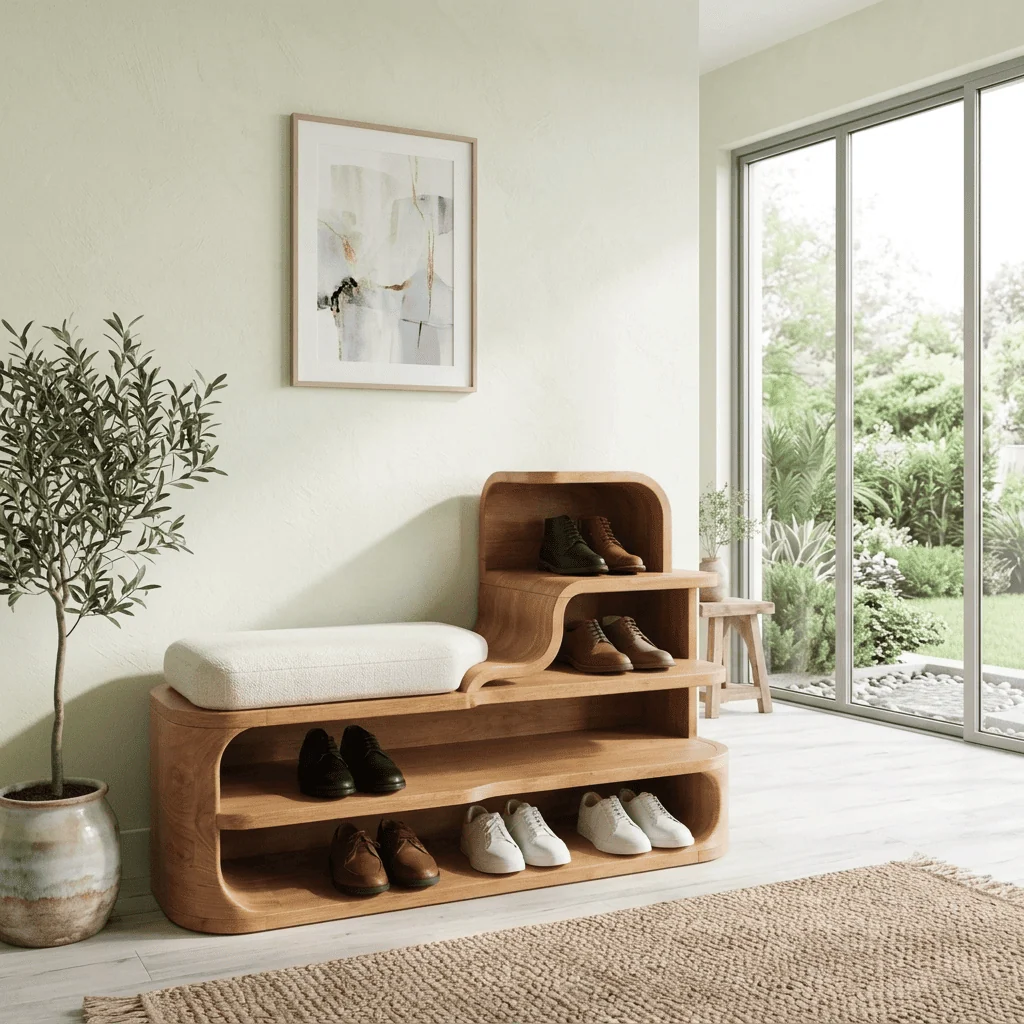
14. Create a Welcoming Look With Warm Neutral Colors
Warm white, beige, taupe, and soft greige create a calm foundation for entryway decor. Pair these shades with natural wood, woven textures, or subtle metallic finishes to add depth. Test paint samples on the wall before making a final choice, as natural and artificial light can change how colors appear.
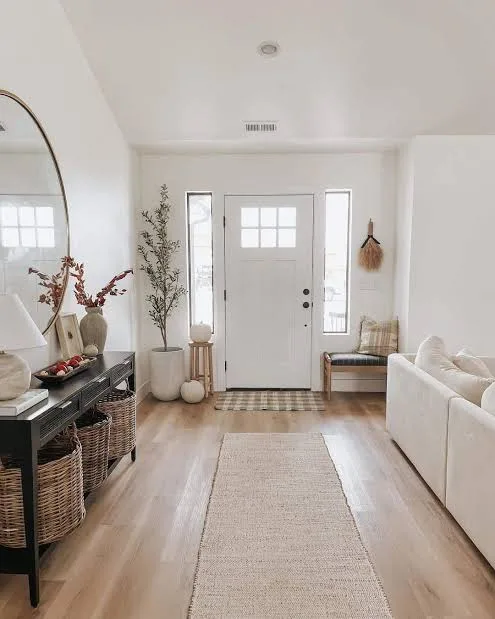
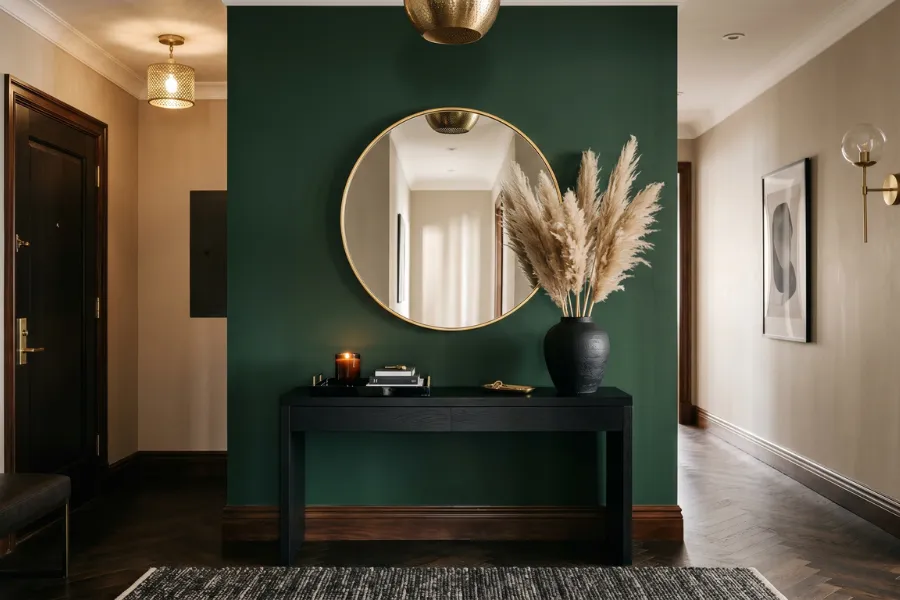
15. Add Personality With a Bold Entryway Accent Wall
An accent wall gives your entrance a memorable focal point. Deep green, navy, muted terracotta, and patterned wallpaper can introduce color without overwhelming the entire space. Choose one wall as the feature and keep nearby finishes relatively simple to create a coordinated look.
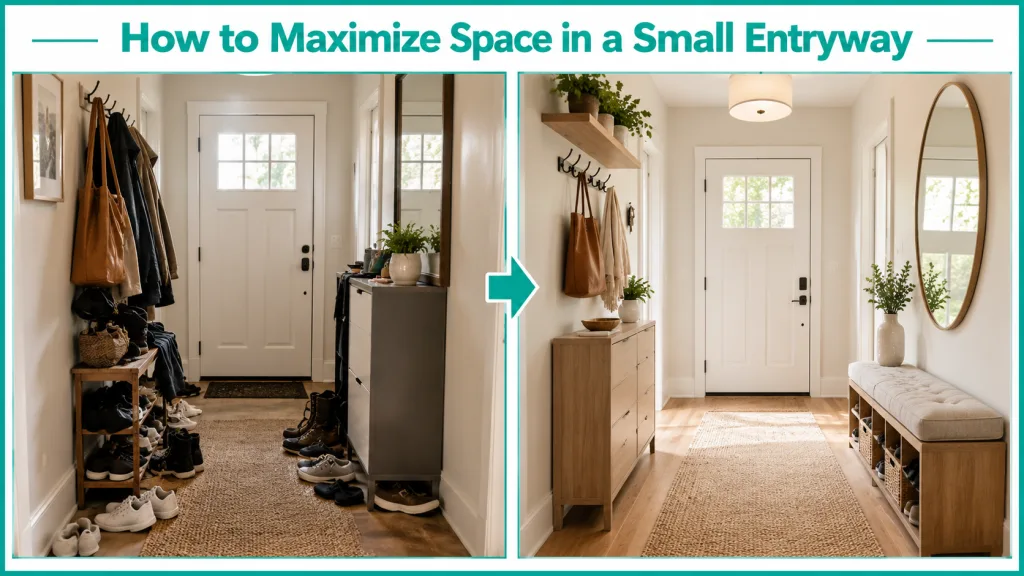
How to Maximize Space in a Small Entryway
A small entryway can feel more open and organized with the right furniture, storage, and layout. Focus on practical solutions that keep everyday essentials accessible without taking up valuable floor space.
- Choose narrow furniture: Use a slim console table or compact shoe cabinet that fits your entrance without blocking movement.
- Install wall-mounted storage: Add floating shelves, hooks, or a small organizer to use vertical space efficiently.
- Use multifunctional pieces: Select a storage bench that provides seating and a convenient place for shoes.
- Improve natural light: Place a mirror where it reflects light from a nearby window to create a brighter appearance.
- Keep the walkway clear: Limit floor accessories and arrange furniture along the walls to maintain comfortable movement.
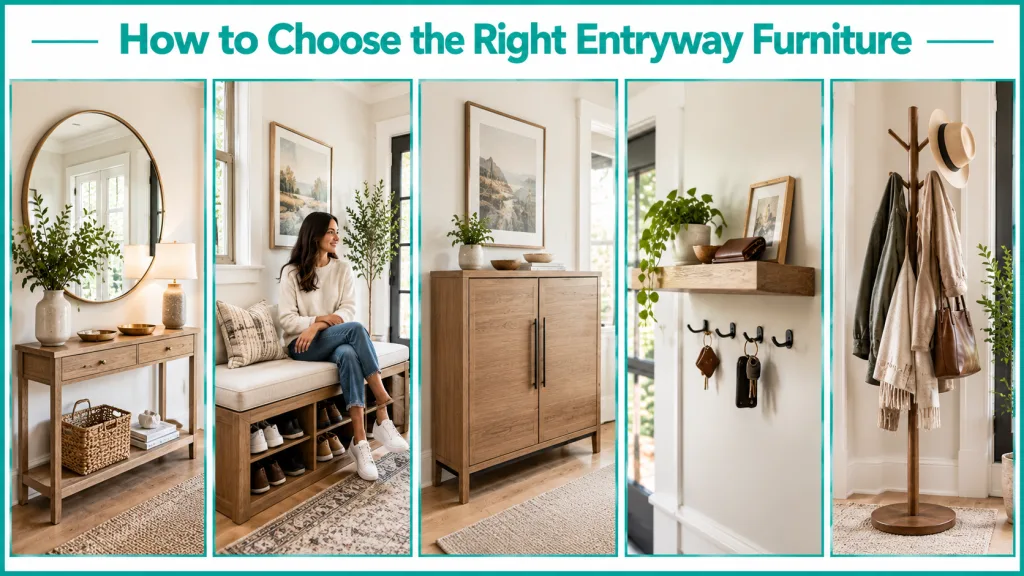
How to Choose the Right Entryway Furniture
Choose entryway furniture according to your available space, storage needs, and daily routine. Each piece should serve a clear purpose while keeping the entrance comfortable and easy to navigate.
| Furniture | Practical Purpose |
| Console table | Display decor and hold everyday essentials |
| Storage bench | Provide seating and store shoes or accessories |
| Shoe cabinet | Keep footwear organized and out of sight |
| Wall shelf | Hold keys, wallets, and small decorative items |
| Coat rack | Hang jackets, bags, and everyday outerwear |
Measure Your Entryway Before Buying
Measure the available wall length, hallway width, and furniture depth before choosing a piece. As general design guidelines, consider these dimensions:
- Console table: Around 30–34 inches high and 10–14 inches deep.
- Entryway bench: Around 18 inches high, with a seat depth of approximately 14–18 inches.
- Walking clearance: Aim for about 36 inches of clear passage where possible.
Check how much floor space the furniture will occupy. For example, a 12-inch-deep console in a 48-inch-wide hallway leaves approximately 36 inches of space.
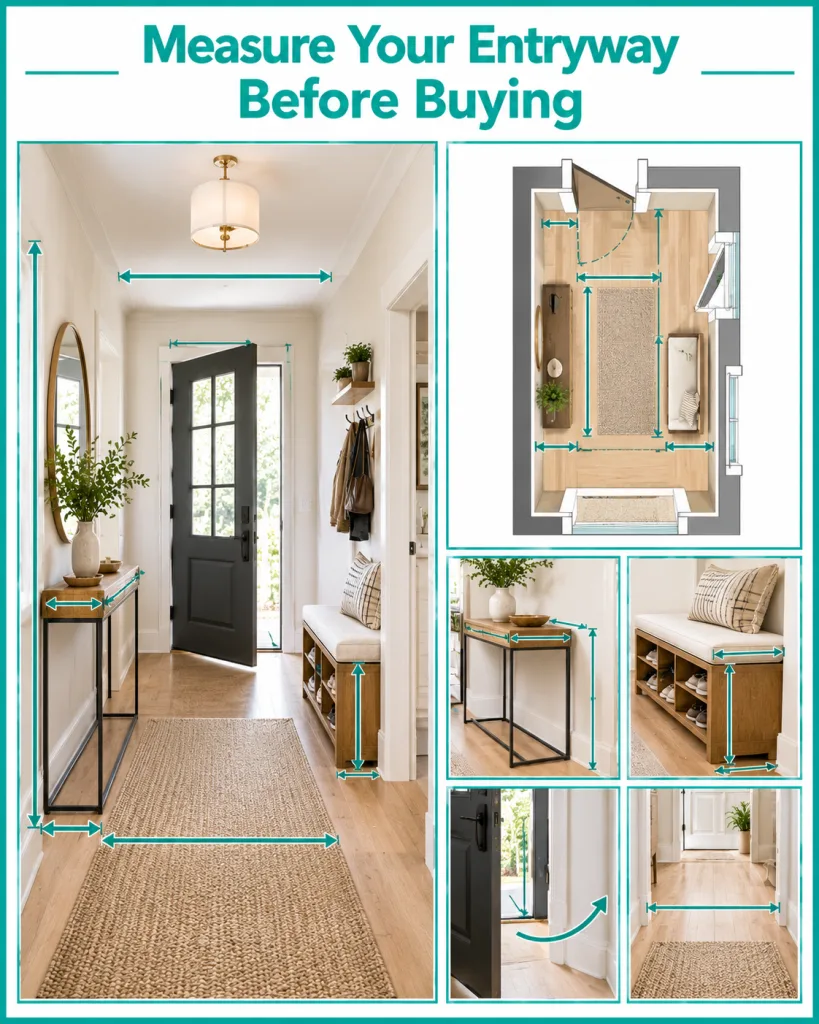
Measure door swings and nearby openings as well to avoid obstructing movement. If you are unsure how much room a console table needs, this guide to entryway console table depth can help you choose a size that fits your hallway without restricting movement.
Best Entryway Colors and Materials
A coordinated color palette and complementary materials can make your entryway feel balanced and welcoming. Choose finishes that work with your existing interior rather than introducing too many unrelated colors and textures.
| Element | Suitable Choices |
| Walls | Warm white, beige, or soft greige |
| Wood finishes | Natural oak for a light look or walnut for richer contrast |
| Accent details | Black frames, hooks, or lighting fixtures |
| Metal finishes | Brushed brass for a subtle decorative touch |
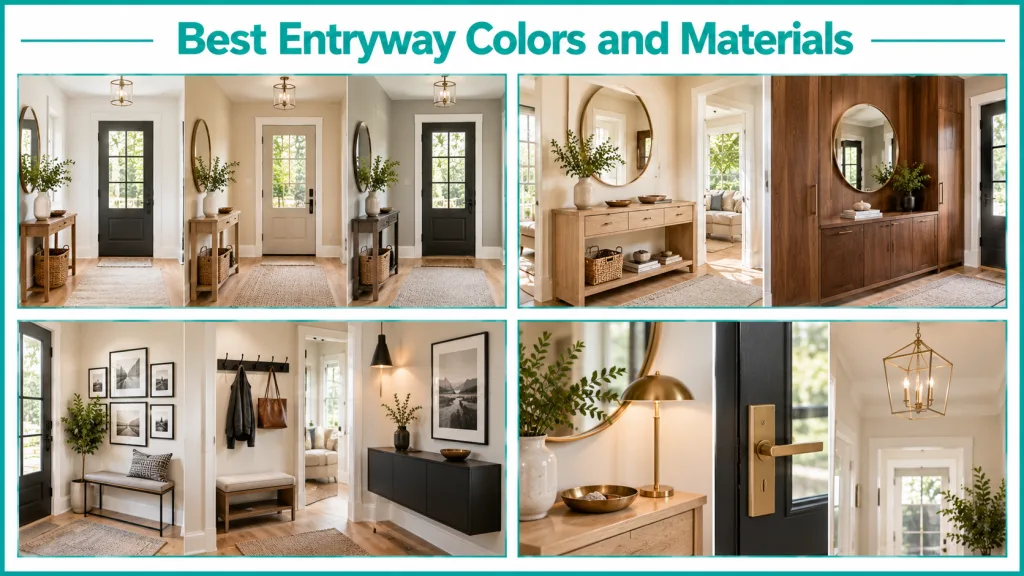
Repeat a few finishes, such as oak wood or brushed brass, to give the entrance a coordinated look. You can also use the same natural textures and neutral tones found in Japandi-inspired bedroom designs to create a calm, cohesive interior.
Entryway Lighting and Mirror Tips
Good lighting makes your entrance feel comfortable and helps highlight its decorative features. Choose a fixture that suits the ceiling height, available space, and overall design.
- Pendant lights: Work well in entrances with enough ceiling height and clearance.
- Flush-mount fixtures: Suit low ceilings and compact entryways.
- Wall sconces: Provide focused lighting without taking up floor space.
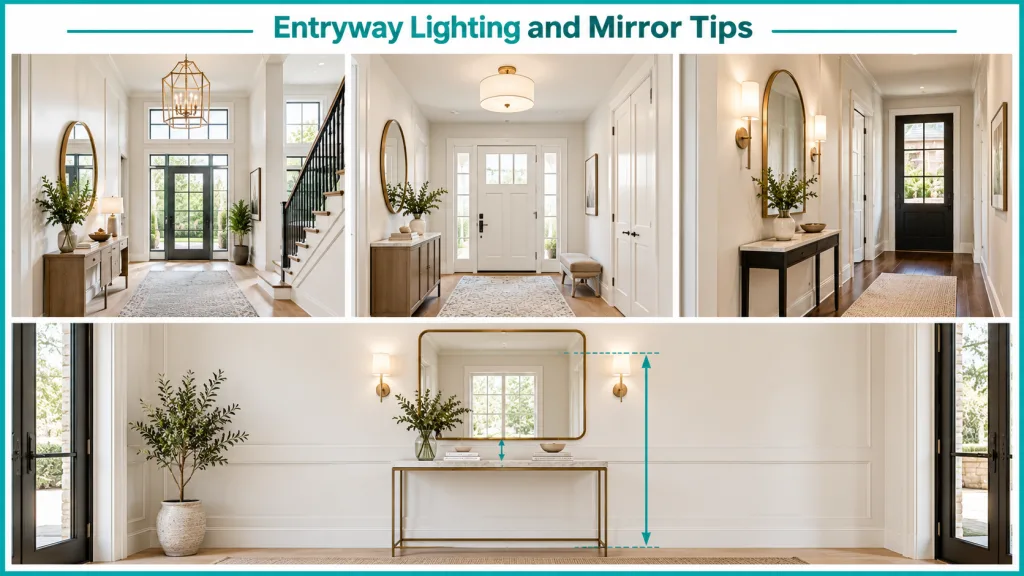
A mirror can make a small entryway feel brighter and more open. Position its center around 57–60 inches from the floor as a general guideline. Above a console, leave about 4–8 inches between the tabletop and the mirror frame.
For a narrow entrance, these designer ideas for console tables and small spaces offer practical ways to arrange furniture and mirrors without crowding the walkway.
Common Entryway Decorating Mistakes
Small design decisions can affect how comfortable and organized your entrance feels. Avoid these common decorating mistakes when planning your space:
- Buying furniture without measuring: Oversized pieces can restrict movement and make the entrance feel cramped.
- Hanging mirrors too high: Poor placement can make mirrors less useful for everyday viewing.
- Overcrowding the console table: Too many decorative items leave little room for keys, mail, and daily essentials.
- Ignoring storage needs: Without suitable storage, shoes, coats, and bags can quickly clutter the entrance.
- Choosing inadequate lighting: Dim fixtures can leave the space looking dark and make everyday tasks harder.
- Using rugs without non-slip backing: Loose rugs can slide underfoot and increase the risk of trips and falls.
Final Thoughts
Your entryway should reflect your home’s personality while making everyday arrivals and departures easier. You don’t need a complete makeover to create a welcoming entrance.
Focus on a few details that suit your lifestyle, complement your interior, and make the space feel like a natural extension of your home.
Frequently Asked Questions
How do you decorate an entryway?
Start with practical essentials such as a console table, hooks, and suitable storage. Add a mirror, lighting, and a few decorative accents to complete the look.
What should you put in an entryway?
Consider a console table or bench, a mirror, a key tray, and a rug. Add a plant or lamp if the space allows.
How can I decorate a small entryway?
Choose slim furniture, wall-mounted shelves, and compact hooks. Use a mirror to reflect light and keep the walkway open.
What furniture works best in an entryway?
Console tables, storage benches, and shoe cabinets are practical choices. Select pieces that suit your layout and allow comfortable movement.
How do you make an entryway look bigger?
Use light wall colors, a well-placed mirror, and furniture with a slim or open design. Avoid overcrowding the floor with accessories.
What colors are best for an entryway?
Warm white, beige, and greige create a welcoming base. Natural wood, black details, and brushed brass can add contrast.
How do you organize shoes in an entryway?
Use a closed shoe cabinet, a storage bench, or a slim shoe rack. Keep frequently worn pairs accessible and store other footwear elsewhere.
What is the difference between an entryway and a foyer?
An entryway refers to the area around a home’s entrance. A foyer usually describes a more defined entrance hall or room.