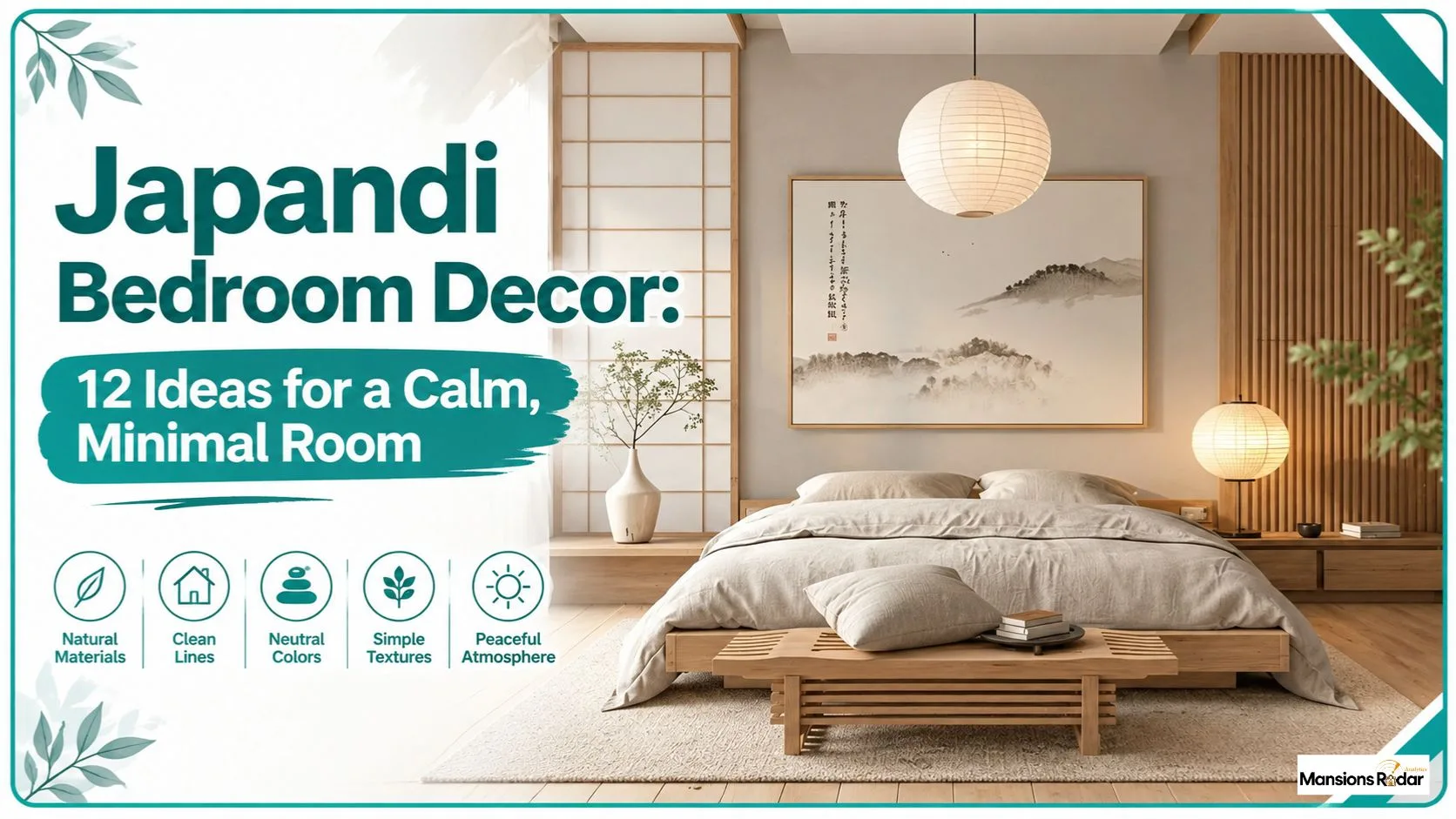
Japandi bedroom decor blends Japanese minimalism with Scandinavian design to create a peaceful, functional, and inviting space. Natural wood, warm neutral colors, soft lighting, organic textures, and simple furniture help create a clutter-free bedroom with a cozy feel.
Whether you have a small bedroom or a spacious retreat, these 12 Japandi bedroom ideas will show you how to combine simplicity, comfort, and natural elements to create a timeless look.
What Is Japandi Bedroom Style?
Japandi bedroom style combines Japanese simplicity with Scandinavian comfort. It features practical furniture, natural finishes, and minimal decor to create a calm, functional space.
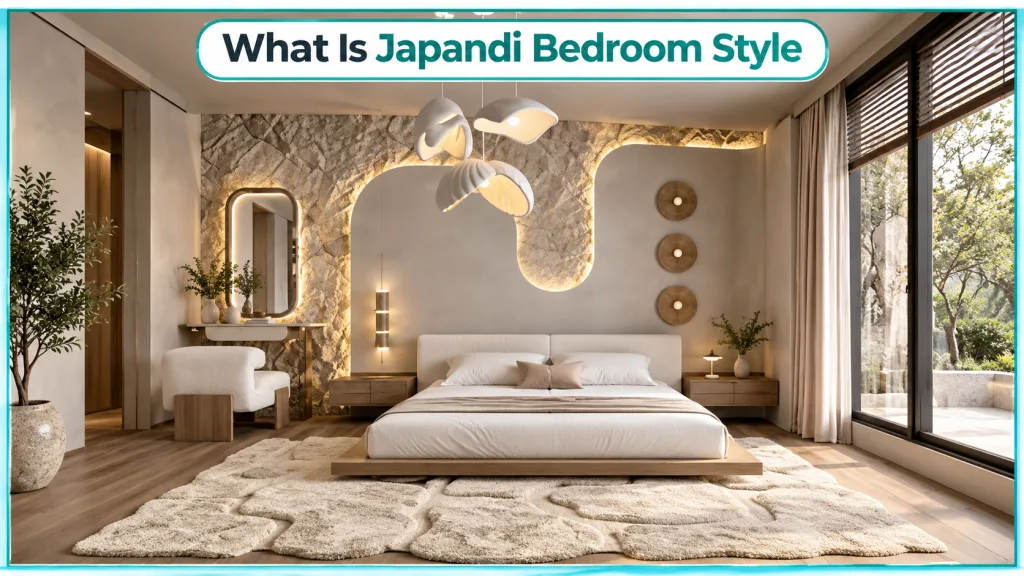
Each piece serves a purpose, keeping the room simple and welcoming. If you prefer a more relaxed, colorful look, explore our boho bedroom decor ideas for a different approach to bedroom styling.
What Makes a Bedroom Look Japandi?
A Japandi bedroom balances Japanese simplicity with Scandinavian comfort. It uses natural materials, practical furniture, and a restrained color palette to create a clean, welcoming space. These key features help you recognize the style at a glance.

12 Japandi Bedroom Decor Ideas
Japandi bedroom decor combines Japanese minimalism with Scandinavian warmth. These ideas show how to use thoughtful furniture, natural finishes, soft lighting, and subtle details to create a comfortable, balanced, practical bedroom.
Choose a Low Wooden Bed
Anchor the room with a low-profile bed in oak, ash, or walnut. Its clean silhouette grounds the space, while the wood adds warmth and natural character.

Layer Neutral Bedding
Combine cotton sheets, a linen duvet cover, and a lightweight textured throw. Cream, ivory, and beige tones create a relaxed palette, while contrasting fabrics keep the bed visually interesting.
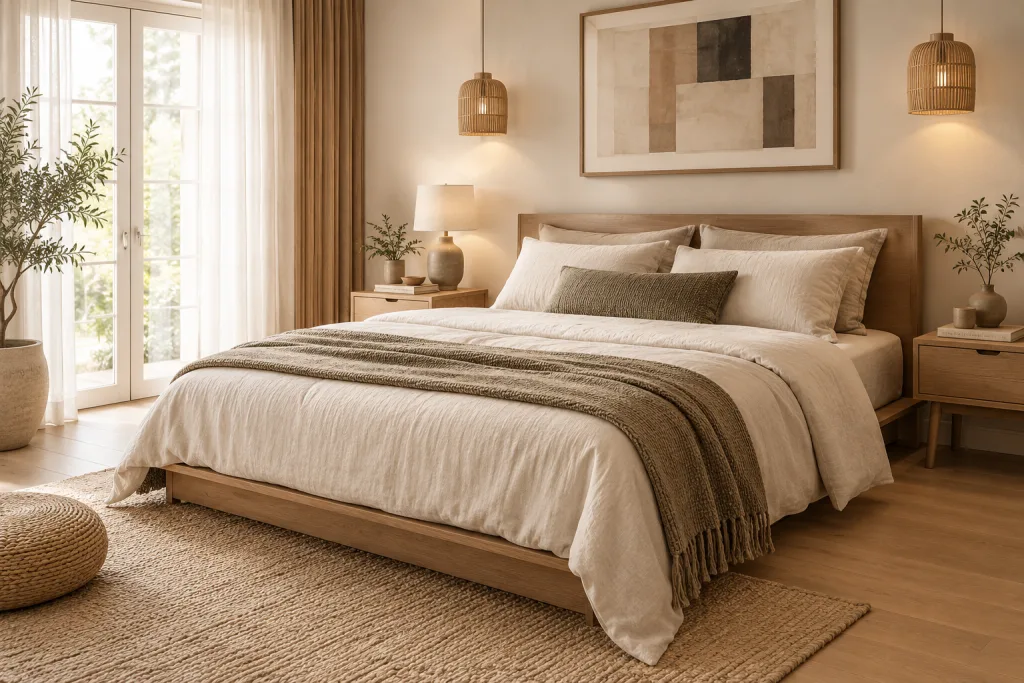
Build a Warm Color Palette
Start with warm white, sand, or taupe for the main colors. Introduce muted sage, clay, or charcoal through one accent to add depth without overpowering the space.

Choose Functional Bedside Furniture
Select a compact wooden nightstand with a drawer or open shelf for everyday essentials. A practical design keeps bedside items accessible without taking up unnecessary floor space.

Soften the Room With Pendant Lighting
Choose a paper-style or fabric-shade pendant to create gentle ambient light. Check its size, ceiling height, and installation requirements to ensure it suits your bedroom.

Pick a warm bulb too. Energy Trust of Oregon says people usually prefer about 2700K for bedrooms, where they want a relaxing mood.
Create a Focal Point With Artwork
Hang one nature-inspired print, abstract painting, or understated artwork above the bed. Choose a piece that complements the room’s colors rather than competing with other decorative features.
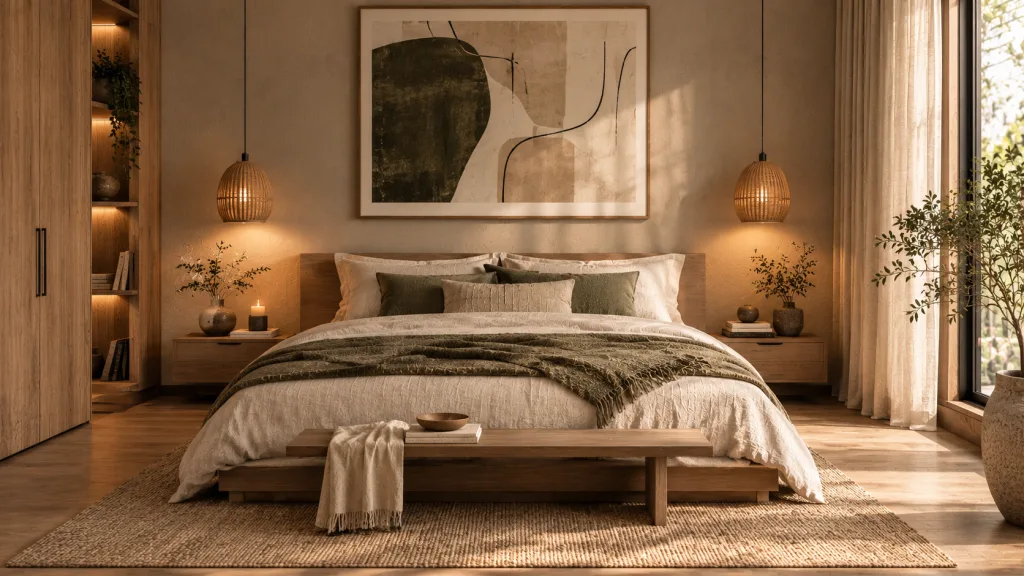
Let Wood Grain Add Character
Choose furniture with visible grain, subtle knots, or a matte finish. Pair compatible wood tones across the bed frame and nightstand to create a cohesive, organic look.

Add a Soft, Textured Rug
Place a wool rug or suitable natural-fiber blend beside or beneath the bed. It adds comfort underfoot and introduces texture while helping define the sleeping area.

Frame Windows With Simple Curtains
Use linen or cotton curtains in a neutral shade to soften the windows and filter daylight. Choose a lined option when you need greater privacy or stronger light control.
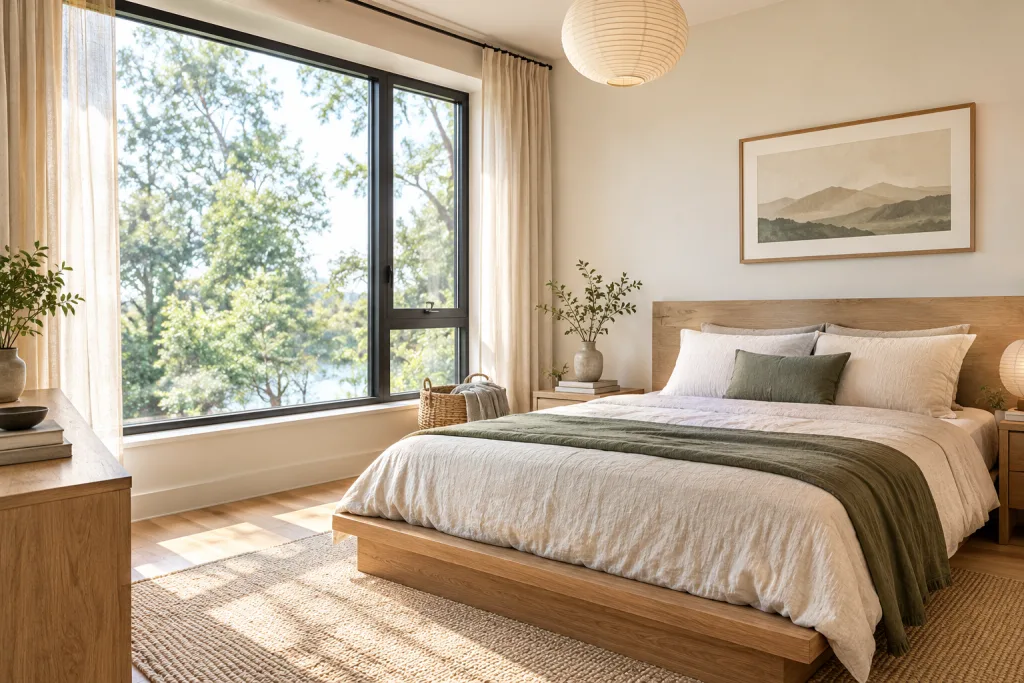
Introduce Greenery Thoughtfully
Add an indoor plant suited to the room’s natural light and your care routine. Its organic shape brings a fresh accent without requiring several extra decorative pieces.
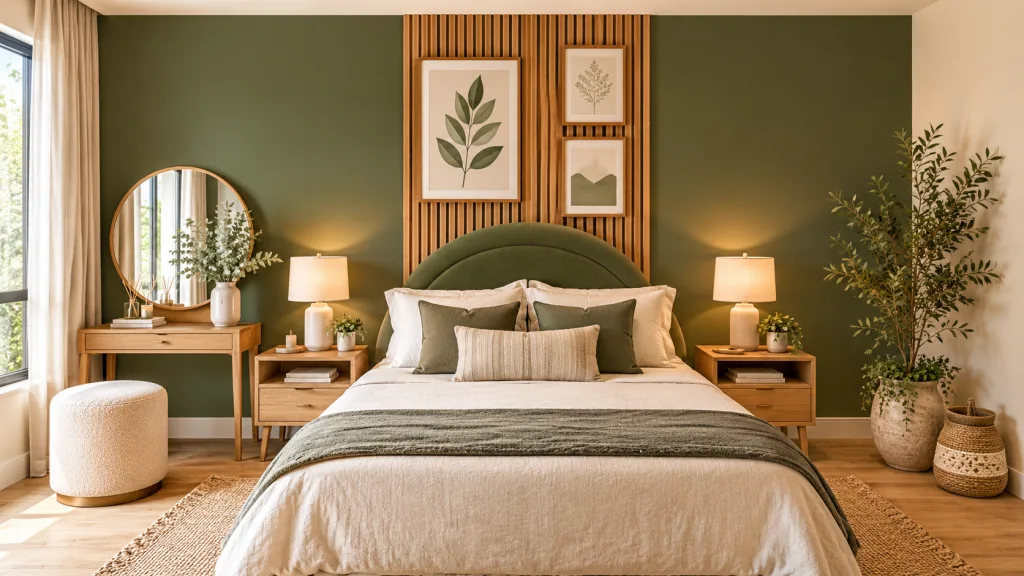
Keep Belongings Out of Sight
Use a streamlined wardrobe, drawer unit, or storage bed to organize clothing and personal items. Choose storage that meets your needs before adding extra furniture to the room.

Finish With Handmade Ceramic Pieces
Display a handmade ceramic vase or sculptural bowl on a shelf or nightstand. A piece with a tactile finish adds subtle personality without distracting from the bedroom’s overall design.

Source:@vibelicioushome
Best Japandi Bedroom Color Combinations
The right Japandi bedroom colors balance warmth, simplicity, and natural texture. Consider these four neutral and earthy bedroom palettes to find a combination that suits your space.
- Warm neutral: Cream, oatmeal, and light oak create a soft, airy look.
- Earthy tones: Sand, muted clay, and medium wood add warmth and depth.
- Soft green: Warm white, sage green, and natural oak bring a subtle connection to nature.
- High contrast: Beige, walnut, and charcoal create a refined, modern finish.
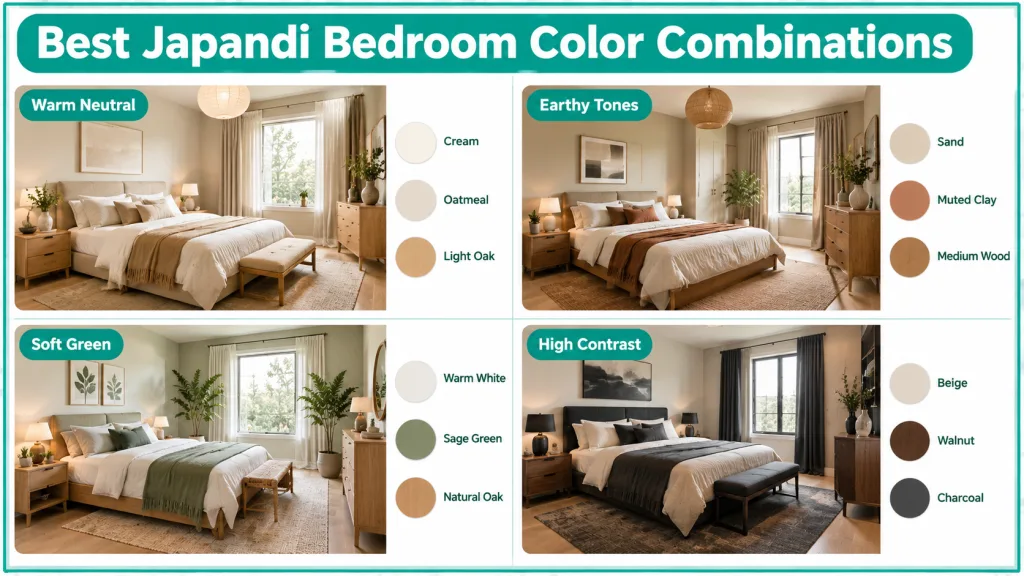
Test paint samples in both natural daylight and artificial lighting before choosing your final palette.
Japandi Bedroom Materials and Finishes
Japandi bedroom materials add texture, warmth, and visual balance. Compare these common options by where they work best, and check care requirements and prices before buying.
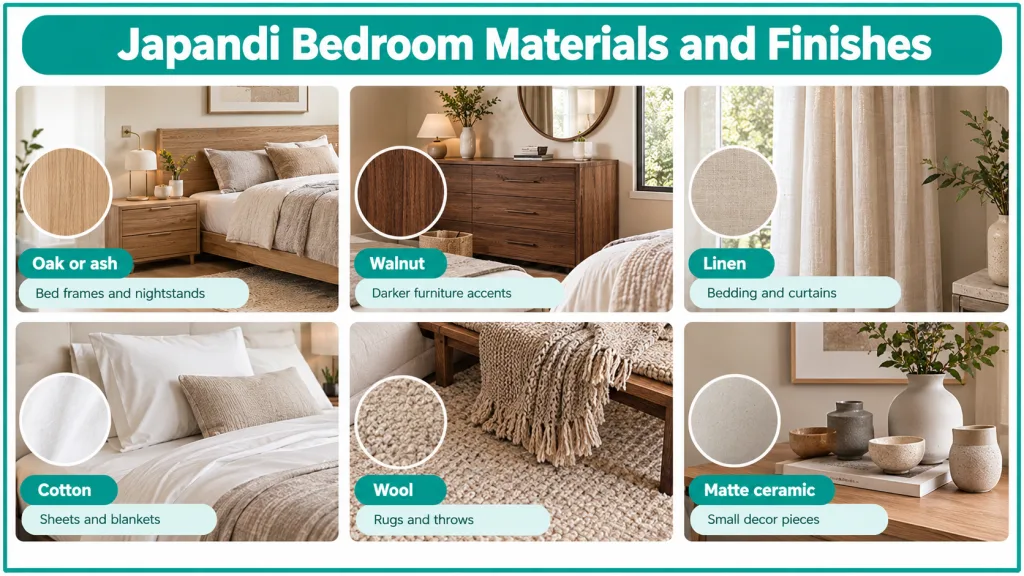
Natural materials vary in durability, upkeep, and price. Check cleaning instructions and finish requirements to choose options that suit your lifestyle and budget.
Japandi Bedroom Ideas for Small Rooms
A small Japandi bedroom needs thoughtful planning to balance comfort and usable space. These practical choices help create an open, functional layout without adding unnecessary furniture.
- Choose the right bed size: Leave enough room to walk comfortably around the bed.
- Use compact storage: Try a narrow nightstand or wall-mounted shelf.
- Keep floors open: Remove furniture that serves no clear purpose.
- Simplify window treatments: Choose curtains that fit neatly within the available space.
- Place mirrors thoughtfully: Improve light or support daily routines where needed.
- Measure before buying: Check furniture dimensions, drawer clearance, door swings, and walkways.
These adjustments help a minimalist small bedroom feel more practical and organized. For tested floor plans, see our 10×10 bedroom layout ideas.
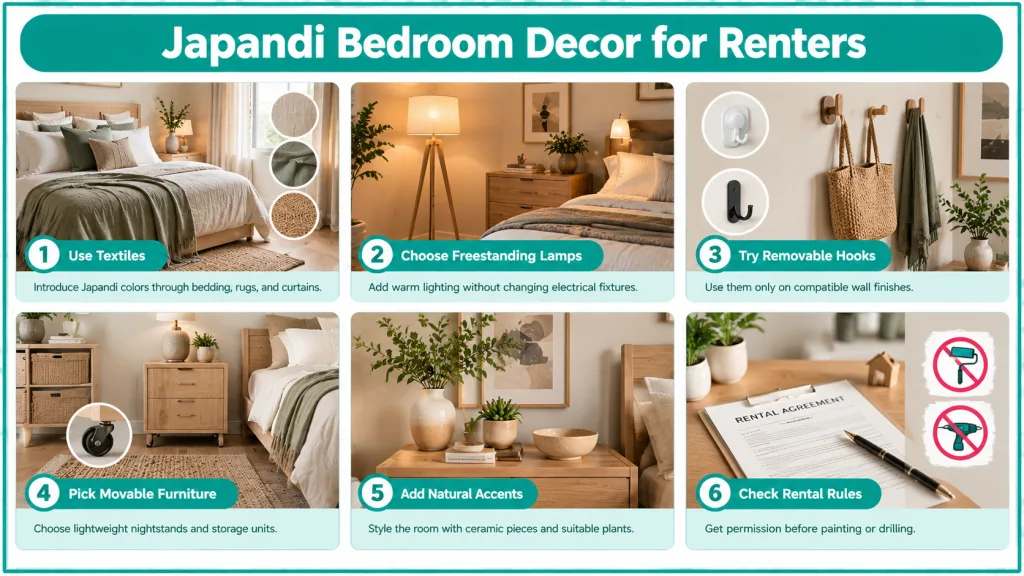
Japandi Bedroom Decor for Renters
You can create a Japandi bedroom in a rental without making permanent changes. Choose portable decor and reversible updates that suit your lease and living space.
How Much Does Japandi Bedroom Decor Cost?
The cost of Japandi bedroom decor depends on your room size, existing furniture, and material choices. You can create the look on a small budget or invest in a more complete makeover.
| Budget Area | What Affects the Cost |
| Bed frame | Material, size, and construction |
| Bedding | Fabric quality and set size |
| Lighting | Fixture type and installation |
| Rugs | Size, material, and craftsmanship |
| Storage | Ready-made or custom furniture |
| Decor | Artwork and handmade accessories |
Low budget: Reuse furniture and update bedding. Mid-range: Replace one major piece and improve lighting. Higher budget: Invest in a new bed frame, custom storage, or premium materials. Include delivery, assembly, and installation in your budget.
Common Japandi Bedroom Decorating Mistakes
Small design mistakes can make a Japandi bedroom feel unbalanced or less functional. Watch out for these common problems:
- Too much beige: The room may look flat without visual contrast.
- Oversized furniture: Bulky pieces can restrict movement.
- Matching furniture sets: Identical finishes and proportions may make the room feel predictable.
- Overfilled shelves: Too many objects distract from the overall design.
- Harsh lighting: Bright, cool light can make the space feel less inviting.
- Unnecessary decor: Objects without a clear purpose can create visual clutter.
How to Plan a Japandi Bedroom
Follow these steps to organize your project before buying furniture or decor.
- Measure the room, including doors and windows.
- Plan the bed placement and traffic flow. Our Feng Shui bedroom layout guide can help you find a calm bed position.
- Choose your main color palette.
- Identify furniture you can reuse.
- Set a realistic decorating budget.
- Select essential furniture based on room size.
- Plan lighting and textiles.
- Add a few useful finishing touches.
Final Thoughts
Creating a Japandi bedroom does not require a complete makeover. Start with one meaningful change, work with what you already have, and let your daily needs guide your choices.
A thoughtful approach helps you build a bedroom that feels personal, works for your lifestyle, and stays practical over time.
Frequently Asked Questions
What colors work best in a Japandi bedroom?
Warm white, cream, beige, oatmeal, and taupe work well as base colors. Sage green, muted clay, and charcoal can add subtle contrast.
How do you make a small bedroom look Japandi?
Choose appropriately sized furniture, keep walkways clear, use compact storage, and limit unnecessary decorations. A well-planned layout helps the room feel more open and functional.
Is Japandi bedroom decor expensive?
No. You can create a Japandi bedroom on different budgets by reusing furniture, updating bedding, and adding a few carefully chosen pieces. Costs increase when you replace major furniture or choose custom finishes.
What materials are common in Japandi bedrooms?
Common materials include oak, ash, walnut, linen, cotton, wool, and ceramic. These materials add natural texture and warmth while supporting the style’s simple appearance.
How can renters create a Japandi bedroom?
Renters can use neutral bedding, rugs, freestanding lamps, movable furniture, and removable wall hooks where suitable. Check your lease before painting, drilling, or making permanent changes.
What is the difference between Japandi and Scandinavian bedroom style?
Scandinavian bedrooms often emphasize light colors, comfort, and practical design. Japandi combines these qualities with Japanese minimalism, restrained decoration, and a stronger focus on balance and simplicity.
How do you keep a Japandi bedroom from looking plain?
Introduce contrast through wood finishes, layered fabrics, subtle artwork, and varied textures. A few carefully chosen details add depth without overwhelming the room.