A Feng Shui bedroom layout arranges furniture to support rest, clear movement, and visual balance. The goal is a room that feels settled and calm, not just tidy. Small changes — how the bed sits, where the dresser goes, how much open space stays clear — shape how the room feels every day.
The best Feng Shui bedroom layout places the bed in a commanding position, with a solid wall behind the headboard, a clear view of the door, and enough space to move around the bed on both sides.
What Is a Feng Shui Bedroom Layout
A Feng Shui bedroom layout applies traditional Chinese design principles to how you arrange furniture, space, and light in a sleeping room. It starts with bed placement — where the bed sits relative to the door, the windows, and the walls.
From there, it covers how furniture distributes across the room, how movement flows between pieces, and how the overall space feels to move through and rest in.

The practice treats the bedroom as a room for rest first. Every layout decision follows from that priority.
What Makes a Good Feng Shui Bedroom Layout
| Principle | What It Means |
| Command position | See the door from the bed without lying directly in the doorway line |
| Solid backing | Keep the headboard against a stable wall with no window directly behind it |
| Clear movement | Leave usable routes around the bed and between all furniture |
| Visual balance | Distribute furniture across the room rather than crowding one side |
| Calm setting | Reduce clutter and visual distractions throughout the room |
These principles introduce the framework. Each one appears in a specific layout scenario in the section below.
12 Feng Shui Bedroom Layout Ideas
Each layout below covers a specific room situation, not just a general rule. The goal is a practical starting point for real rooms with real constraints.
Command Position Bedroom
Place the bed so you can see the bedroom door from the pillow, but keep the bed out of the direct line of the doorway. Put the headboard against a solid wall.

This is the starting point for most Feng Shui bedroom arrangements. It also gives the room a clear focal point and a stable furniture anchor.
Bed Centered on a Solid Wall
Center the bed on the longest unbroken wall in the room. Leave matching space on both sides and place nightstands at equal height. This works well in medium and large bedrooms.
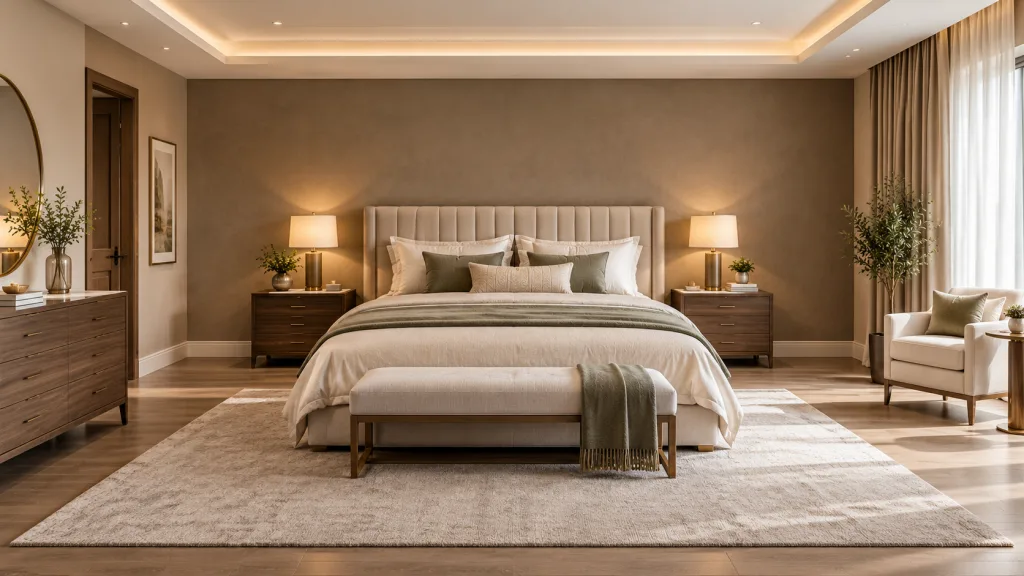
The centered position gives the room visual balance without adding extra furniture to fill the space.
Small Bedroom Layout
In a small room, give the bed the best wall and work around it. Use compact nightstands and wall-mounted storage rather than large floor pieces. Keep the main route through the room clear.
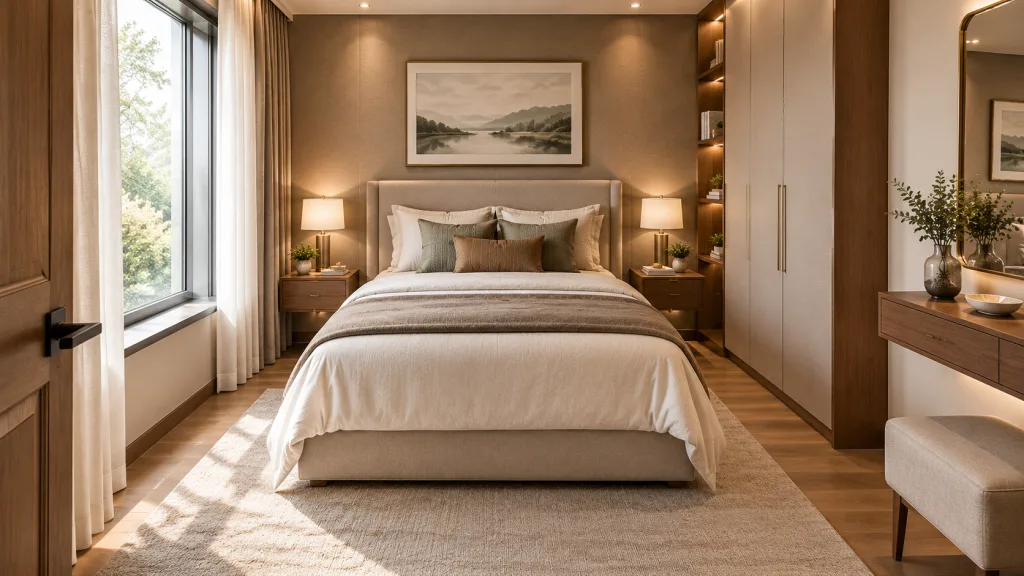
Good Feng Shui in a small room does not require filling every corner. It requires keeping the most used areas open and uncluttered.
Narrow Bedroom Layout
In a narrow room, place the bed along the long wall to keep circulation open down the center. Check that the wardrobe and dresser doors open fully before fixing the bed position.
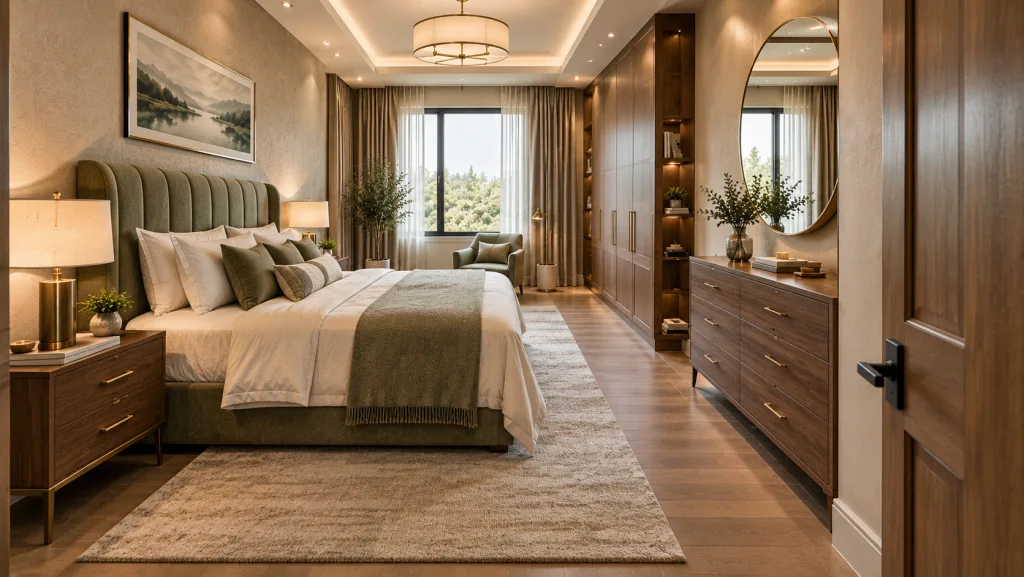
Give the headboard a stable backing and keep the foot of the bed away from the direct doorway path where space permits.
Bedroom With a Window Behind the Bed
A window directly behind the bed is not the preferred position in Feng Shui. If no other wall is available, use a solid headboard that reaches above the windowsill and fit heavy curtains to reduce the sense of exposure. Check drafts and light levels before deciding this is the only option.

Bedroom With a Door Opposite the Bed
When the door faces the foot of the bed directly, shift the bed to one side if the bed can move. The goal is to reduce the direct alignment while keeping the entrance in sightline from the pillow.

If the room does not allow a shift, a solid footboard or a low bench at the foot of the bed creates a visual break between the sleeping area and the doorway.
Bedroom With Two Doors
Identify the main entrance first. Place the bed on a wall with no window or door, with the entrance remaining visible from the pillow. Keep the bed out of the route between both doors.

Position other furniture so the secondary door stays clear and easy to reach without crossing the bed area.
Bedroom With an Ensuite Bathroom
Keep the bed out of direct line with the bathroom door. Feng Shui practice commonly suggests keeping the bathroom door closed, which also supports ventilation and privacy.

Check air quality and moisture levels near the bathroom wall before finalizing the bed position — these practical factors matter as much as door alignment when placing the bed close to a wet room.
Balanced Two-Nightstand Layout
Place a nightstand on each side of the bed. They do not need to match exactly, but similar height and scale create enough visual balance for most rooms.

Both sides should stay clear and easy to reach — usable surfaces and open access on each side make the arrangement practical for everyday use as well as visually settled.
Bedroom With a Dresser
Place the dresser on a wall where the drawers open without blocking the circulation through the room. If the dresser has a mirror, check that it does not reflect the bed directly.

Many Feng Shui sources flag mirrors that reflect the bed as a placement to avoid. The concern is that a reflective surface opposite the sleeper adds visual activity to a space meant for rest.
Bedroom With a Desk
If a desk must share the bedroom, keep it visually separate from the sleeping area. Do not place it directly beside the bed. Face the screen away from the bed.

Feng Shui practice treats work activity and rest as opposing uses. The more clearly the desk sits apart from the sleeping zone, the less the two uses interfere with each other.
Large Primary Bedroom
In a large bedroom, define the sleeping zone first before placing anything else. Keep the bed against a stable backing in the command position and arrange the seating, dressing, and storage areas in separate zones away from it.
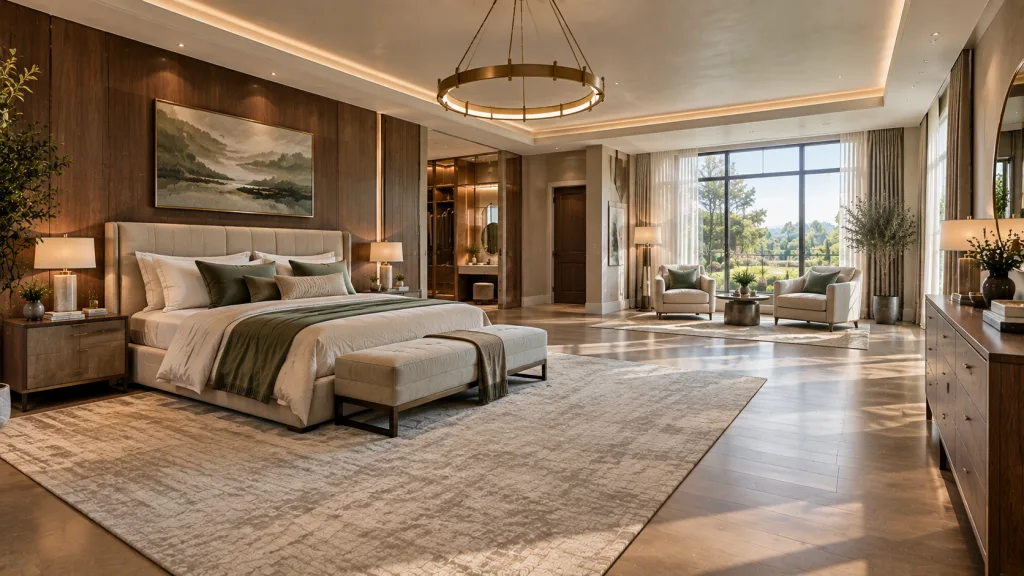
Match furniture scale to the room size. Large empty areas do not need filling. Clear circulation space is part of what makes a large bedroom feel considered rather than cluttered.
Feng Shui Bedroom Layout by Room Shape
| Room Shape | Main Planning Focus |
| Square | Center the bed on the strongest wall and balance furniture across all sides |
| Rectangle | Protect the main route along the long axis of the room |
| Narrow | Place the bed along the long wall and keep the center clear |
| L-shaped | Define the sleeping zone in the main section and use the alcove for storage or dressing |
| Small | Give the bed the best wall and remove any furniture that does not serve a regular purpose |
Feng Shui Bedroom Dimensions and Clearances
These are practical planning checks. Feng Shui positioning and standard building clearances are different things. Use both when planning.
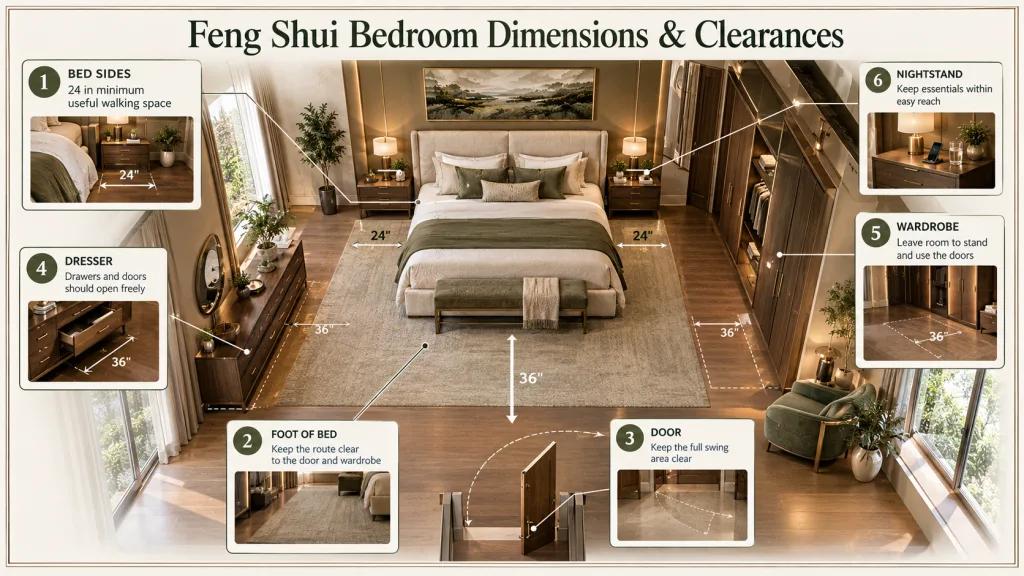
For a full guide on bedroom clearances and furniture positioning, the 10×10 bedroom layout guide on MansionsRadar covers standard measurements and practical layouts for rooms of varying sizes.
How to Plan a Feng Shui Bedroom Layout
- Measure the room, including length, width, ceiling height, and door and window positions
- Mark every door and window on a simple floor plan before moving anything
- Find the strongest wall — unbroken, no window, no door — for the headboard
- Position the bed so the door stays visible from the pillow
- Check the sightline from the pillow before finalizing the bed position
- Place nightstands on both sides of the bed at a matching height
- Add the dresser on a wall where drawers open freely and the mirror does not face the bed
- Position remaining storage where it does not block any route through the room
- Walk every path from the door to the bed, wardrobe, and bathroom before fixing positions
- Review lighting and clutter last — these are the easiest things to adjust after the furniture is in place
Feng Shui Bedroom Colors and Materials
Colors
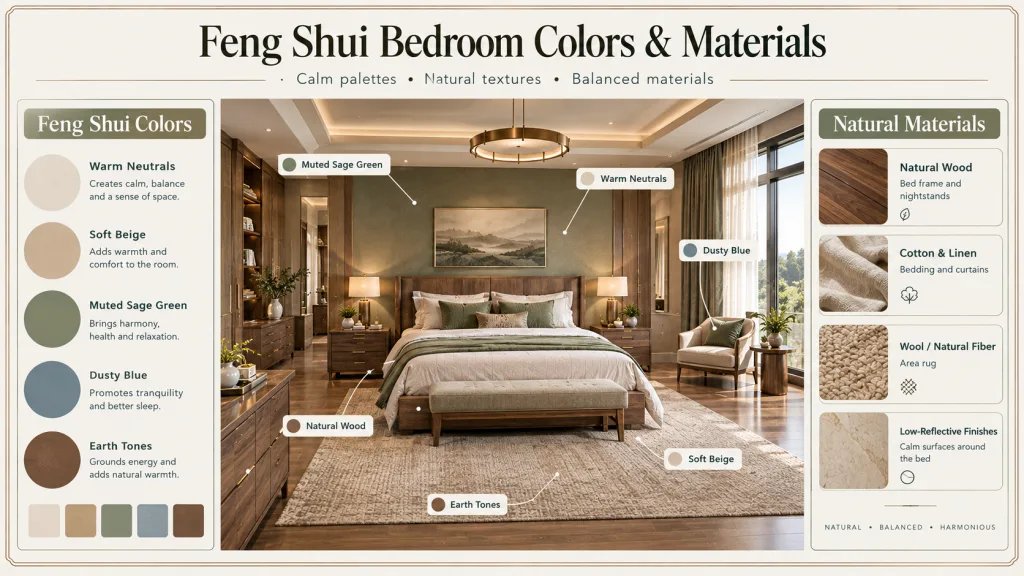
Feng Shui bedroom practice leans toward quieter, softer palettes rather than bold or saturated tones. Common choices include warm neutrals, soft beige, muted sage green, dusty blue, and earth tones. These work well for rest because they reduce visual stimulation without making the room feel flat.
Choose colors based on natural light levels in the room and existing flooring and furniture tones, not solely on a traditional Feng Shui color chart.
Materials
- Natural wood for bed frames, nightstands, and storage
- Cotton and linen for bedding — breathable and visually calm
- Wool or natural fiber rugs to add warmth underfoot
- Avoid highly reflective surfaces near the bed
Feng Shui Bedroom Lighting
- Use soft ambient lighting as the main source rather than a single bright overhead fixture
- Add a bedside lamp on each side of the bed for task lighting and visual balance
- Avoid harsh overhead lighting directly above the bed
- Let natural daylight in during the day and control it with curtains at night
- Keep screens away from the direct line of sight from the bed
Feng Shui Bedroom Storage and Clutter
- Keep the floor clear of loose items, especially along routes between furniture
- Keep nightstands simple with one lamp, one useful item, and a clear surface
- Organize drawers so the room stays settled when they are closed
- Avoid storing items under the bed where possible. Feng Shui practice treats the space under the bed as part of the sleeping environment — unused clutter there affects how the room feels
- Use closed storage for anything not in regular use
- Keep work materials out of the sleeping area entirely
Feng Shui Bedroom Mirror Placement
Mirrors in a bedroom need careful positioning because they reflect light, movement, and the room itself back into the sleeping space.
- A mirror that directly faces the bed is the most commonly flagged placement in Feng Shui. The concern is that a reflective surface opposite the sleeper adds visual activity to a space meant for rest
- A mirror on a side wall, angled away from the bed, works better than one placed directly opposite
- Wardrobe mirrors on the inside of a door reflect only when the door is open, which is one of the more practical solutions for small rooms
- Covering a mirror at night is a simple alternative when repositioning is not an option
- Check glare and reflection paths during the day before fixing any mirror position permanently
How Much Does a Feng Shui Bedroom Makeover Cost
Feng Shui does not require an expensive remodel. Many changes involve moving furniture, clearing clutter, and adjusting lighting. All of these cost nothing.
Basic cost areas when changes are needed:
- Paint for quieter, softer wall tones
- Bed frame or headboard for solid backing where one is missing
- Nightstands for visual balance on both sides of the bed
- Bedside lamps for layered soft lighting
- Curtains for light and privacy control
- Rug for warmth and zone definition
- Closed storage to replace open shelving that adds visual noise
What raises the cost:
- Custom built-in storage
- Electrical changes for new lighting circuits
- New flooring
- Custom window treatments
- Major furniture replacement across the whole room
For help budgeting and sequencing a bedroom renovation, the home improvement planning guide covers realistic project scoping and cost planning.
Feng Shui Bedroom Mistakes to Avoid
- Placing the bed directly in the doorway line so the feet point toward the door
- Blocking the main route through the room with a piece of furniture that could go elsewhere
- Crowding the room with furniture that does not serve a regular purpose
- Using oversized pieces that reduce the open floor space around the bed
- Leaving clutter under the bed or on nightstand surfaces
- Placing a mirror that reflects the bed directly
- Adding too many electronics near the sleeping area
- Ignoring door and window positions when choosing where the bed goes
What to Do When the Ideal Feng Shui Layout Is Not Possible
Most rooms have at least one constraint that makes the ideal arrangement difficult. Here are practical fixes for the most common situations.
Bed Must Sit Under a Window
Use a solid headboard that reaches above the windowsill and hang heavy curtains on either side. The headboard gives the sense of a stable backing even when the wall itself has a break.
Bed Faces the Door Directly
Shift the bed to one side if the bed can move. If it cannot, place a solid footboard or a low bench at the foot of the bed to create a visual separation between the sleeping area and the doorway.
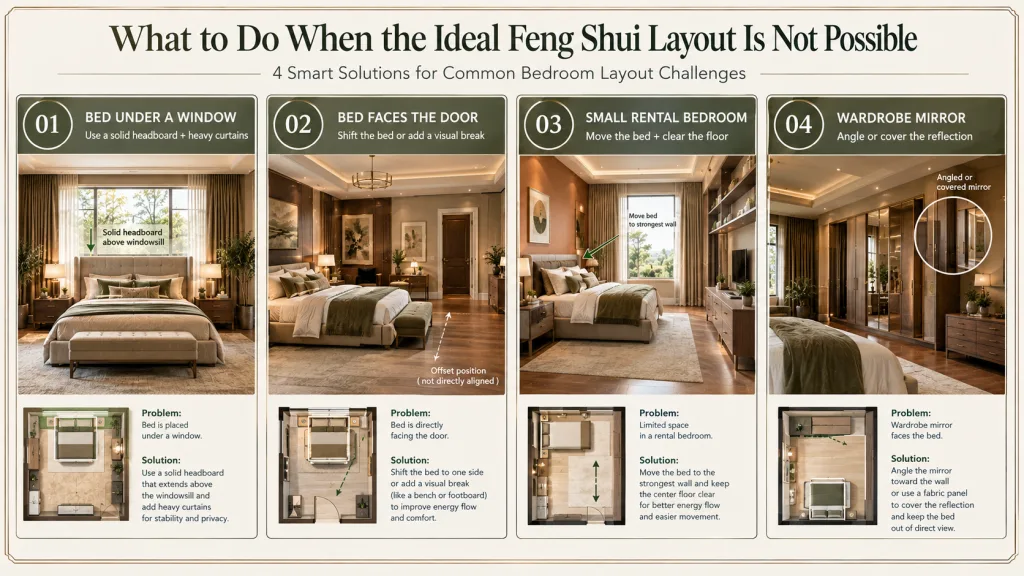
Small Rental Bedroom
Focus on the two most useful changes. Move the bed to the best available wall and clear the floor. Both cost nothing and make the biggest practical difference without any permanent changes.
Fixed Wardrobe Mirror That Faces the Bed
Angle the wardrobe door so the mirror faces the wall when closed rather than the bed. If the door is fixed, cover the mirror with a fabric panel or replace the mirror door with a solid panel door.
Feng Shui Bedroom Layout vs Regular Bedroom Layout
| Feng Shui Approach | Regular Bedroom Planning |
| Considers command position relative to the door | Focuses on function and available wall space |
| Treats door relationship as a priority | Treats door access as a practical clearance check |
| Values visual balance across the room | Uses available space based on furniture size |
| Limits visual clutter as a design principle | Prioritizes storage as needed |
| Uses traditional placement principles | Uses general design and comfort practices |
Both approaches share the same practical goals. A room that is comfortable to use, easy to move through, and settled to rest in. Feng Shui adds a layer of intention to how each placement decision gets made.
Feng Shui Bedroom Checklist
- Bed has a stable backing against an unbroken wall
- Door stays visible from the pillow
- Bed sits outside the direct doorway line
- Routes stay clear on both sides of the bed and to the wardrobe
- Mirror does not reflect the bed directly
- Storage stays organized and closed where possible
- Lighting feels soft and layered rather than a single bright source
- No work materials or electronics dominate the sleeping area
- Clutter stays off the floor and nightstand surfaces
Final Thoughts
A Feng Shui bedroom layout puts the bed in a secure, stable position with the door visible from the pillow, keeps movement routes open, distributes furniture in a balanced way, and reduces visual clutter throughout the room.
These five priorities work whether or not the room meets every traditional rule. Start with the bed, check the routes, and keep the room simple. Everything else follows from that.
Frequently Asked Questions
What is the best Feng Shui bedroom layout?
Place the bed in the command position with a stable backing, the door visible from the pillow, and clear space to move on both sides.
Where should a bed be placed in Feng Shui?
Against the strongest unbroken wall in the room, with the door visible from the pillow and at least 24 inches of space on each open side.
Should the bed face the bedroom door?
The door should stay visible from the bed, but the bed should not sit directly in the doorway line. A diagonal or offset position works better.
Can a bed go under a window?
It is not the preferred position. If no other wall is available, a solid headboard and heavy curtains reduce the sense of exposure behind the sleeper.
Where should a mirror go in a Feng Shui bedroom?
On a side wall angled away from the bed, or on the inside of a wardrobe door where it reflects only when the door is open.
What colors work best in a Feng Shui bedroom?
Warm neutrals, soft beige, muted sage green, dusty blue, and earth tones. Choose based on the room’s natural light level and existing furniture tones.
Should both sides of the bed have space?
Yes. Equal space and a nightstand on each side support both practical everyday use and visual balance across the room.
Is a TV bad Feng Shui in the bedroom?
Feng Shui practice treats screens as active elements that compete with rest. Keeping the TV out of direct sightline from the bed reduces its impact on the sleeping environment.
Can Feng Shui work in a small bedroom?
Yes. A small bedroom benefits most because the core principles — command position, clear routes, minimal clutter — directly improve how a tight space functions and feels.
Does Feng Shui guarantee better sleep?
No. Feng Shui is a traditional design practice. A well-arranged room can improve how a space feels to rest in, but it does not guarantee specific health or sleep outcomes.