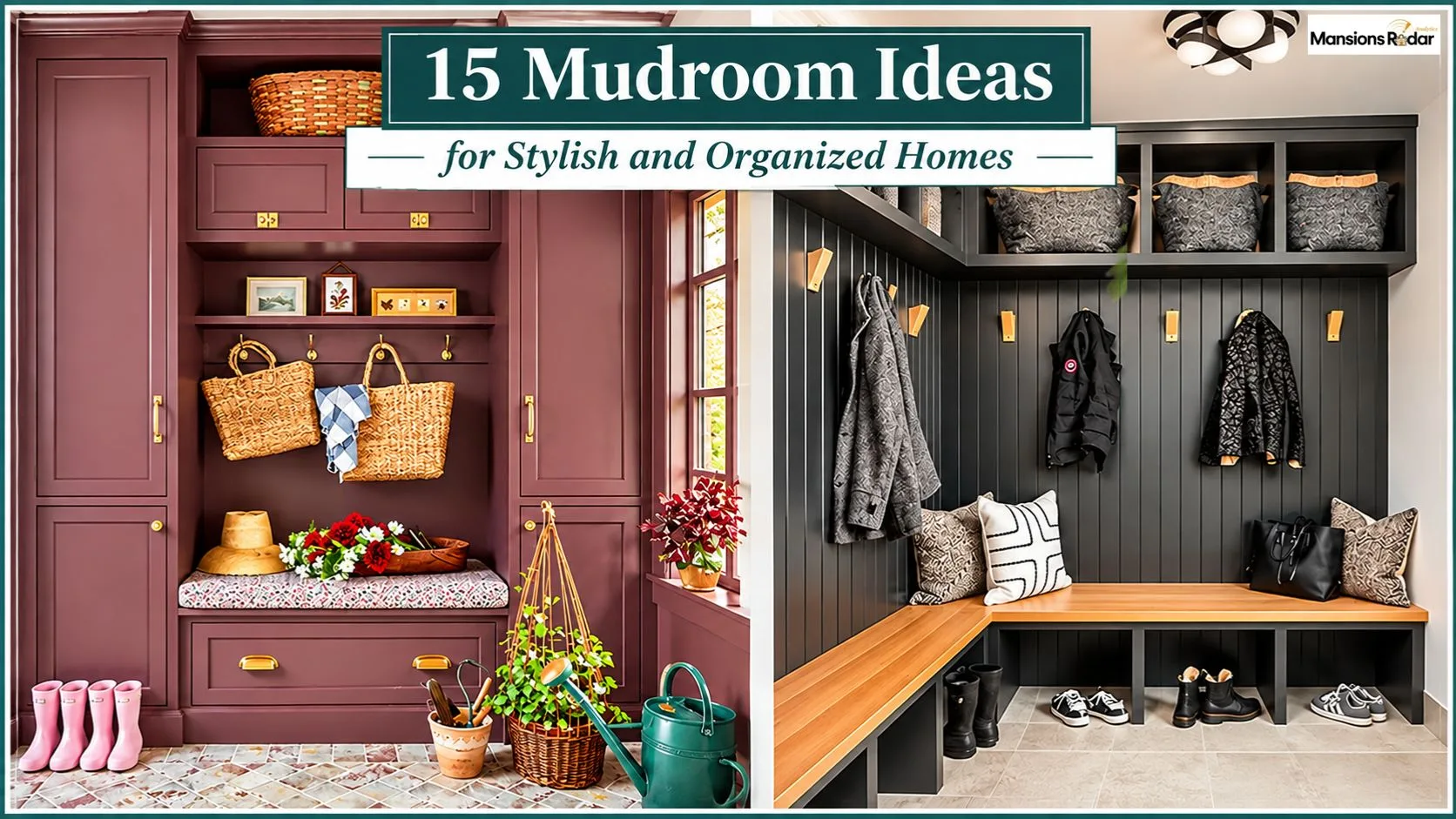
Shoes, coats, backpacks, and everyday bags can quickly clutter the entrance to your home. A well-designed mudroom provides a dedicated place for these essentials while keeping the space neat and easy to use.
Explore 15 mudroom ideas for different home sizes and layouts, from practical storage solutions to attractive decorating details. You will also find guidance on small mudroom layouts, material choices, storage planning, and common design mistakes.
What Is a Mudroom and Why Does Your Home Need One?
A mudroom is a dedicated area near an exterior entrance where you can organize shoes, coats, bags, and outdoor equipment. It helps contain dirt and moisture before they reach the main living areas. A well-planned mudroom can serve several everyday purposes:
- Shoe organization: Keep everyday footwear in one convenient place.
- Coat and bag storage: Give jackets, backpacks, and accessories designated spots.
- Dirt control: Use washable mats and easy-to-clean surfaces to manage mud and moisture.
- Family convenience: Create a practical drop zone for children, adults, and pets.

Unlike a decorative entryway, which focuses on welcoming guests, a mudroom prioritizes everyday organization and cleanup. If you want ideas for styling your home’s main entrance, explore these entryway decor ideas.
15 Mudroom Ideas for Stylish and Organized Homes
A functional mudroom needs more than a place to leave shoes and coats. The right combination of seating, storage, durable finishes, and thoughtful details can make everyday routines easier. Explore these ideas to create a mudroom that suits your home’s layout and storage needs.
1. Build a Mudroom Bench With Shoe Storage
A built-in mudroom bench creates a comfortable place to sit while putting on or removing shoes. Add drawers, baskets, or open compartments underneath to organize everyday footwear.
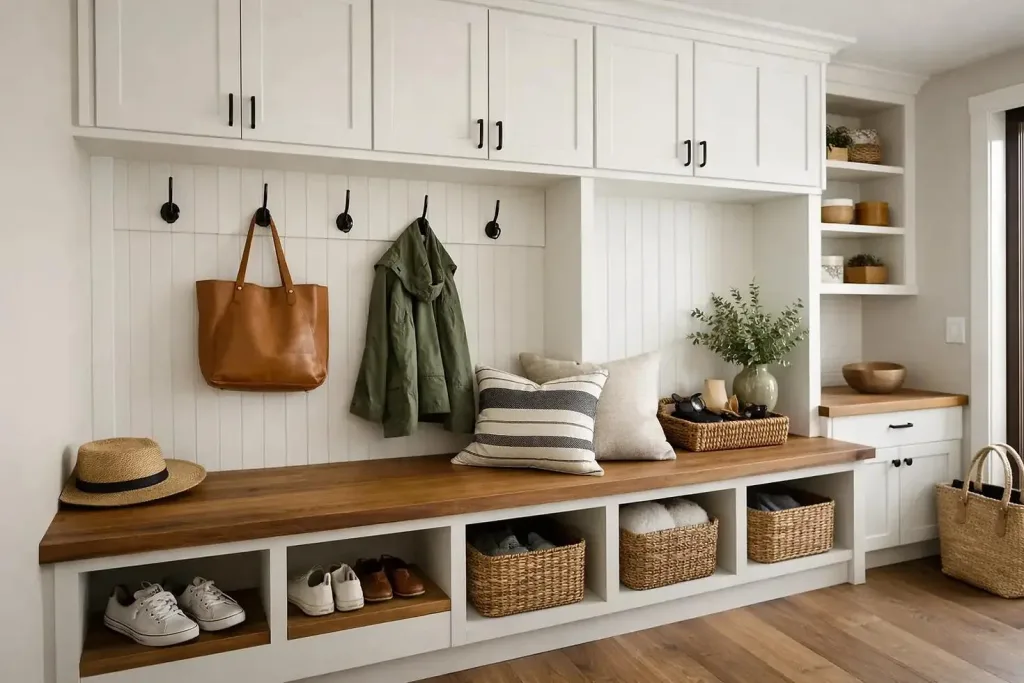
Choose a comfortable seat height and make sure the bench does not restrict the walkway.
2. Give Each Family Member a Personal Locker
Individual mudroom lockers give everyone a designated place for coats, backpacks, and personal belongings.
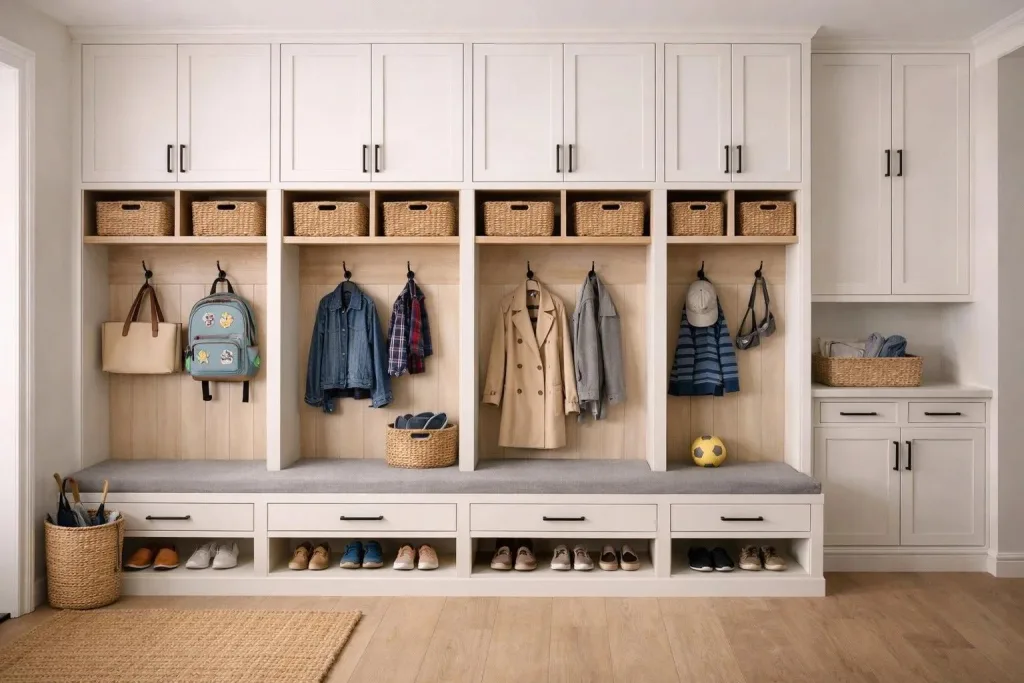
Include a hook, shelf, and lower compartment in each section to keep items organized. Use names or colors to help family members identify their spaces quickly.
3. Keep Daily Essentials in Open Cubbies
Open cubbies make frequently used shoes, bags, and accessories easy to reach. Arrange them by family member or item type to simplify daily routines. Place a removable boot tray underneath to collect dirt and water from footwear.
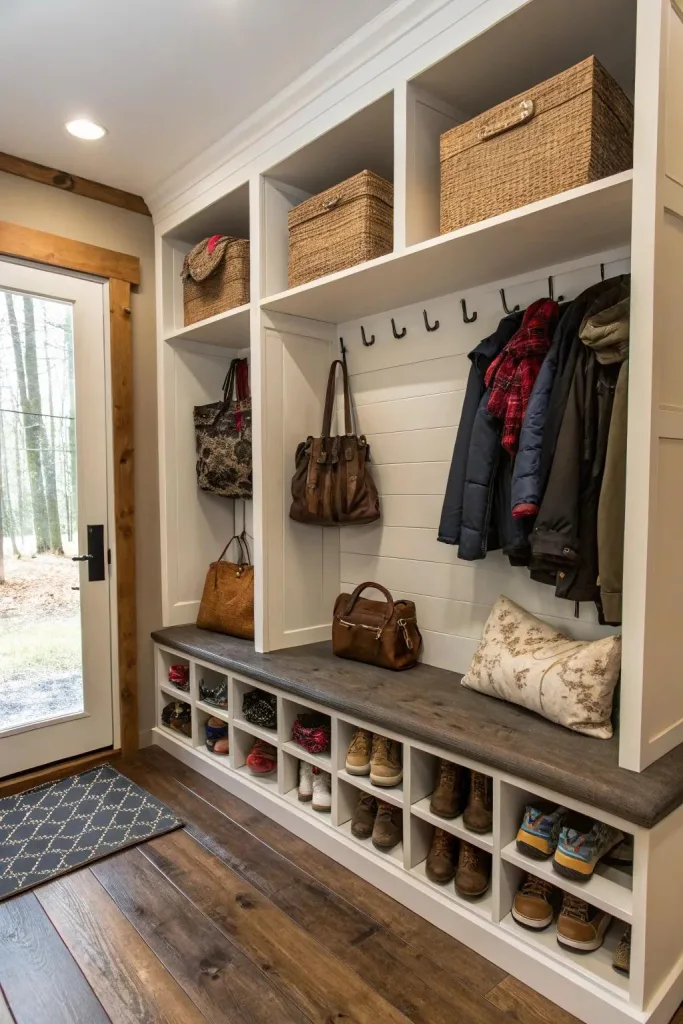
4. Add Floor-to-Ceiling Mudroom Cabinets
Tall cabinets provide enclosed storage for seasonal coats, cleaning supplies, sports equipment, and other items you do not need every day.
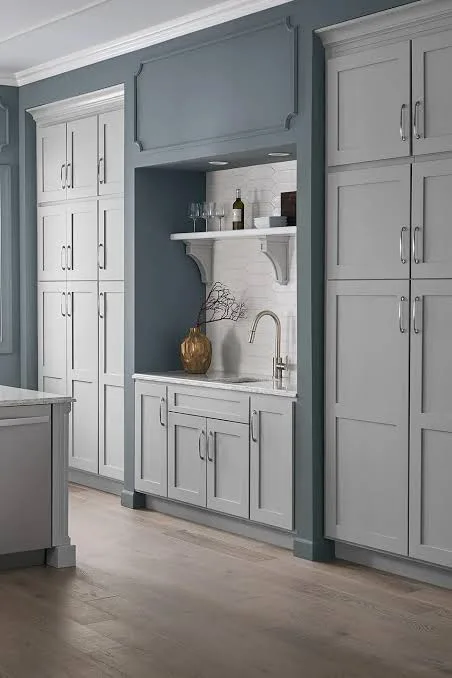
Use upper shelves for less frequently used belongings and keep daily essentials within easy reach. Choose cabinet doors that complement your home’s interior.
5. Install Wall Hooks at Different Heights
Wall hooks provide convenient hanging space for jackets, backpacks, hats, and handbags. Install them securely using wall studs or suitable anchors.
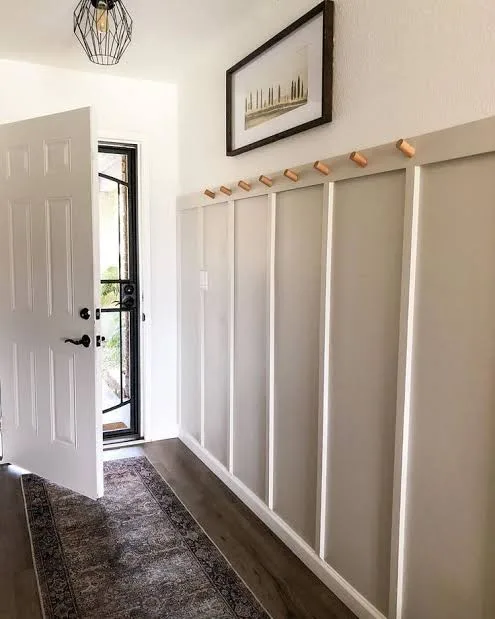
Add a lower row for children so they can hang their belongings without assistance.
6. Choose Space-Saving Shoe Storage
A slim shoe cabinet or pull-out shoe drawers can organize footwear without taking up too much room.
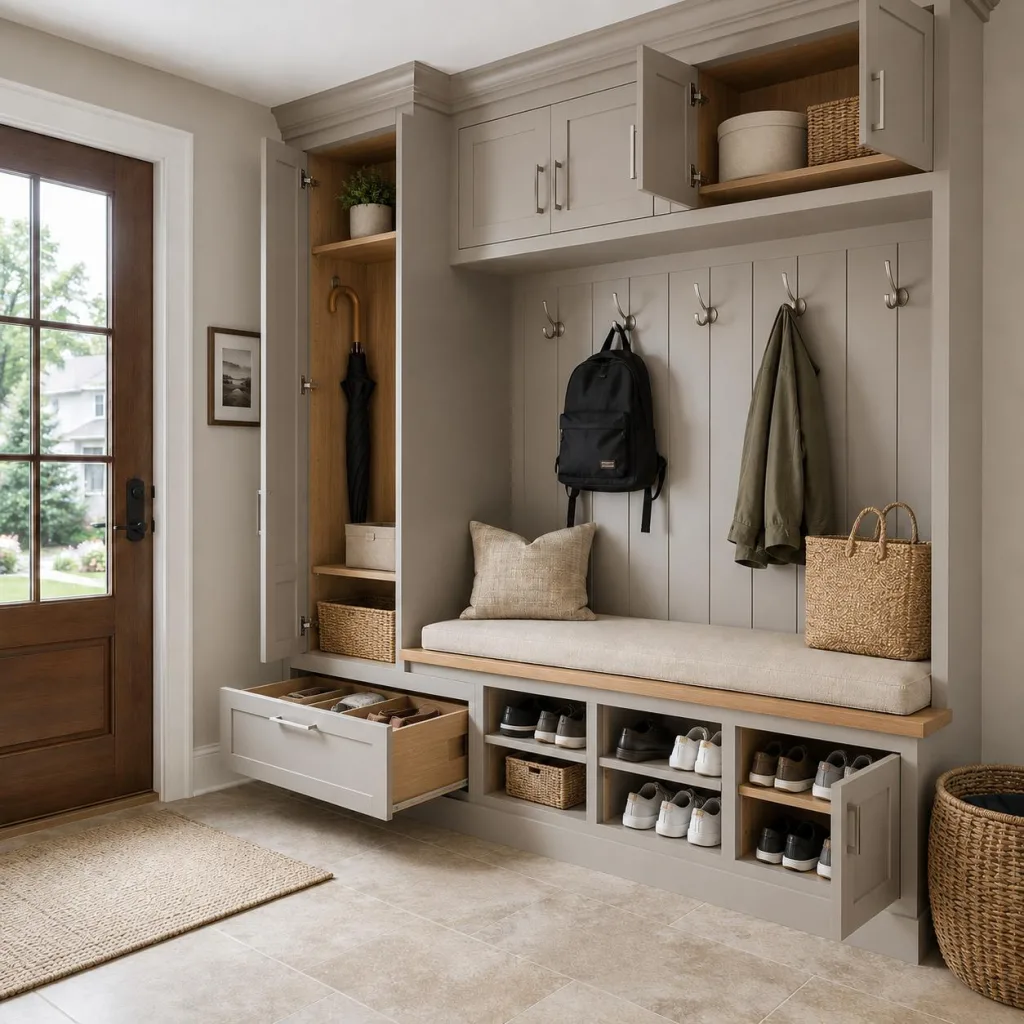
Tilt-out cabinets work particularly well in narrow mudrooms with limited floor space. Let wet shoes dry before placing them inside enclosed storage.
7. Combine a Mudroom With a Laundry Area
A combined mudroom and laundry room creates a convenient place to handle dirty clothes and everyday household tasks. Position the washer and dryer near a drop zone for outdoor clothing, and include cabinets for laundry supplies.
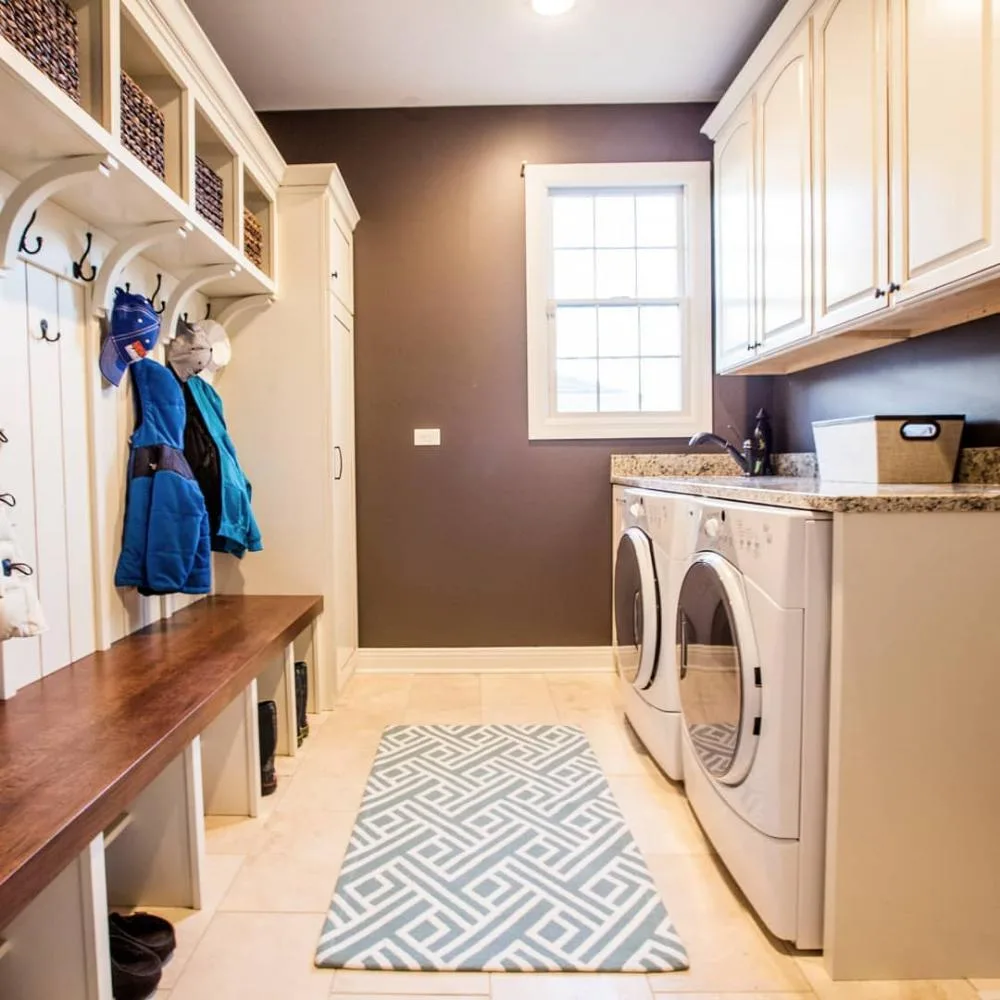
Leave enough clearance to open appliance doors and move comfortably. If you are planning a compact combined space, our 5×7 laundry room layout ideas can help you plan the available space.
8. Create a Pet Washing Station
A pet washing station makes it easier to clean muddy paws before pets enter the main living areas. Include a low washing basin, handheld sprayer, and nearby towel storage.
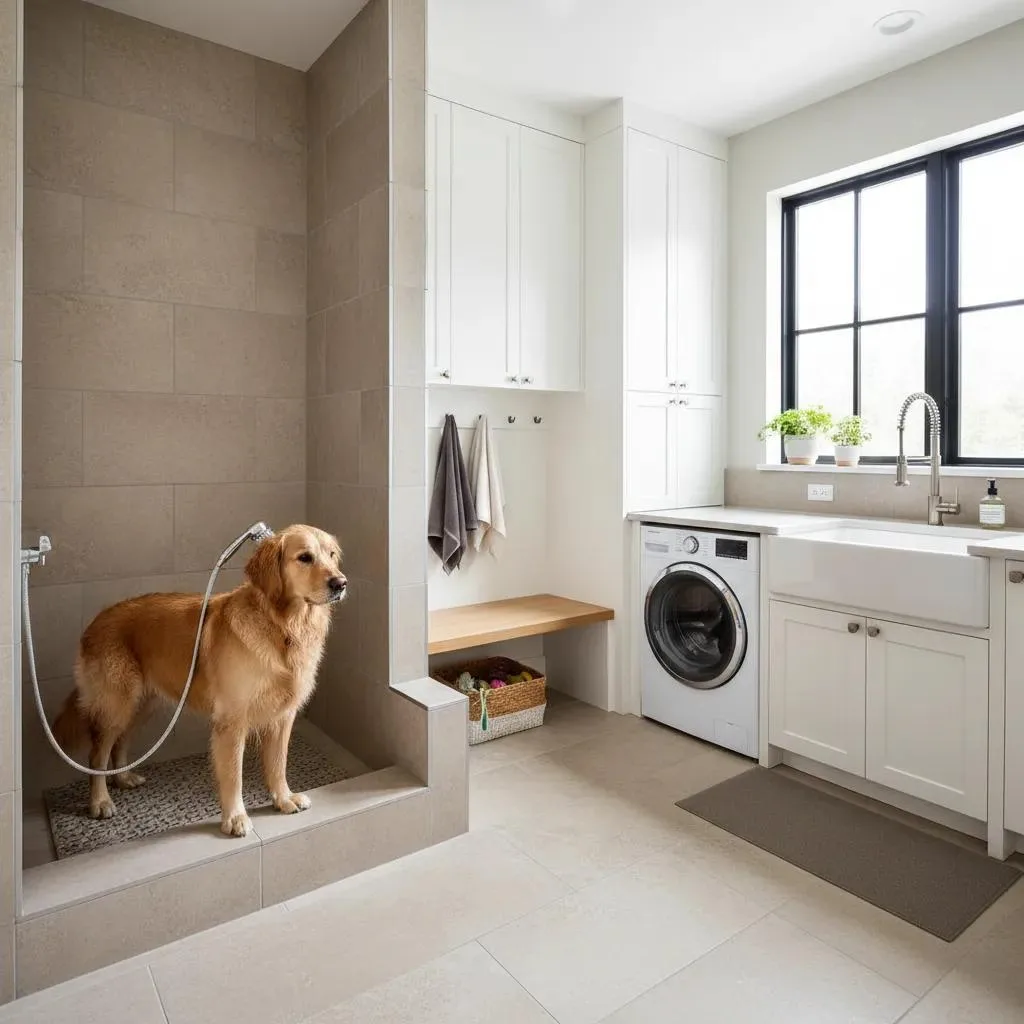
Choose water-resistant surfaces and arrange suitable drainage with a qualified plumbing professional.
9. Set Up a Family Command Center
A family command center keeps schedules and important reminders in one convenient location. Add a wall calendar, mail organizer, message board, and small key holder near the entrance.
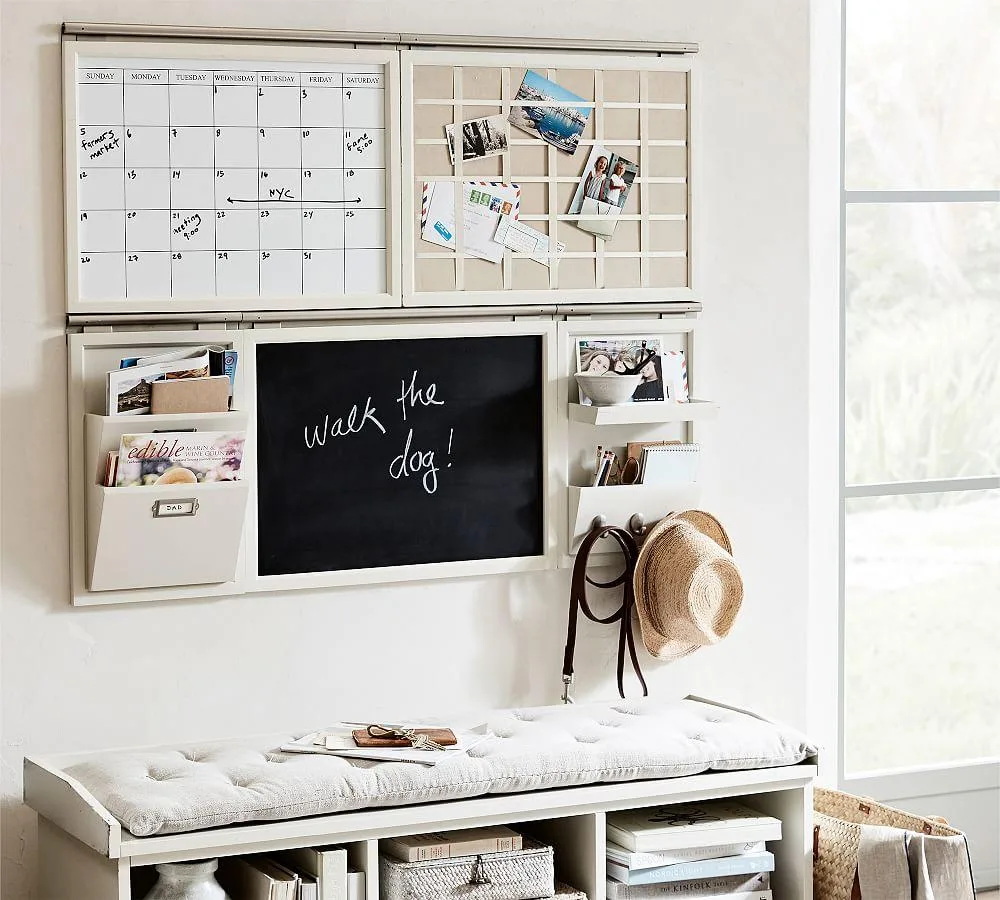
Keep current notes and frequently used documents accessible instead of allowing paperwork to pile up.
10. Organize Small Items With Woven Baskets
Woven baskets provide flexible storage for gloves, scarves, hats, pet accessories, and other small belongings.
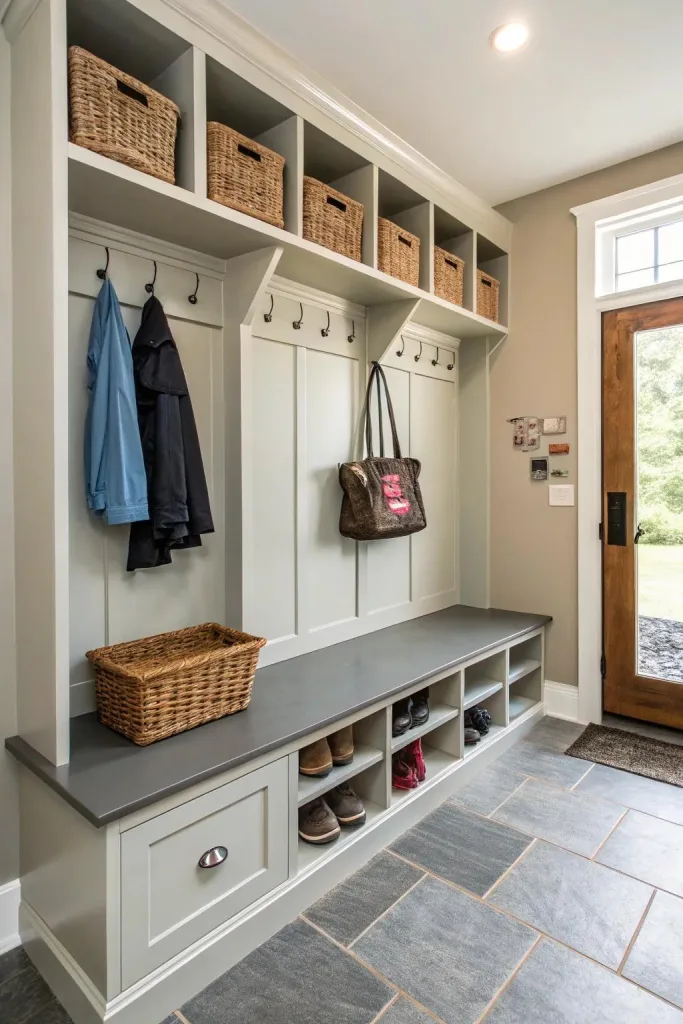
Place them inside open shelves or cubbies to keep similar items together. Choose baskets with handles and labels so family members can find and return their belongings easily.
11. Make Better Use of Vertical Wall Space
Use the full wall height to add storage without filling the floor with furniture. Install upper shelves for seasonal accessories, extra bags, and items you rarely use.
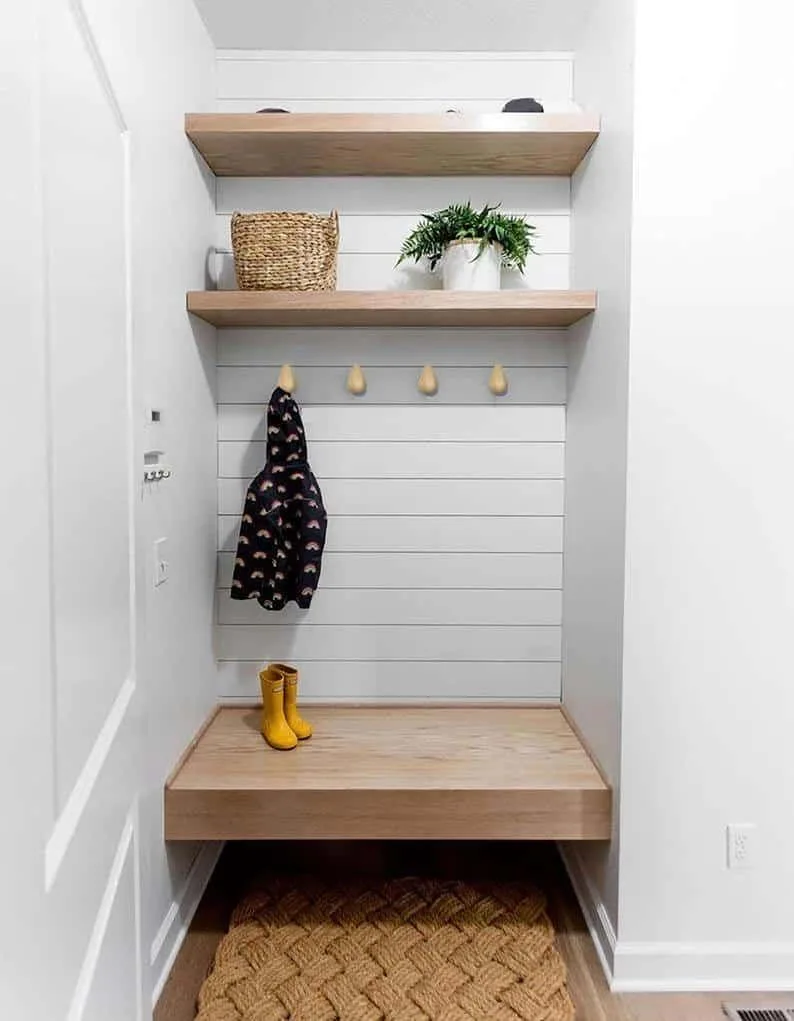
Keep heavier belongings on lower shelves and leave enough clearance for hanging coats underneath.
12. Install Easy-Clean Mudroom Flooring
Mudroom flooring should handle frequent foot traffic, dirt, and moisture. Porcelain tile, sealed concrete, and suitable waterproof flooring are practical options for busy households.
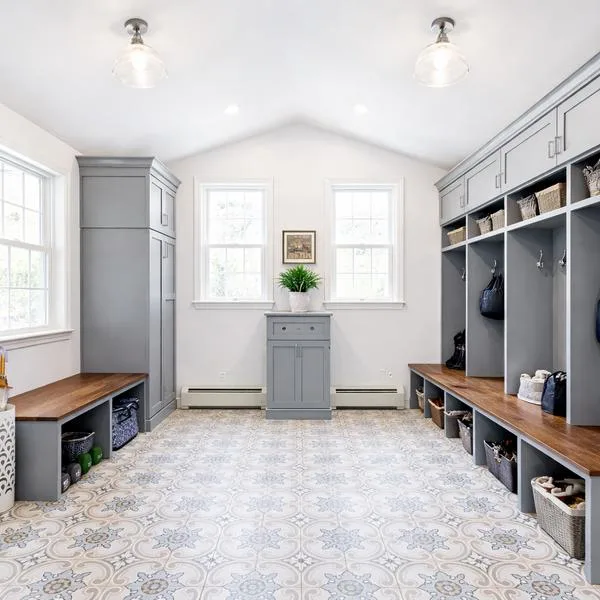
Choose a surface designed for the intended conditions and check its wet-floor slip performance. For more tile patterns and finish inspiration, explore our bathroom floor tile ideas.
13. Protect Walls With Washable Finishes
Coats, bags, shoes, and everyday activity can leave marks on mudroom walls. Use washable paint, moisture-resistant wall panels, or tile in areas that need extra protection. Select finishes that are easy to clean and follow the manufacturer’s care instructions.
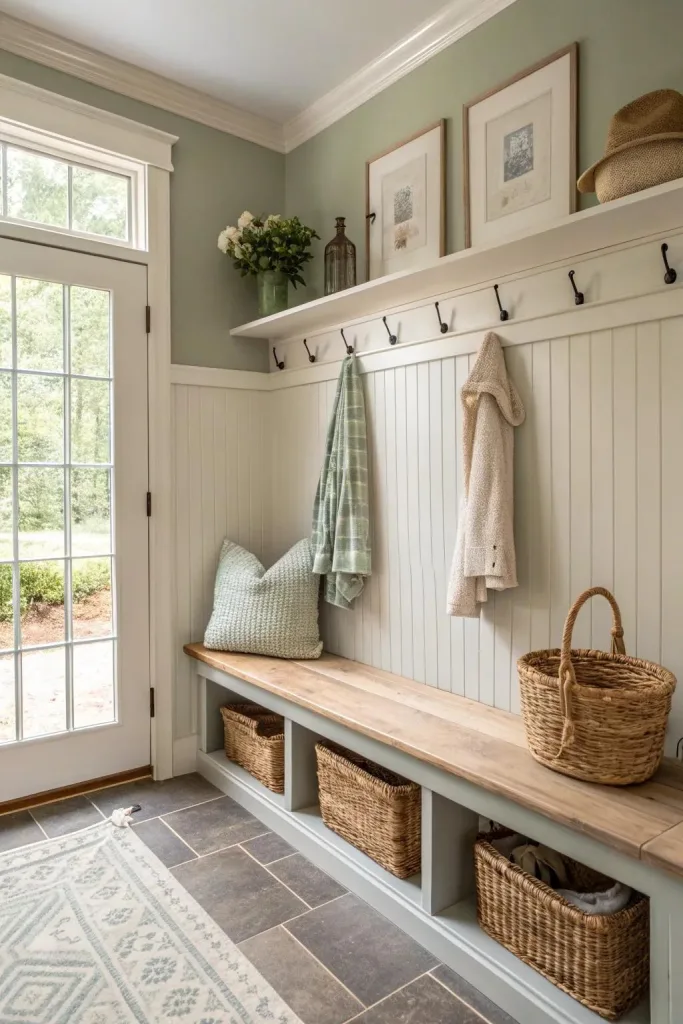
14. Choose a Warm and Natural Color Palette
Sage green, warm white, beige, and natural wood create a welcoming mudroom color scheme. Add black or brushed brass details for contrast without making the space feel busy. Test paint samples in the actual room to see how natural and artificial light affect the colors.
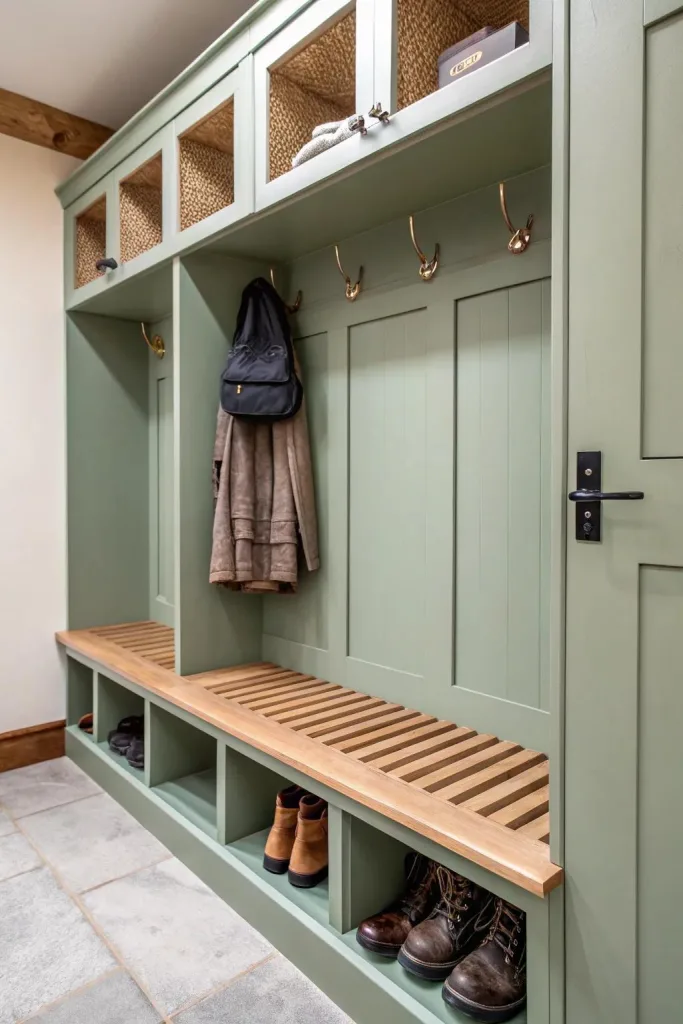
15. Bring More Natural Light Into the Mudroom
Windows and glazed exterior doors allow natural light to brighten the mudroom and make the space feel more inviting.
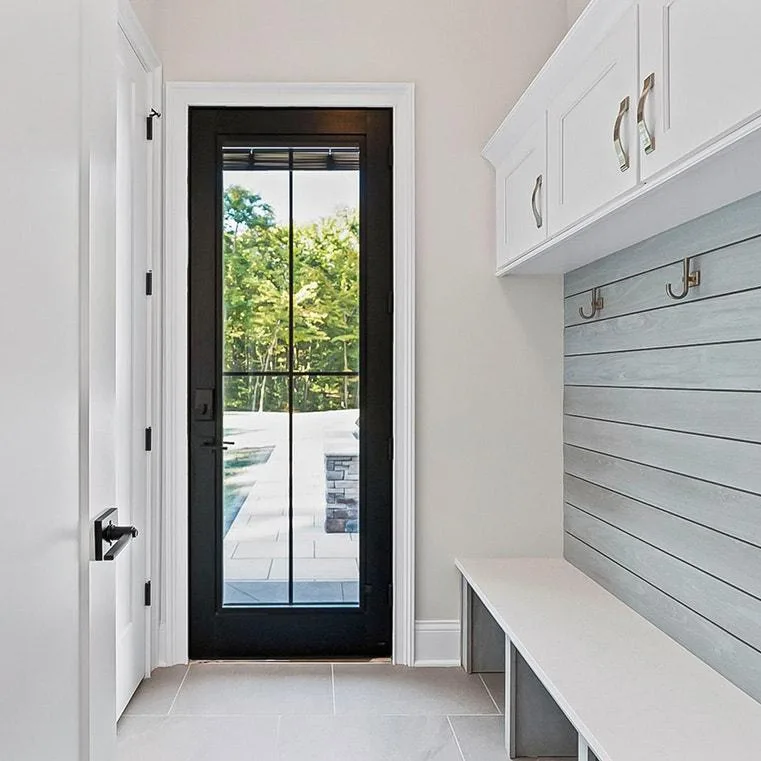
Keep window areas clear and use light wall colors to help distribute daylight. Add ceiling lights or wall fixtures to provide enough illumination after sunset.
Small Mudroom Ideas for Limited Spaces
Even a narrow hallway, small closet, or compact entrance can serve as a functional mudroom. Choose space-saving furniture and wall-mounted storage to make the most of the available area.
- Slim shoe cabinets: Store everyday footwear without using too much floor space.
- Wall-mounted hooks: Hang coats, backpacks, and bags without adding bulky furniture.
- Floating shelves: Use upper wall space for baskets and seasonal accessories.
- Narrow storage benches: Add a compact seat with hidden storage for shoes and small belongings.
- Over-door organizers: Use the back of a suitable door for lightweight accessories.
- Multifunctional furniture: Choose pieces such as storage benches that combine seating and organization.
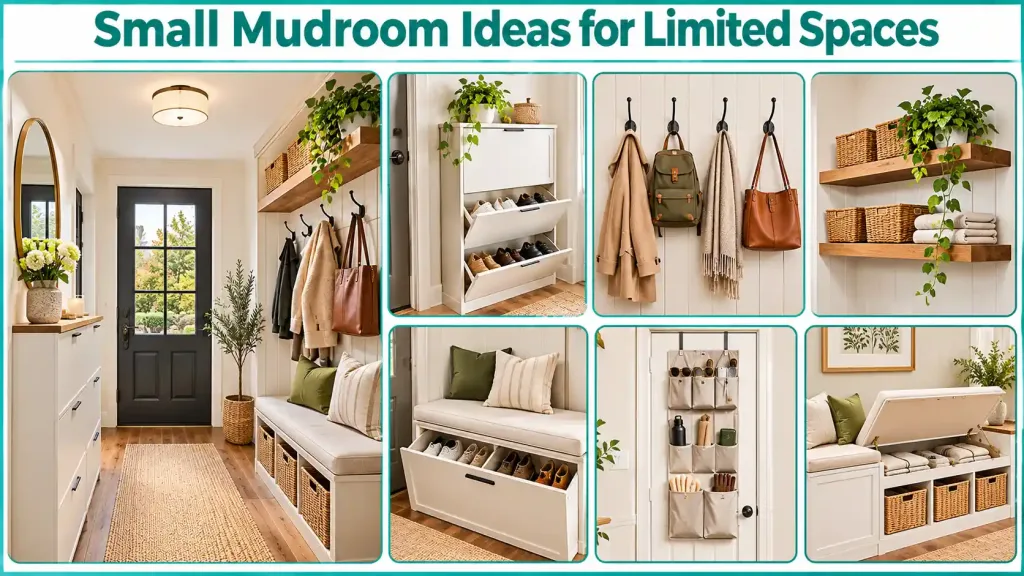
Plan the layout around a clear walking path. Aim for about 36 inches of clearance where possible, although the space needed depends on your home’s layout and local requirements.
If furniture makes the entrance difficult to navigate, choose a shallower design or move storage to the wall.
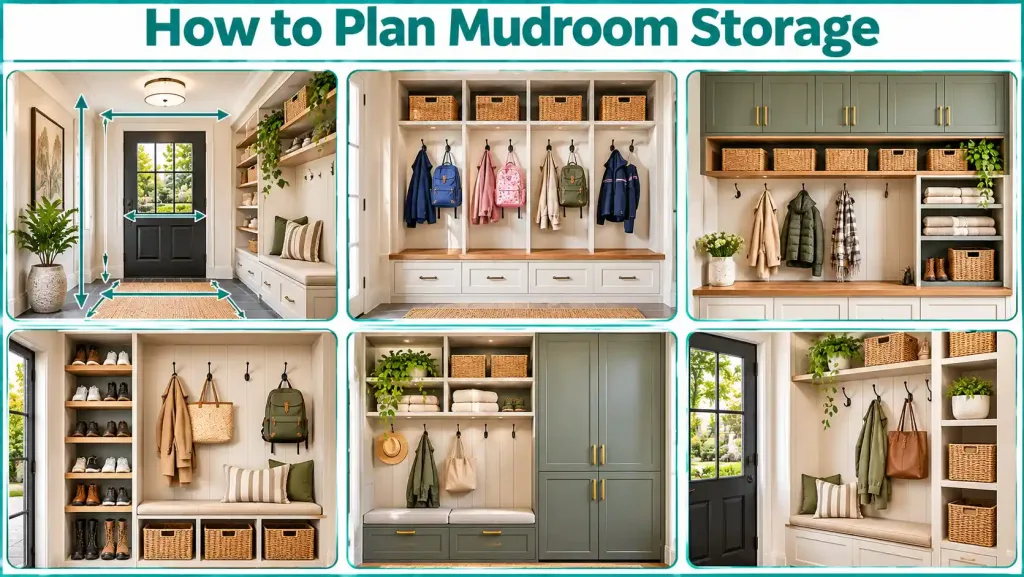
How to Plan Mudroom Storage
A well-planned mudroom keeps everyday belongings organized and makes the entrance easier to use. Before choosing cabinets, lockers, or shelves, consider who will use the space and what they need to store.
- Measure the available space: Check the wall length, room width, ceiling height, and door clearance.
- Consider household needs: Count the regular users and identify how much storage each person requires.
- Separate daily and seasonal items: Keep frequently used belongings accessible and store seasonal gear in upper cabinets or closed compartments.
- Assign storage areas: Plan dedicated places for shoes, coats, backpacks, and smaller accessories.
- Combine open and closed storage: Use hooks and cubbies for daily essentials and cabinets to conceal less attractive items.
- Keep essentials within reach: Position frequently used hooks, shelves, and compartments at convenient heights.
Mudroom Storage Dimensions to Consider
Use these general planning ranges as a starting point, then adjust them to your household’s needs:
- Individual lockers: Around 15–24 inches wide, depending on the items stored.
- Bench height: Approximately 17–19 inches for comfortable seating.
- Bench depth: Around 15–18 inches, depending on available space.
- Adult hooks: Often positioned around 60–66 inches above the floor, with lower hooks for children.
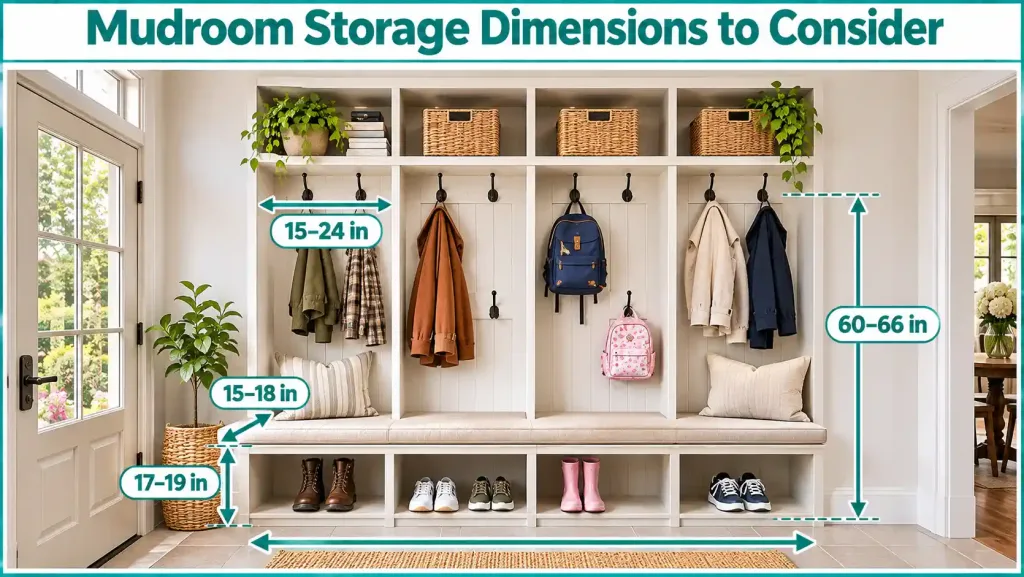
A single-wall mudroom layout also needs enough room for storage depth and comfortable movement. Before finalizing the design, compare your measurements with these mudroom dimensions and layout guide.
Best Mudroom Materials, Colors, and Flooring
Choose mudroom materials that can handle moisture, dirt, frequent cleaning, and everyday wear. Durable surfaces and easy-care finishes help keep the space functional while complementing your home’s interior style.
| Element | Suitable Choices | Why They Work |
| Flooring | Porcelain tile, sealed stone, moisture-resistant flooring | Handles regular foot traffic and is easier to clean |
| Cabinets | Painted wood, sealed natural wood | Provides practical storage with a finish that suits your interior |
| Bench | Hardwood, durable, easy-clean upholstery | Offers comfortable seating and everyday durability |
| Walls | Washable paint, moisture-resistant wall panels | Helps manage scuffs, dirt, and everyday marks |
| Colors | Sage green, warm beige, white, soft gray | Creates a calm and welcoming appearance |
| Hardware | Black, brushed brass, stainless steel, nickel | Adds contrast and a coordinated finishing detail |
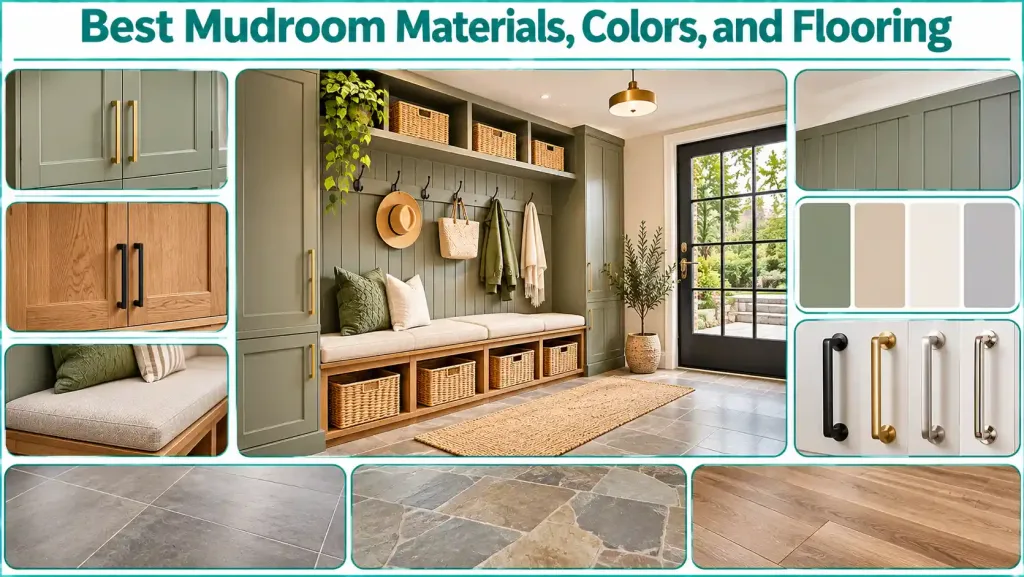
For a balanced look, combine durable flooring with warm wood finishes and a simple neutral color palette. Choose sealed or moisture-resistant surfaces where needed, especially around exterior doors and areas where wet shoes are stored.
How Much Does a Mudroom Cost?
The cost of a mudroom depends on its size, materials, storage features, and installation requirements. A simple refresh using hooks, paint, and a ready-made bench usually costs less than a full renovation with custom cabinets, new flooring, or plumbing.
| Cost Factor | What Affects the Price |
| Built-in cabinets | Cabinet size, material, finish, and custom installation |
| Storage bench | Ready-made or custom design, materials, and added storage |
| Flooring | Material, floor preparation, and installation labor |
| Wall finishes | Paint, paneling, wallpaper, and surface preparation |
| Lighting | Fixture style, wiring, and electrical work |
| Laundry addition | Plumbing, electrical connections, and appliance installation |
According to Angi’s 2026 mudroom cost guide, a new mudroom addition costs an average of $12,000, with most projects ranging from $6,500 to $18,000 in the United States. Building a new addition typically costs $100 to $300 per square foot, while converting an existing space costs around $50 to $100 per square foot.
Other features add to the budget. HomeAdvisor’s mudroom cost guide estimates custom cabinets at $300 to $600 each and mudroom flooring at $3 to $25 per square foot.
A DIY refresh with basic storage and fresh paint can cost much less than a custom renovation. Treat these figures as U.S. national estimates rather than fixed prices, and request local quotes before setting your budget.
Common Mudroom Design Mistakes
Avoid these common mistakes when planning your mudroom to keep it comfortable, organized, and easy to maintain.
- Adding too much furniture: Oversized benches and cabinets can make the room feel crowded. Choose furniture that fits the available space.
- Ignoring walking space: Poor furniture placement can make it difficult for family members to move around. Keep the main walkway clear.
- Choosing hard-to-clean flooring: Some surfaces show dirt easily or require extra maintenance. Select durable flooring that is suitable for moisture and regular cleaning.
- Providing too little shoe storage: Without enough room for everyday footwear, shoes can quickly pile up near the entrance. Plan storage based on the number of household members.
- Installing weak wall hooks: Poorly secured hooks may come loose under the weight of heavy coats and bags. Use suitable anchors or attach hooks to wall studs.
- Overlooking ventilation and moisture control: Damp shoes and wet clothing can contribute to unpleasant odors and moisture buildup. Allow wet items to dry and provide adequate ventilation.
- Forgetting storage for every family member: When someone has no designated place for their belongings, bags, coats, and shoes can end up scattered around the room. Assign each person a practical storage area.
Final Thoughts
A well-designed mudroom combines practical storage, durable materials, and a layout that suits your household’s daily routine. Whether you have a spacious room or a small entrance, choose ideas that make it easier to organize shoes, coats, bags, and everyday essentials. Start with the changes that will make the biggest difference, then improve the space as your needs evolve.
Frequently Asked Questions
What should every mudroom have?
A practical mudroom should include a seat or bench, coat hooks, shoe storage, durable flooring, and good lighting. Add closed cabinets or baskets to keep everyday belongings organized.
How do you design a small mudroom?
Use slim cabinets, wall-mounted hooks, and floating shelves to save floor space. Choose multifunctional furniture and keep the main walkway clear.
What is the best flooring for a mudroom?
Porcelain tile is a popular choice because it is durable, easy to clean, and resistant to moisture. Choose a suitable finish with good slip resistance, especially in areas where shoes may bring in water.
How much space do you need for a mudroom?
The space depends on your layout, storage needs, and household size. A single-wall design can work in a narrow area, while storage on both walls requires more room. Measure furniture depth and allow enough clearance for comfortable movement.
What is the difference between a mudroom and an entryway?
An entryway provides a welcoming transition into the home and often emphasizes appearance. A mudroom focuses more on everyday storage and cleanup for shoes, coats, bags, outdoor gear, and pet supplies.
How do you organize shoes in a mudroom?
Use a storage bench with cubbies, pull-out drawers, or a shoe cabinet. Assign each family member a designated space and use a boot tray for wet or muddy footwear.
Are mudrooms useful in small houses?
Yes. A hallway, closet, or unused corner can serve as a compact mudroom. Wall hooks, a slim bench, and vertical storage can help organize everyday essentials without taking up too much floor space.
What colors work best in a mudroom?
Sage green, warm white, beige, and soft gray create a calm, welcoming look. Combine these shades with natural wood or dark hardware for contrast.
Can a mudroom include a laundry area?
Yes. A mudroom can share space with a laundry area if the layout allows enough room for appliances, plumbing, electrical connections, and ventilation. Keep appliance doors and the main walkway clear.