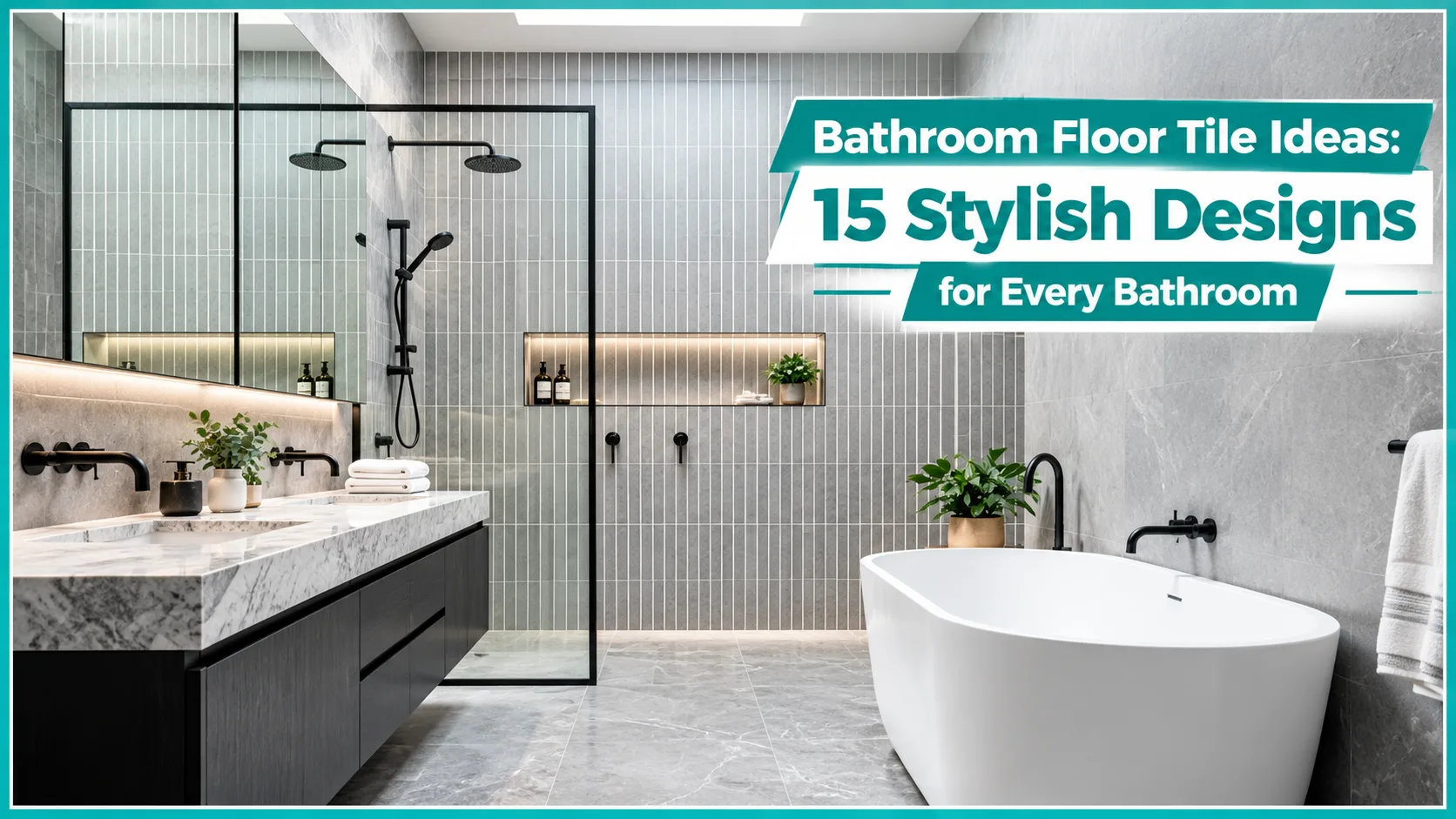
Bathroom flooring needs to handle moisture, daily foot traffic, and regular cleaning while complementing your overall design. The right tile can balance durability, slip resistance, and visual appeal.
Explore 15 bathroom floor tile ideas, from marble-look and wood-look finishes to patterned and textured designs. You’ll also learn how to choose suitable colors, plan tile layouts, style small bathrooms, and estimate installation costs.
How to Choose Bathroom Floor Tiles
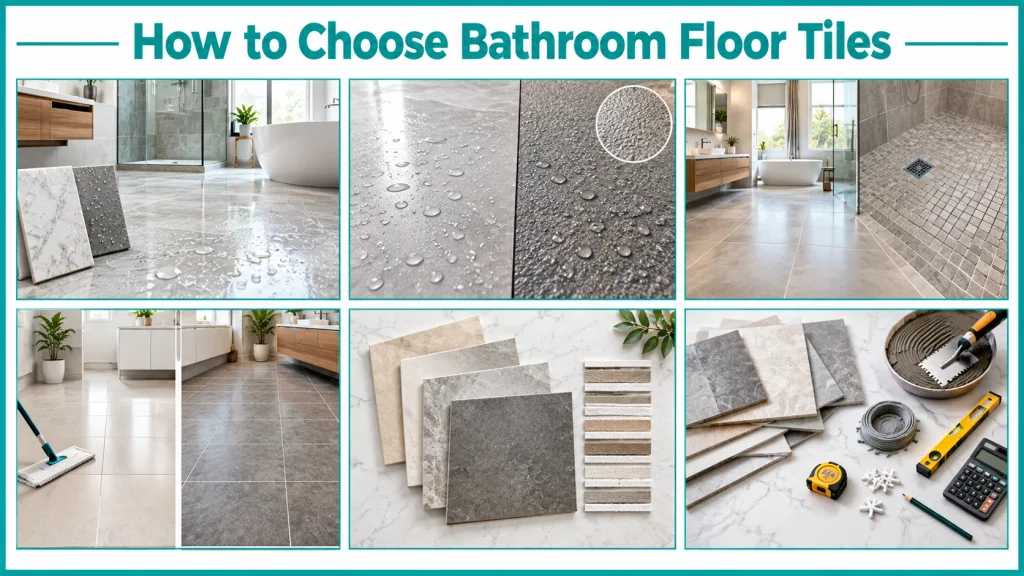
Choose bathroom floor tiles that suit your room, daily routine, and budget. Check these six factors before you buy:
- Water resistance: Choose porcelain or floor-rated glazed ceramic tiles with low water absorption. These options work well in moisture-prone bathrooms.
- Slip resistance: Check the tile’s wet dynamic coefficient of friction (DCOF). A rating of 0.42 or higher is commonly used as a reference for level interior floors expected to get wet. This rating does not guarantee slip resistance in every condition. Read the Crossville DCOF guide for details.
- Tile size: Match tile dimensions to your bathroom’s layout, drain placement, and floor slope. Smaller tiles can make it easier to create the necessary slope around shower drains.
- Cleaning and maintenance: Larger tiles usually create fewer grout lines, which can reduce cleaning effort. However, textured surfaces and grout still need regular care.
- Color and grout: Choose tile and grout shades that complement your bathroom and suit your cleaning routine. Mid-tone colors can help make everyday dust and water marks less noticeable.
- Budget: Calculate the full project cost, including tiles, grout, adhesive, labor, surface preparation, and removal of old flooring. Add a small allowance for cuts and replacement tiles.
15 Bathroom Floor Tile Ideas for Every Style and Space
Explore 15 bathroom floor tile designs, from classic marble-inspired finishes to eye-catching geometric patterns. Each option offers a different way to personalize your space, with practical tips to help you compare colors, patterns, finishes, and installation requirements.
1. White Marble-Look Porcelain Floor Tiles
White marble-look porcelain creates a bright, timeless finish with subtle veining. It complements traditional and contemporary bathrooms while generally requiring less maintenance than natural marble.
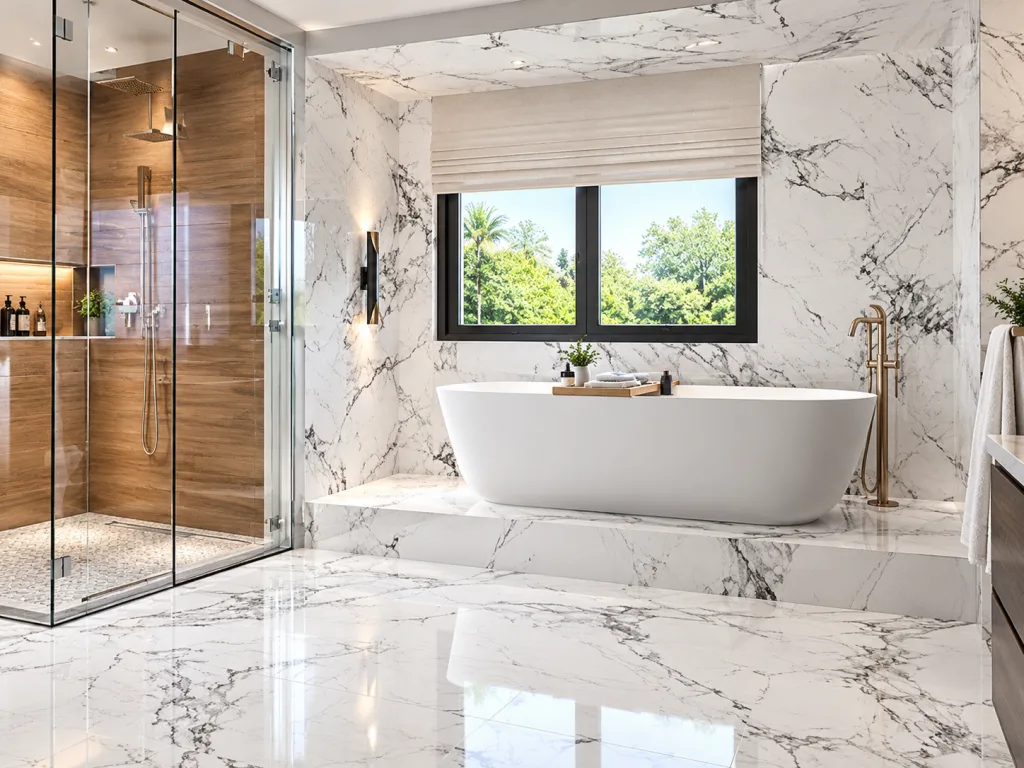
Choose a matte or textured finish, and check the manufacturer’s wet-slip performance rating before installation.
2. Gray Porcelain Bathroom Floor Tiles
Gray porcelain offers a versatile foundation for modern and transitional bathrooms. Warm gray complements wood vanities, while cooler shades pair well with chrome fixtures.
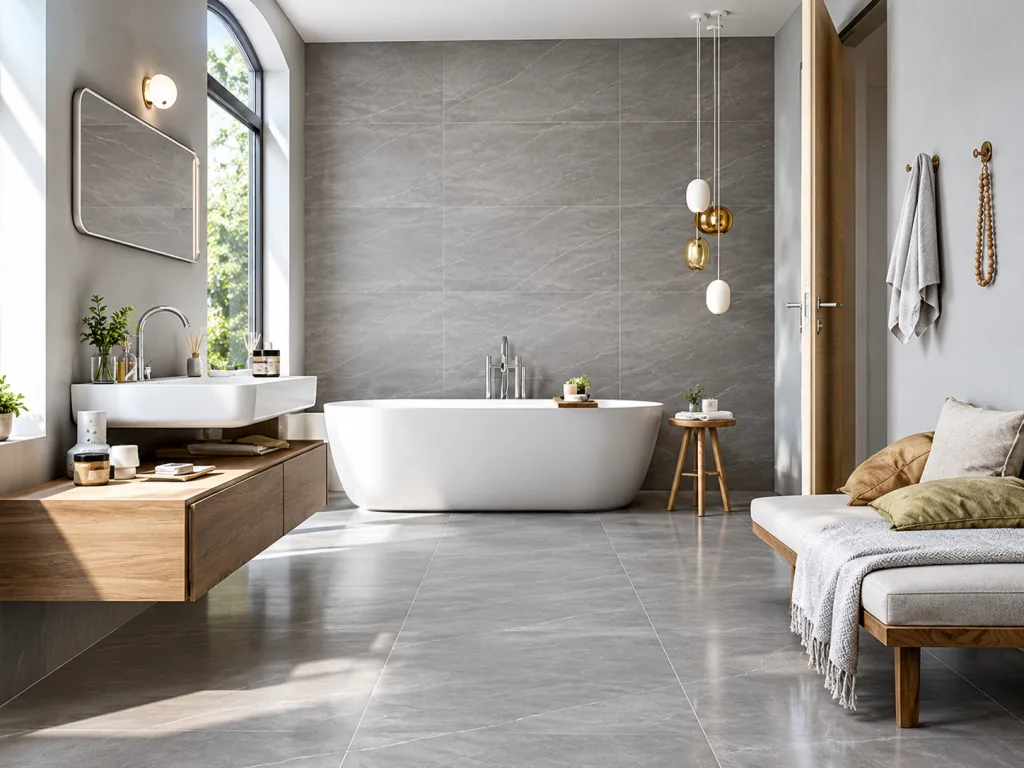
Mid-tone gray can make everyday dust less noticeable than very light or very dark flooring. Test a sample beside your vanity and wall paint before choosing a shade.
3. Wood-Look Bathroom Floor Tiles
Wood-look porcelain planks bring natural warmth to Scandinavian, farmhouse, and Japandi bathrooms without the moisture sensitivity of real wood.
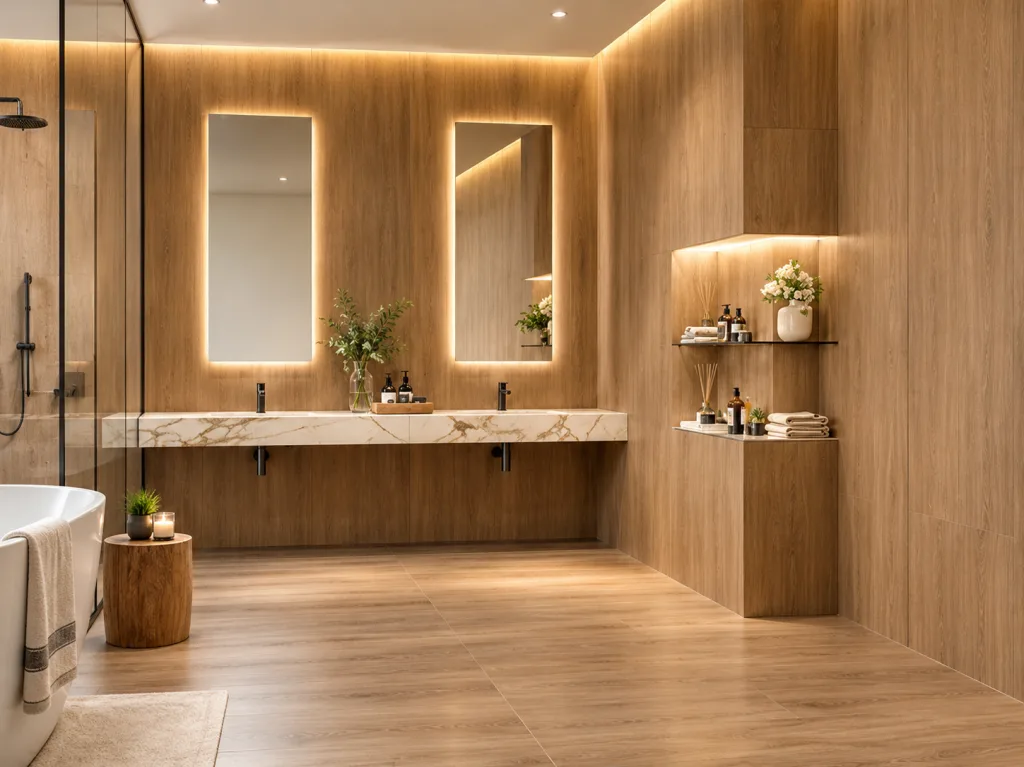
Select a textured finish for added surface detail, and mix planks from multiple boxes to create a more natural-looking grain pattern. Coordinate the grout color with the tile for a cohesive finish.
4. Black Bathroom Floor Tiles
Black floor tiles create a dramatic foundation for modern, art deco, and contemporary bathrooms. However, dust, soap residue, and mineral deposits can stand out on dark surfaces.
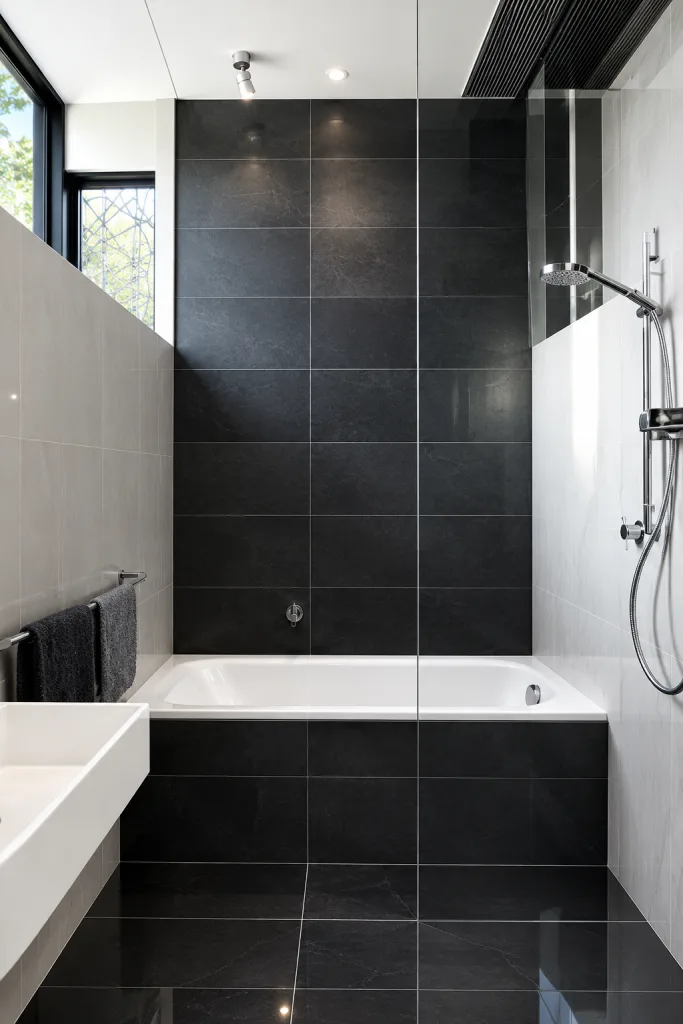
Balance the contrast with warm lighting, lighter walls, or natural wood accents. Check the tile’s finish and cleaning requirements before buying.
5. Beige and Cream Bathroom Floor Tiles
Beige and cream tiles create a warm, welcoming atmosphere in coastal, traditional, and spa-inspired bathrooms. Their soft tones complement white fixtures, natural wood, and brass hardware.
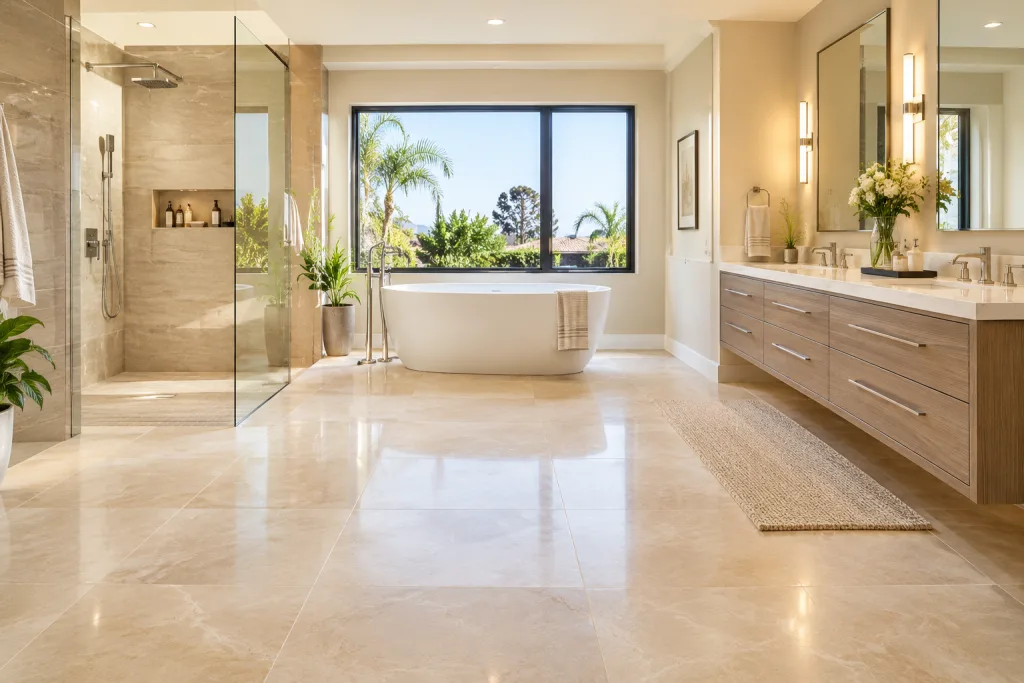
Compare samples with your wall paint and vanity because yellow, pink, and gray undertones can affect the overall color scheme.
6. Small Hexagon Bathroom Floor Tiles
Small hexagon tiles create a classic honeycomb pattern that suits vintage, farmhouse, and contemporary bathrooms.
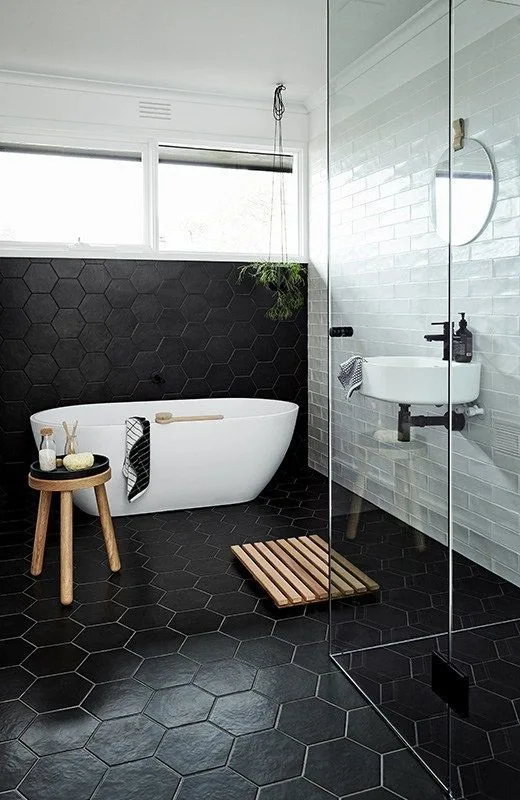
Their numerous grout joints add visual texture, but they do not automatically make a floor slip-resistant. Choose a practical grout color and check the tile’s wet-slip performance before installation.
7. Large-Format Bathroom Floor Tiles
Large-format tiles, such as 24-by-24-inch porcelain, create a streamlined look with fewer grout joints. They work particularly well in contemporary bathrooms with simple finishes.
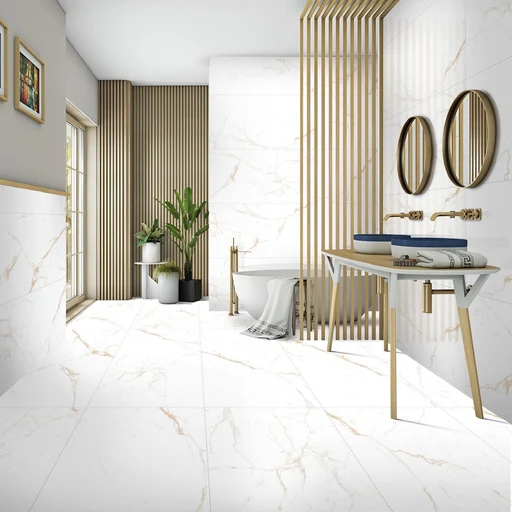
These tiles require a suitably flat substrate and careful installation. Ask your installer to assess the floor before deciding on tile dimensions.
8. Black-and-White Checkerboard Bathroom Floors
Black-and-white checkerboard tiles add striking contrast to retro, art deco, and classic bathrooms. Plan the pattern around the doorway, vanity, or main sightline to create a balanced layout.
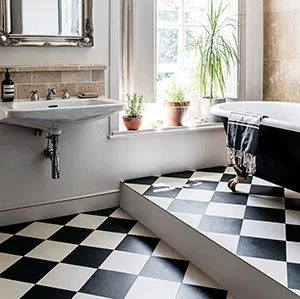
Check the perimeter cuts before installation to avoid narrow tile strips along the walls. Pair the pattern with understated fixtures to keep the room cohesive.
9. Herringbone Bathroom Floor Tile Layout
A herringbone layout arranges rectangular tiles in a repeating zigzag pattern. It adds movement to traditional and modern bathrooms without relying on printed designs.
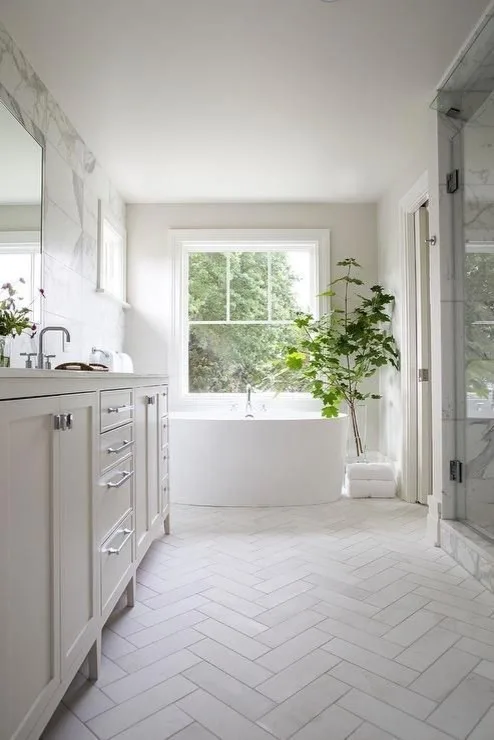
However, the pattern usually requires more cutting and installation time than a straight layout. Confirm the tile quantity, pattern direction, and expected waste with your installer before ordering.
10. Cement-Look Patterned Bathroom Floor Tiles
Cement-look porcelain tiles bring geometric, floral, and Moroccan-inspired patterns to boho, eclectic, and Mediterranean bathrooms. They provide decorative detail without the same maintenance requirements as many traditional cement tiles.
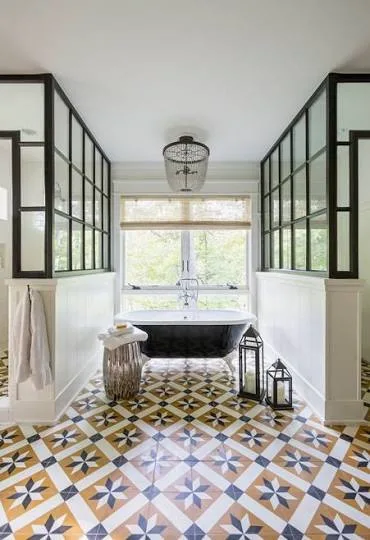
Let the floor serve as the main feature, and keep the walls and vanity relatively simple. Review the full pattern repeat before calculating how many tiles to buy.
11. Terrazzo-Look Bathroom Floor Tiles
Terrazzo-look tiles feature colorful flecks against a neutral or bold background. They complement mid-century, playful, and contemporary bathrooms.
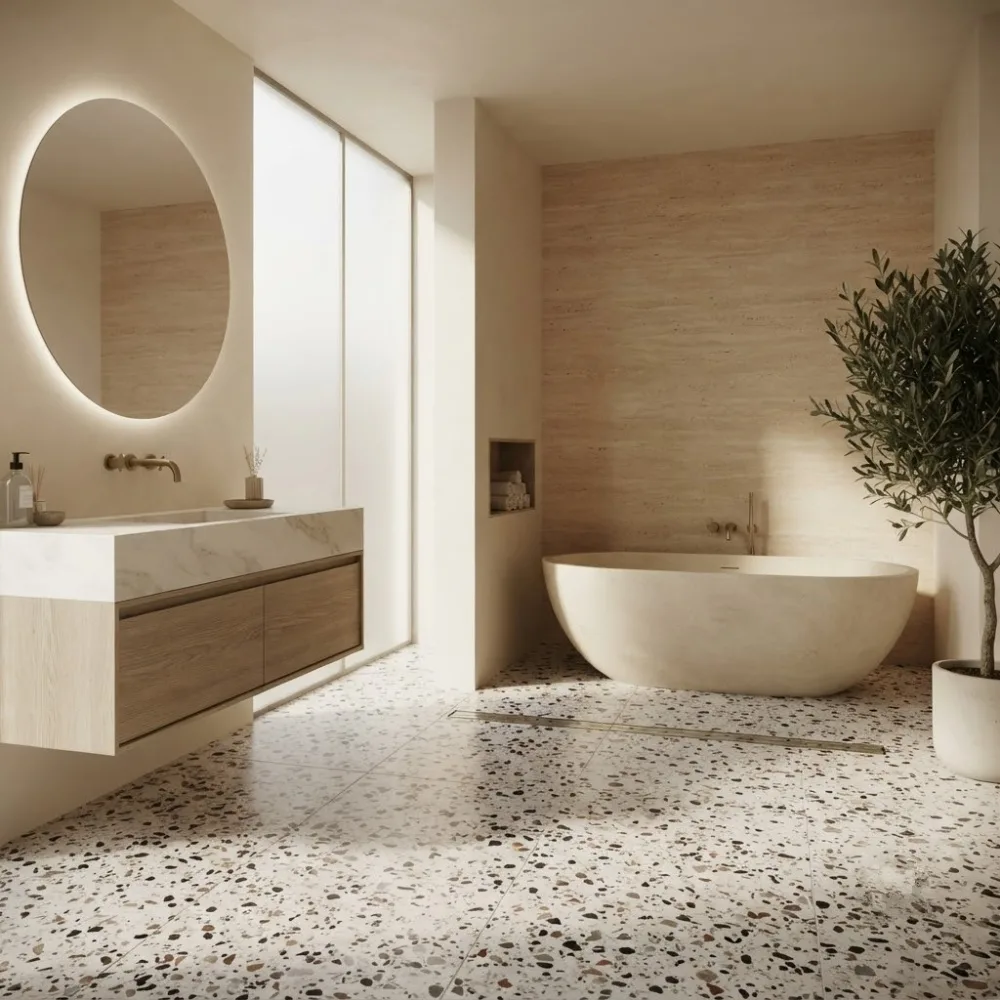
Choose a subtle pattern for a quieter look or larger, more noticeable chips for a stronger design statement. Repeat one color from the tile in towels or artwork to create a coordinated scheme.
12. Dark Green Bathroom Floor Tiles
Dark green floor tiles bring depth and a nature-inspired feel to vintage, moody, and spa-style bathrooms. They pair well with warm wood, white walls, and brass accents.
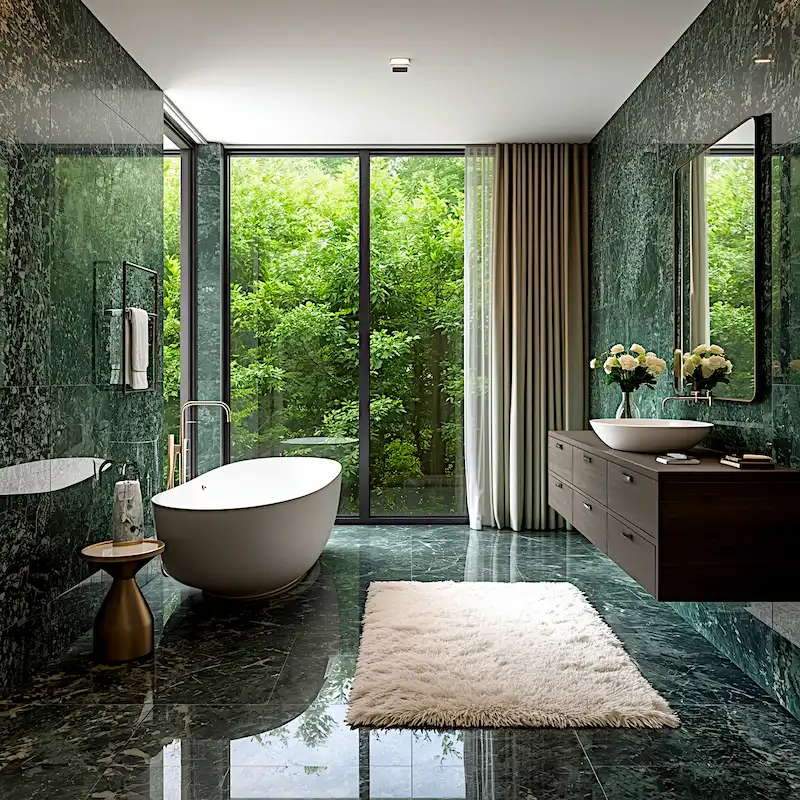
Because natural and artificial lighting can change how green appears, view a sample under your bathroom’s actual lighting before making a final decision.
13. Natural Stone-Look Porcelain Bathroom Tiles
Stone-look porcelain recreates the earthy appearance of slate, travertine, or limestone while offering a practical alternative to natural stone. It suits rustic, organic-modern, and spa-inspired interiors.
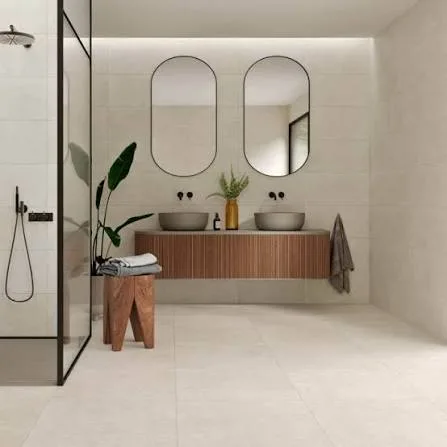
Compare several samples to assess their color variation and surface texture. Before buying, verify the tile’s wet-slip performance and cleaning requirements.
14. Textured Bathroom Floor Tiles for Added Traction
Textured bathroom tiles feature a structured surface that may improve traction when you choose a suitable product. They can work well in bathrooms where wet floors are a regular concern.
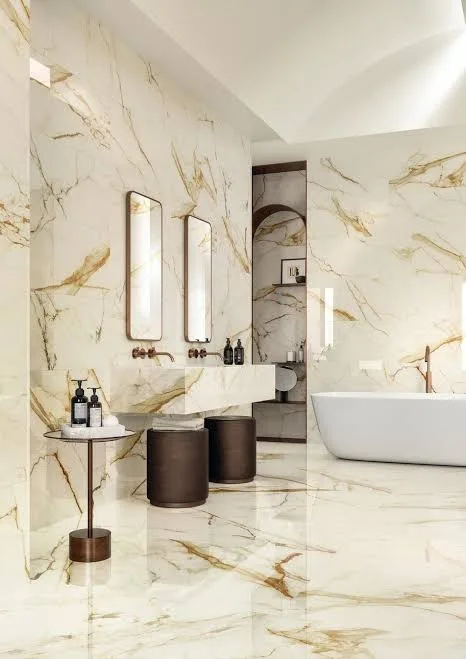
Check the manufacturer’s wet Dynamic Coefficient of Friction (DCOF) rating where applicable, and consider whether the surface will trap dirt or need extra scrubbing. No single rating guarantees slip safety in every condition.
15. Warm Neutral Bathroom Floor Tiles
Warm neutral tiles in greige, sand, and taupe create a versatile foundation for many bathroom styles. They coordinate with white fixtures, natural wood, and brass hardware without relying on short-lived trends.
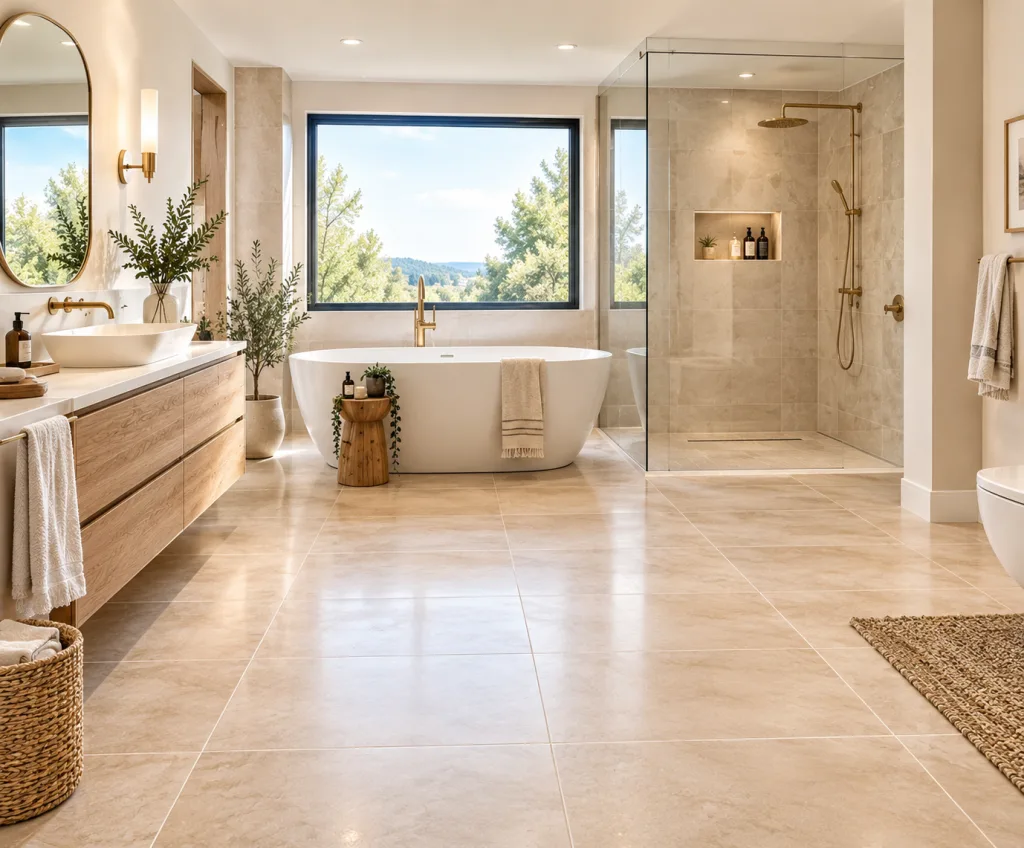
Keep permanent finishes neutral and refresh the room with towels, artwork, or accessories whenever you want a different look.
Best Bathroom Floor Tiles for Different Spaces
Choose bathroom floor tiles according to the room’s size, layout, lighting, and intended use. This guide compares suitable options for common bathroom spaces.
| Bathroom Space | Tile Options to Consider |
| Small bathrooms | Light-colored 12 × 12-inch tiles, small hexagons, or mosaics |
| Primary bathrooms | Large-format porcelain, marble-look tiles, or herringbone layouts |
| Guest bathrooms | Terrazzo-look, checkerboard, or subtle patterned tiles |
| Powder rooms | Dark, geometric, or decorative tiles |
| Walk-in showers | Small mosaics or hexagonal tiles that accommodate the sloped floor |
| Bathrooms with limited natural light | Light-colored or warm-neutral tiles with a matte or soft finish |
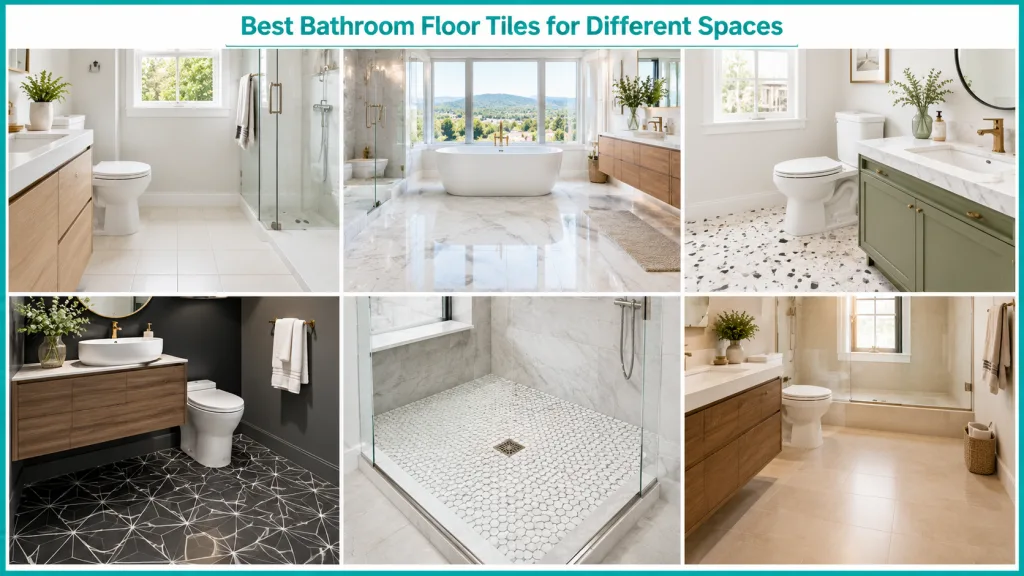
Shower floors need a slope toward the drain. Smaller tiles often fit sloped surfaces more easily. Choose tiles rated for wet-floor use. For help planning the overall space, explore our guide to bathroom layouts with a tub and shower.
Bathroom Floor Tile Colors and Design Combinations
Choose floor tiles that complement your walls, vanity, fixtures, and grout.
- White: Creates a bright look and pairs with most vanity colors. Light gray grout adds subtle contrast.
- Gray: Complements white walls and chrome fixtures. Match its undertone with the rest of the room.
- Beige: Works well with wood finishes and brass fixtures. Check its undertone against your wall color.
- Black: Creates contrast with white walls and pairs well with matte black or brass fixtures.
- Green: Adds color and complements white walls, wood vanities, and brass accents.
- Warm neutrals: Pair easily with white surfaces, natural wood, and soft metallic finishes.
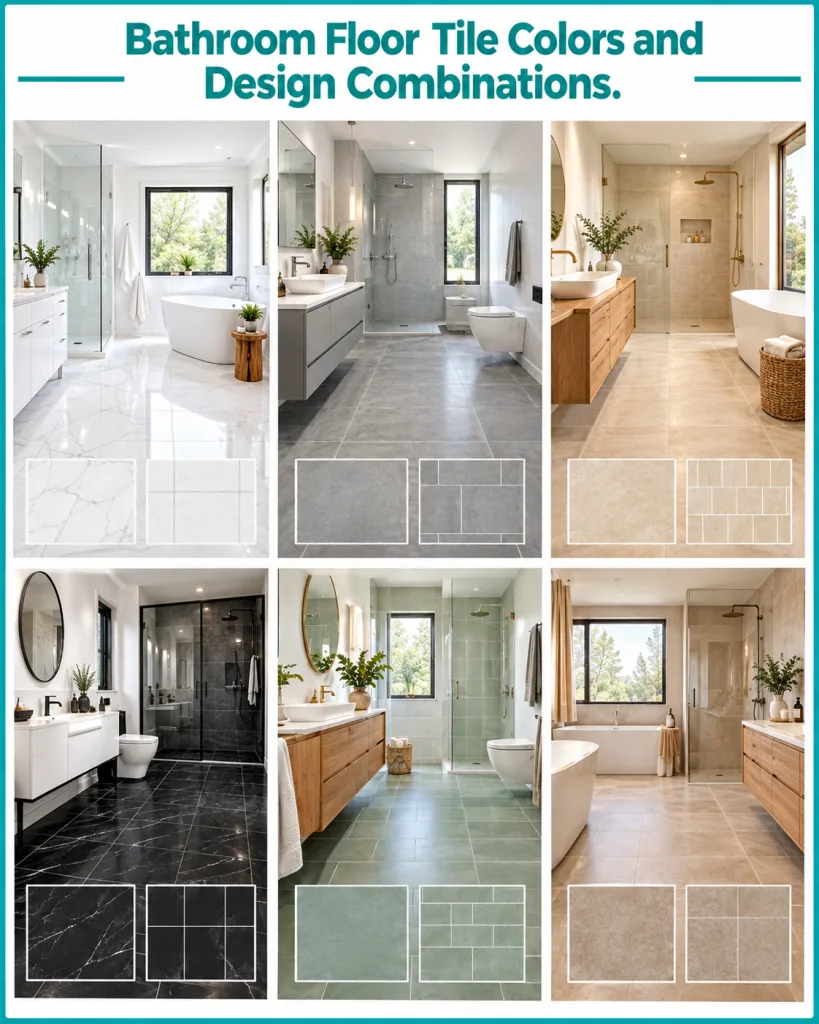
Matching grout creates a seamless look, while contrasting grout highlights the tile pattern. Keep the overall design balanced by choosing one main focal point.
Small Bathroom Floor Tile Ideas
Choose a floor design that complements your bathroom’s size, lighting, and layout. No single tile color or size automatically makes a small bathroom look larger.
- Choose light or medium tones to suit the room’s lighting.
- Keep patterns simple for a balanced look.
- Use small hexagonal tiles for a classic style.
- Consider large-format tiles when the floor is level, and the layout allows balanced cuts.
- Use a consistent floor color to create visual continuity.
- Coordinate floor and wall colors to avoid a cluttered appearance.
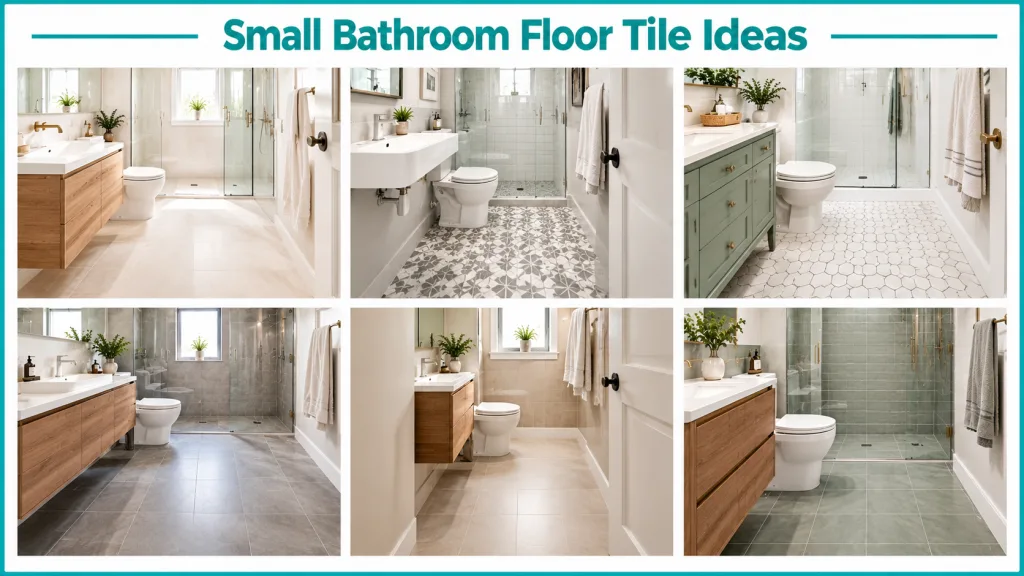
Explore our bathroom layout ideas for more ways to plan your space.
Bathroom Floor Tile Sizes and Layout Patterns
Tile size and layout affect floor appearance, grout lines, cutting, and installation time.
- 12 × 12-inch tiles: Suit many bathroom layouts and simplify planning.
- 12 × 24-inch tiles: Work well in straight or staggered layouts.
- Large-format tiles: Need a flat, properly prepared floor and adequate mortar coverage.
- Straight lay: Creates a clean, simple pattern with straightforward cuts.
- Diagonal layout: Adds visual movement but usually requires more cuts and extra tiles.
- Herringbone: Creates a distinctive pattern but requires careful alignment and more precise cutting.
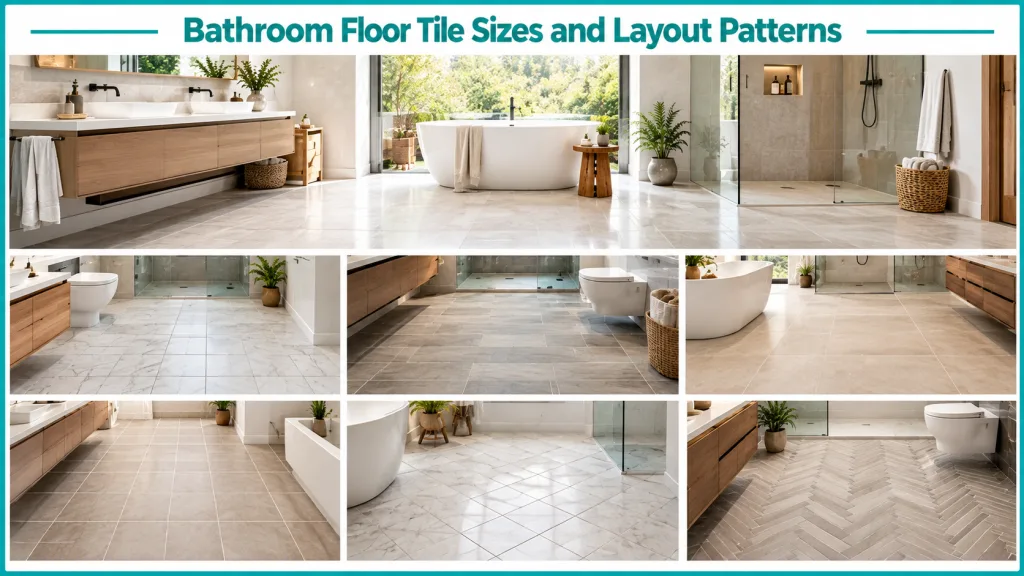
Follow the manufacturer’s guidance for grout joints. Plan the shower-floor slope and drain position before installation.
Bathroom Floor Tile Installation Costs
Your total cost depends on tile material, labor, floor condition, and local rates. These factors can affect your budget:
| Cost Factor | What Affects the Price |
| Tile material | Tile type, size, and finish |
| Labor | Local rates and layout complexity |
| Floor preparation | Leveling, repairs, and backer board |
| Waterproofing | Membrane type and coverage |
| Old floor removal | Removal work and disposal |
| Grout and finishing | Grout type, sealer, and trim |
| Extra expenses | Delivery and additional tiles for cuts |
According to Homewyse, the estimated US national average for bathroom floor tile installation was 16.58–20.60 per square foot in May 2026. Inch Calculator gives a broader estimate of 10–25 per square foot installed. Differences in project scope and pricing methods explain why estimates vary.
Inch Calculator also estimates backer board at 5–6 per square foot and old floor removal at 1–5 per square foot. Get itemized local quotes to build a realistic budget.
Common Bathroom Floor Tile Mistakes
- Ignoring slip resistance: Wet floors can increase the risk of slipping.
- Overlooking drainage: Poor slopes can leave standing water.
- Choosing unsuitable grout: The wrong grout can stain or crack.
- Skipping floor preparation: Uneven surfaces can cause cracked or loose tiles.
- Ignoring tile layout: Poor planning can leave narrow, awkward cuts.
- Overlooking maintenance: Some tile materials require more cleaning and care than others.
Final Thoughts
The right bathroom floor tile should suit the room’s layout, moisture levels, maintenance needs, and budget. Before making a final decision, compare tile samples under your bathroom’s lighting and check their suitability for wet floors.
Measure the area, account for cutting waste, and obtain at least two local installation quotes to compare the total project cost.
Frequently Asked Questions
What is the best tile for a bathroom floor?
Porcelain is a popular choice because it absorbs little water and resists wear. Choose a finish suitable for wet floors.
Which bathroom floor tiles are easiest to clean?
Glazed porcelain is generally easy to maintain. Large tiles also reduce grout lines, which can collect dirt.
Are large tiles good for small bathrooms?
Yes. Large tiles can make a small bathroom feel less busy, but they need a suitable, level surface and careful planning around drains and slopes.
What color tile makes a bathroom look bigger?
Light, consistent colors can make a bathroom feel more open. Test samples under your bathroom’s lighting before choosing.
Are porcelain tiles better than ceramic tiles?
Porcelain generally absorbs less water, making it a strong option for bathroom floors. Quality ceramic tiles can also work when rated for the intended use.
What tile is best for a shower floor?
Small mosaics often fit sloped shower floors well. Choose tiles with suitable wet-area slip performance and follow the installation requirements.
Is matte or glossy tile better for bathroom floors?
Matte or textured tiles may provide better traction than glossy finishes, but performance varies. Check the product’s wet-floor rating.
How much does bathroom floor tile installation cost?
Installation estimates commonly range from $10 to $25 per square foot in the US. Tile selection, floor preparation, labor, and location affect the final price.
What tile size is best for a bathroom floor?
Small tiles suit sloped shower floors, while 12 × 12-inch and 12 × 24-inch tiles work in many standard bathrooms. Choose a size that fits the layout and drainage needs.
Which bathroom floor tiles are least slippery?
Look for tiles tested and rated for wet-floor use. Texture, surface finish, installation, and maintenance all affect traction, so no tile is completely slip-proof.