A small attic room with a low ceiling can feel cramped, but smart design choices can make it more comfortable and functional. Sloped ceilings limit headroom and furniture placement, so every inch matters.
How do you make the most of a low ceiling attic? Choose low profile furniture, place taller pieces where the ceiling is highest, and use the space beneath the eaves for storage. Add layered lighting, light colors, and clear walkways to create an open feel.
These 15 attic room ideas cover layout, storage, lighting, decor, costs, and essential safety considerations.
How to Plan a Small Attic Room With a Low Ceiling
Start by measuring the attic usable space before choosing furniture. Sloped ceilings, exposed beams, and limited headroom can affect where each item fits.
- Measure ceiling height: Check the center and sloped sides to identify usable headroom.
- Map fixed features: Mark windows, doors, beams, electrical outlets, and walking paths.
- Choose the room’s purpose: Decide whether the attic will serve as a bedroom, home office, reading nook, or storage area.
- Plan furniture placement: Keep standing and walking areas beneath higher ceilings, and fit low furniture into sloped sections.
Best Uses for Different Ceiling Heights
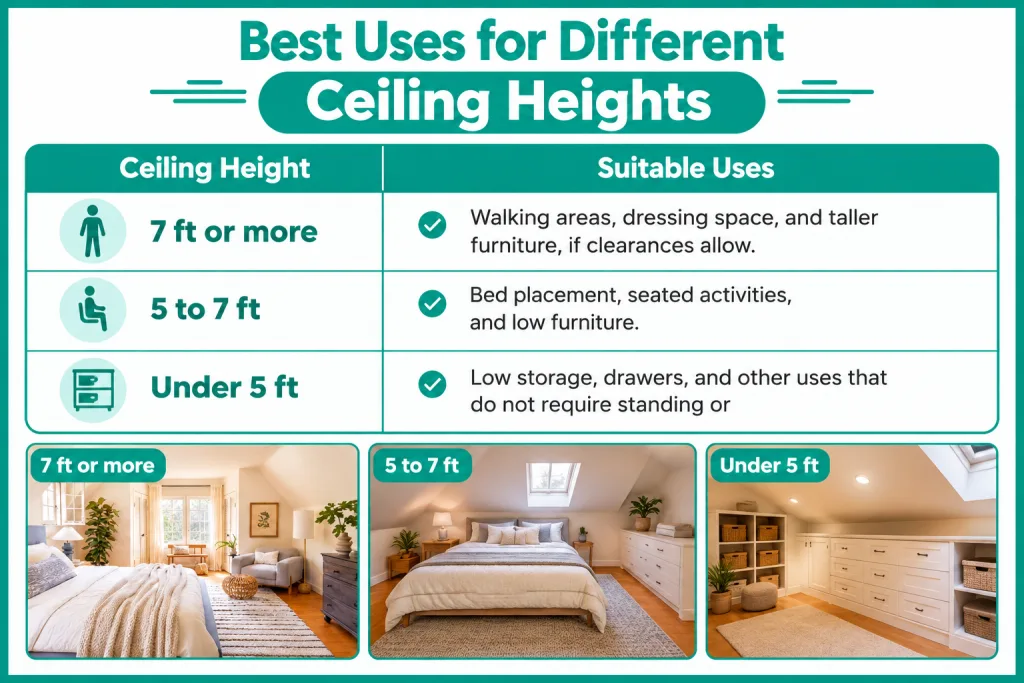
These height ranges serve as general planning guidelines, not universal building code limits. Check local requirements before converting an attic into a habitable room.
15 Low Ceiling Small Attic Room Ideas
A low ceiling does not mean you have to sacrifice comfort or style. Choose furniture that fits the roofline, use awkward corners efficiently, and maximize natural light. These 15 small attic room ideas help you create a practical, comfortable space.
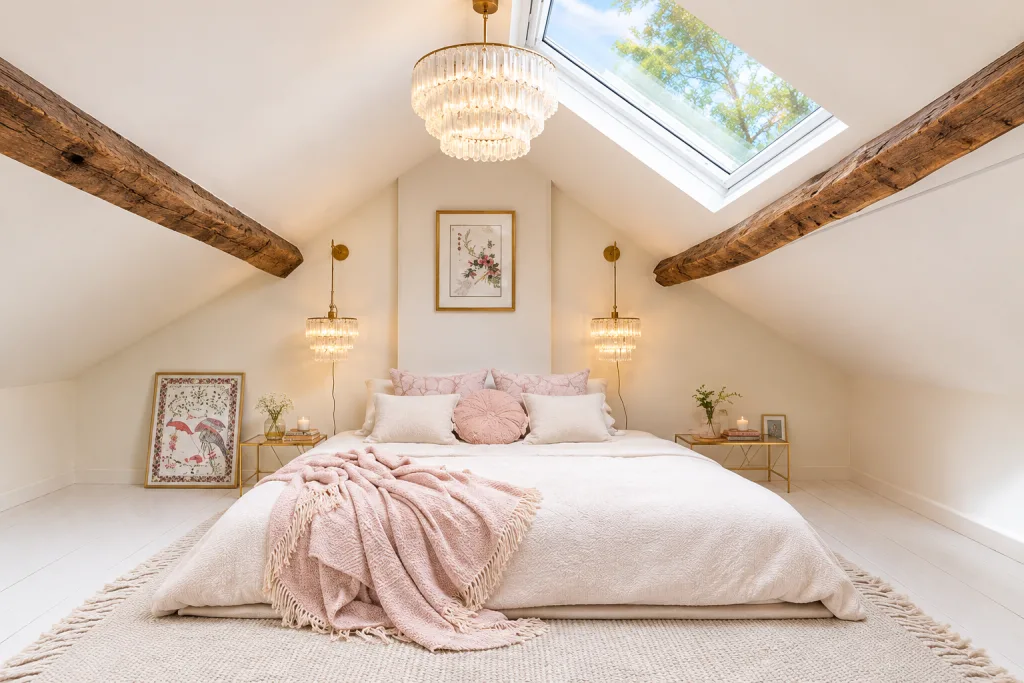
1. Place a Low Platform Bed
Choose a low platform bed to increase the space between the mattress and the sloped ceiling. A simple frame without a tall headboard works especially well in attic bedrooms.
2. Use the Highest Part of the Ceiling
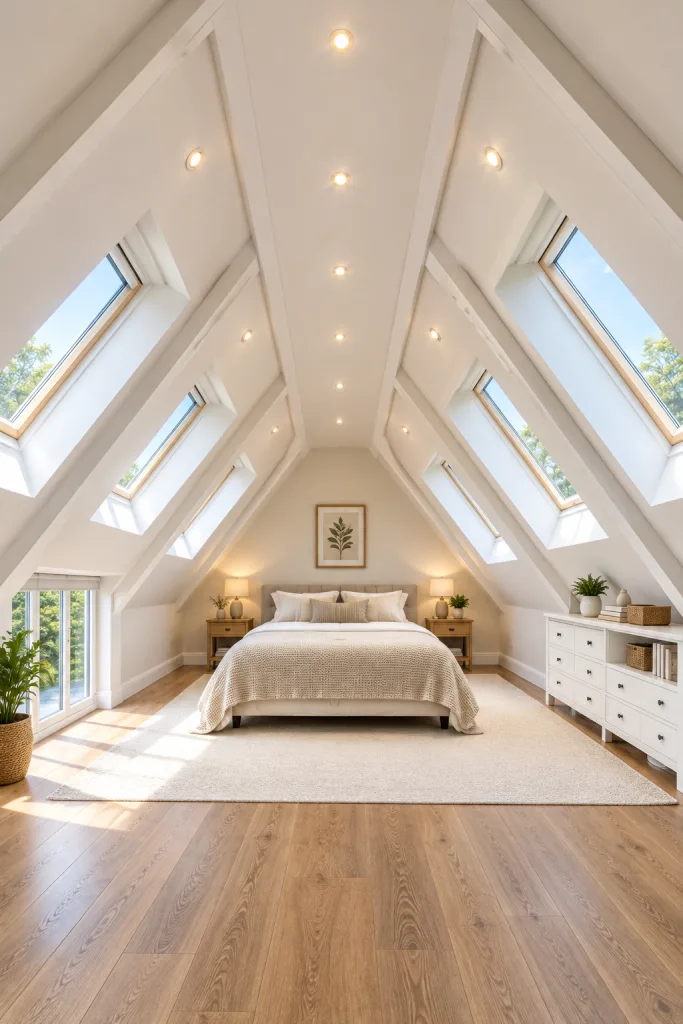
Place wardrobes, dressers, and other tall furniture where the ceiling provides the most headroom. Reserve lower sections for activities you can comfortably do while sitting or lying down.
3. Add Built-In Storage Under the Eaves
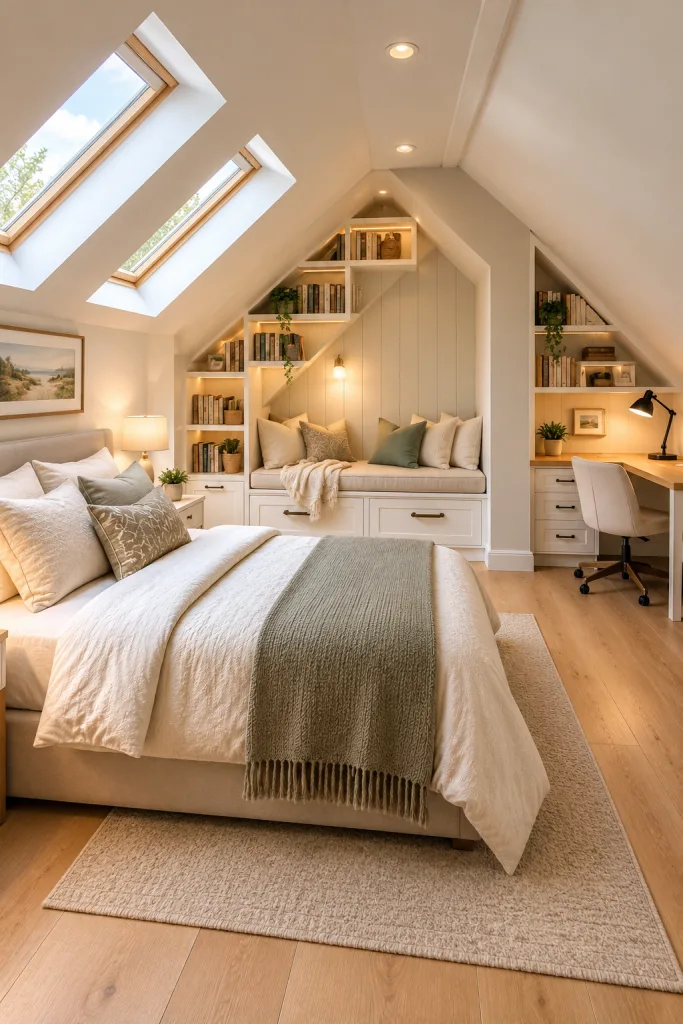
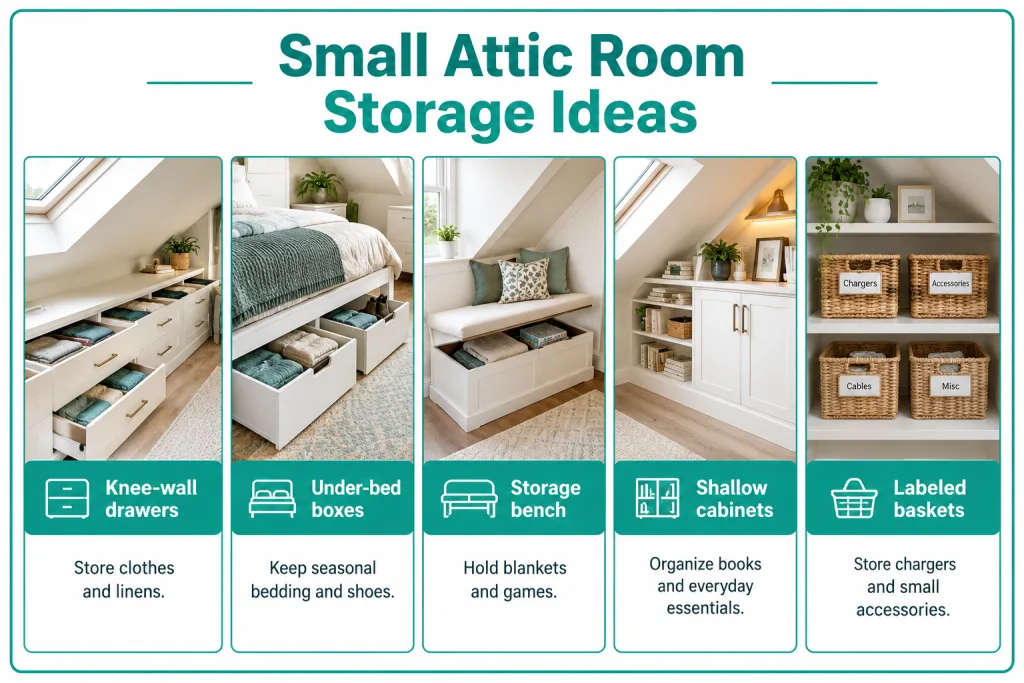
Fit custom drawers or cabinets beneath the sloped roof to use otherwise awkward spaces. Built-in storage keeps clothing, bedding, and other essentials organized without taking up the central floor area.
4. Choose Low-Profile Furniture
Select sofas, chairs, and tables with low backs and compact proportions. These pieces fit more naturally beneath sloped ceilings and help maintain balanced room proportions.
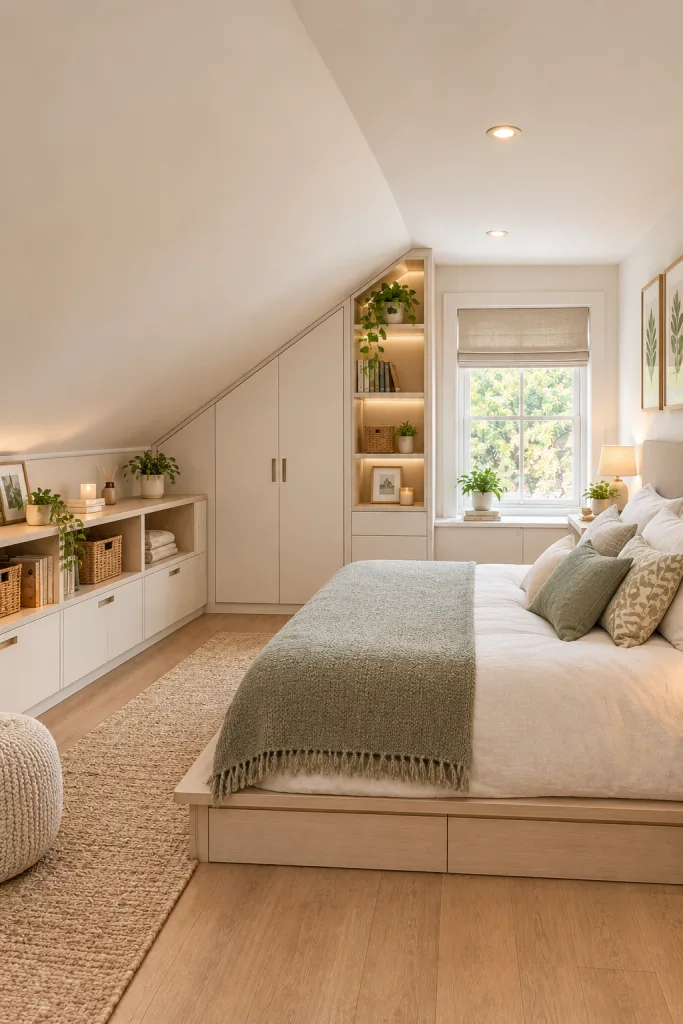
5. Paint the Walls and Sloped Ceiling the Same Color
Use one paint color across the walls and sloped ceiling to create a continuous visual effect. Light neutrals can also reflect daylight and help the attic feel brighter.
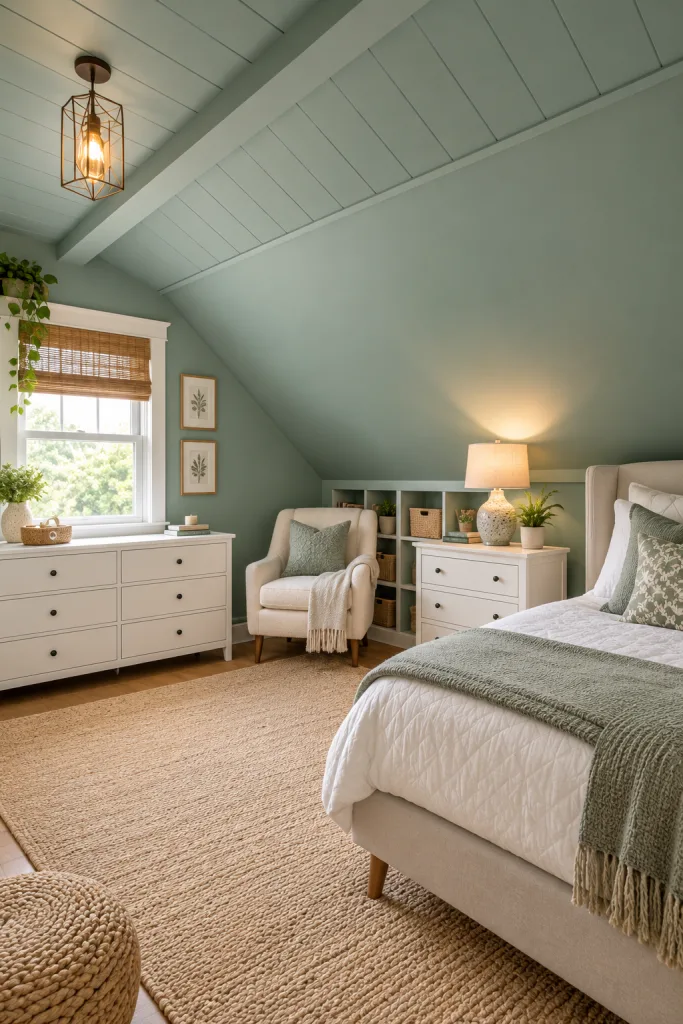
6. Consider a Skylight or Dormer
A skylight can bring daylight into an attic with limited wall space. A dormer can also increase usable headroom, depending on its design. Consult a qualified professional before making structural or roofing changes.
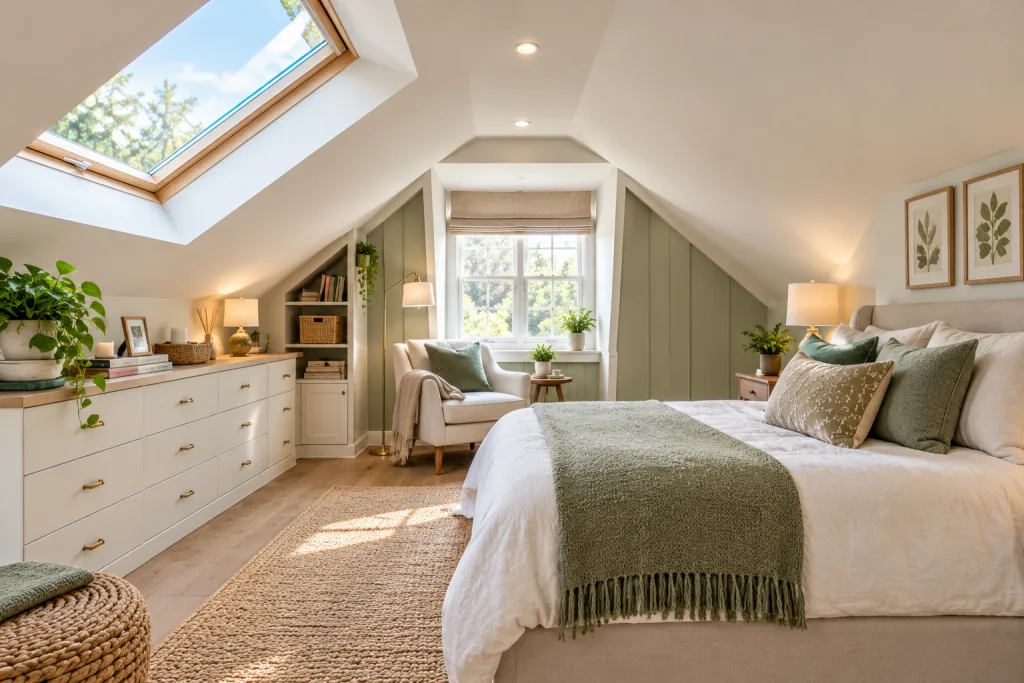
7. Hang Curtains Close to the Ceiling
Mount curtain rods near the top of the available wall and choose panels that suit the window height. Light fabrics, such as linen, soften the room while allowing natural light to filter through.
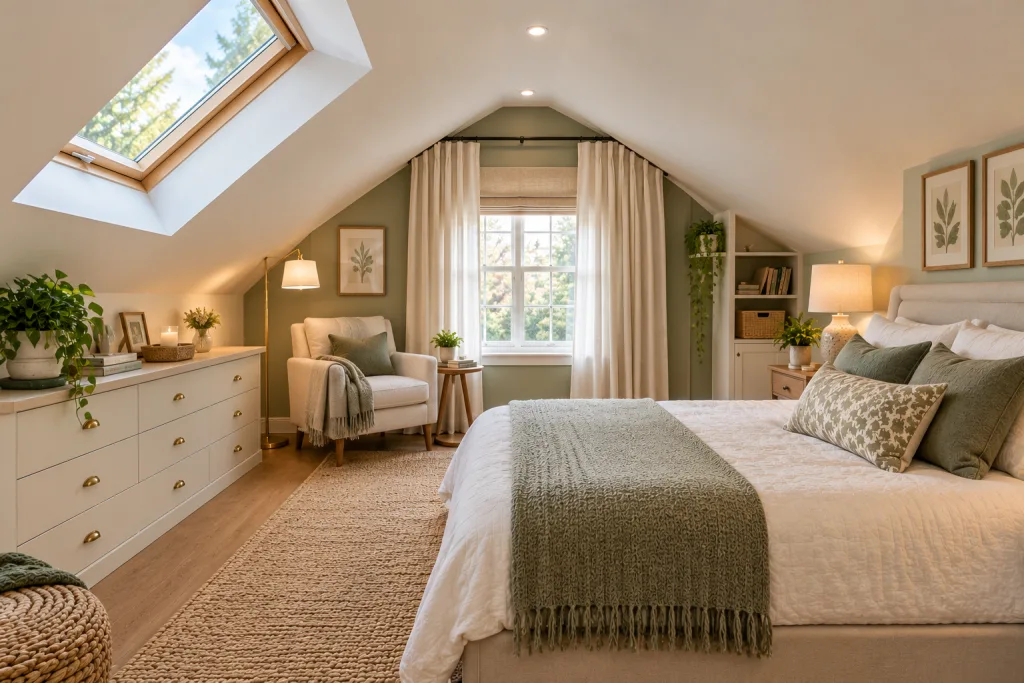
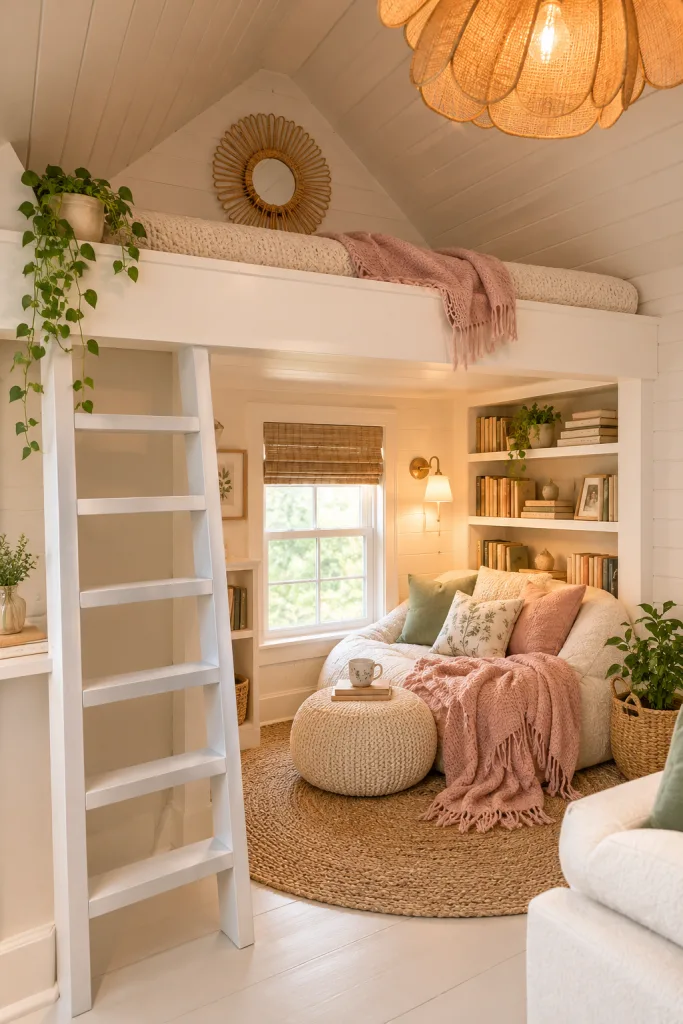
8. Create a Cozy Reading Nook
Turn an unused corner into a reading nook with a floor cushion, low chair, or compact bench. Add a small book basket and a reading light suited to the available space.
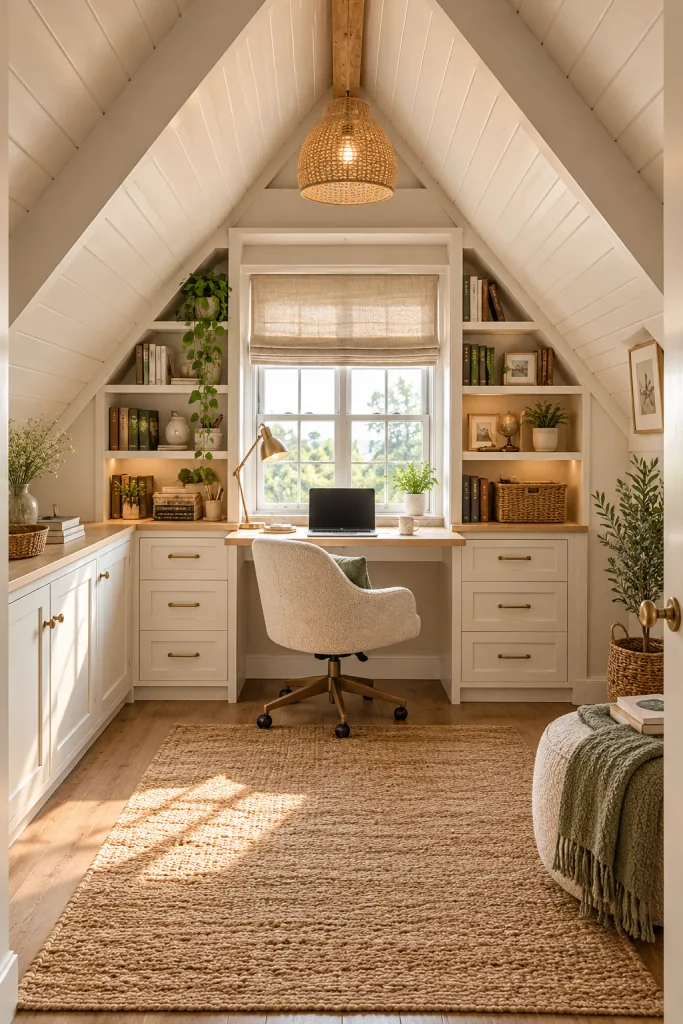
9. Place a Compact Desk Near a Window
Position a slim desk near a window to make the most of natural daylight. Check seated headroom, chair clearance, and access to the desk before settling on its location.
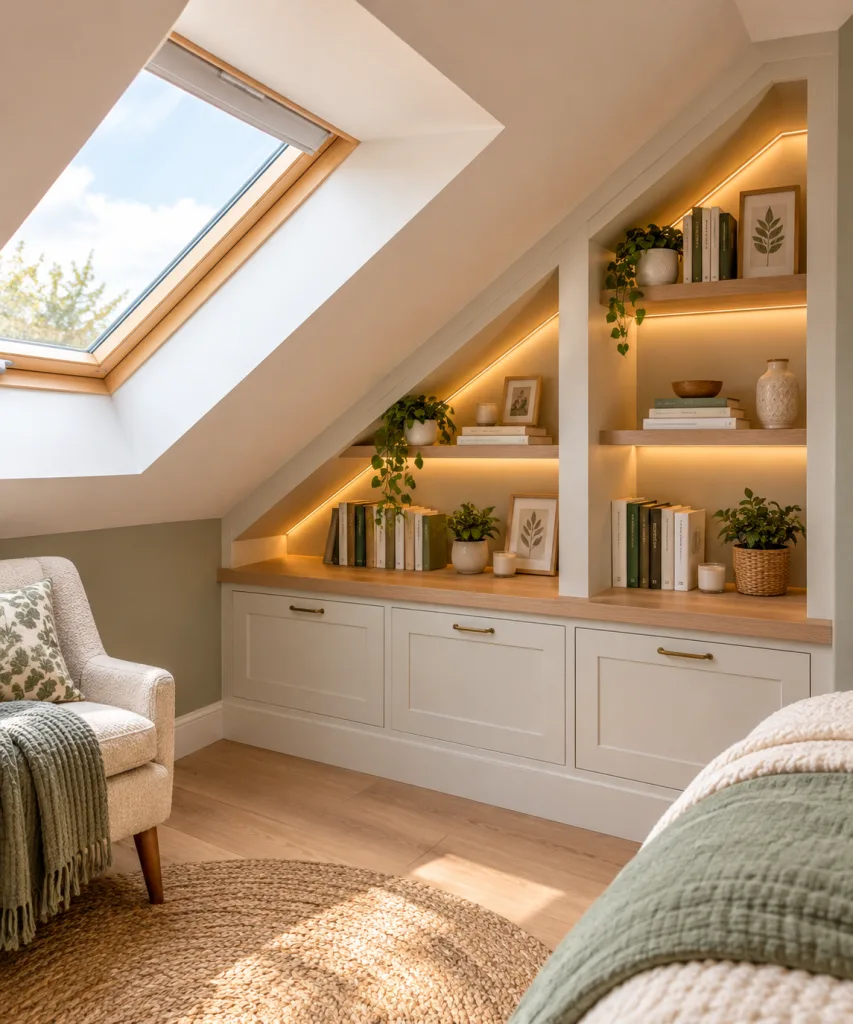
10. Install Shallow Wall Shelves
Use shallow shelves for books, plants, or small decorative items. Place them on suitable vertical wall sections where they will not interfere with headroom or movement.
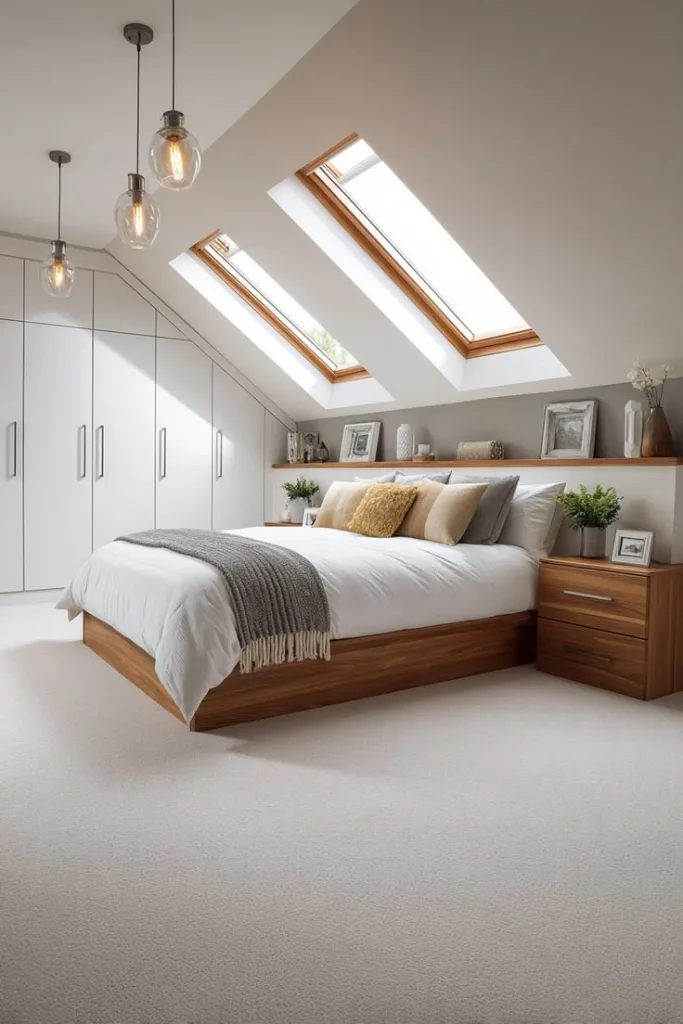
11. Choose a Low Chest of Drawers
A low, wide dresser fits beneath a sloped ceiling where a tall wardrobe wouldn’t. Use its top surface for everyday essentials, a small lamp, or a mirror.
Source: @glowdecors
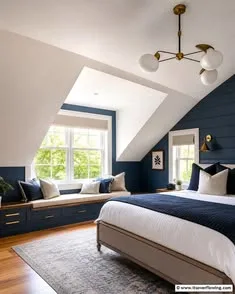
12. Use Mirrors to Reflect Natural Light
Place a mirror opposite or near a window to reflect available daylight. Choose a position that provides a useful reflection without interfering with furniture or movement.
Source: @its_overflowing
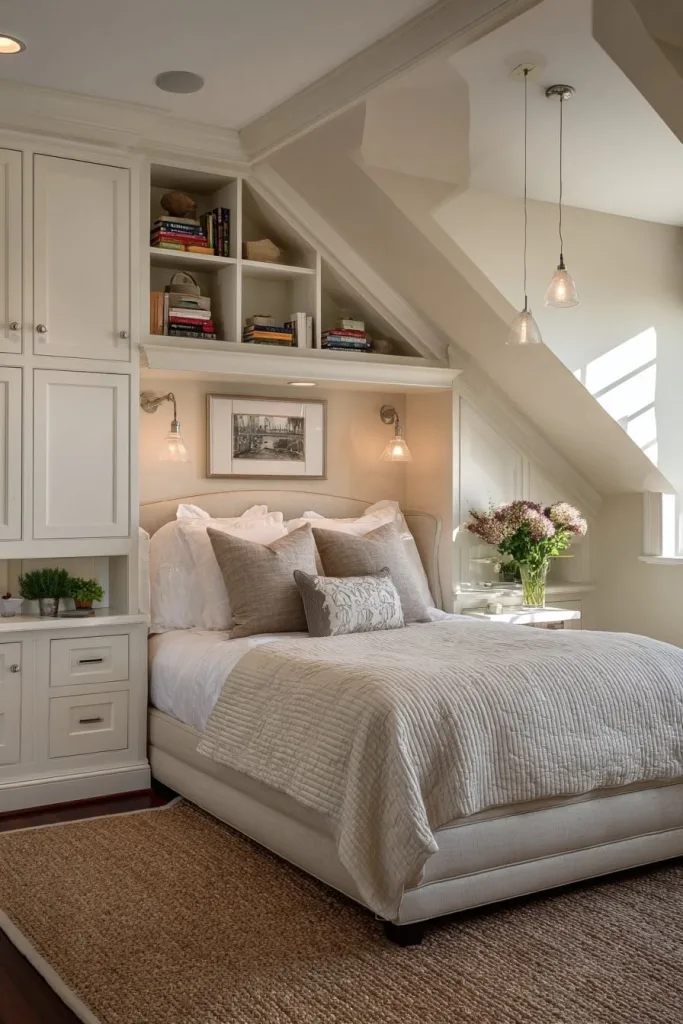
13. Define the Sleeping Area With a Rug
Place a rug partly beneath the bed to distinguish the sleeping area from the rest of the room. Choose a size that fits the layout and doesn’t block the main walking path.
Source: @leslie6496
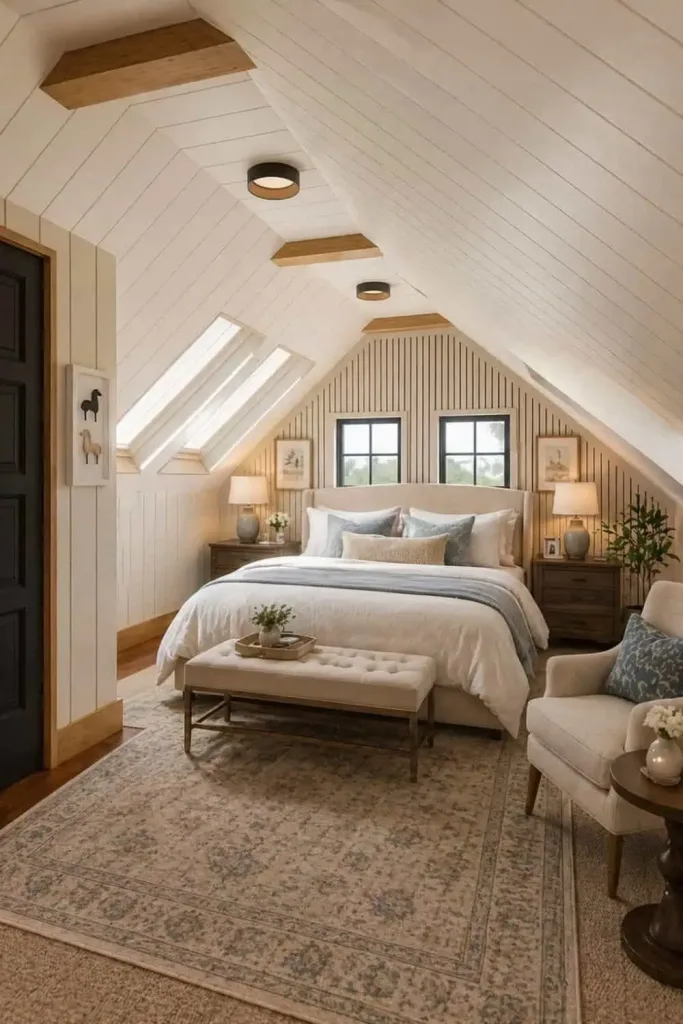
14. Make Exposed Beams a Design Feature
Keep exposed beams in their natural finish or paint them to complement the room. If a beam sits low, make its position visible and avoid attaching lights or heavy objects without checking that the fixing method is suitable.
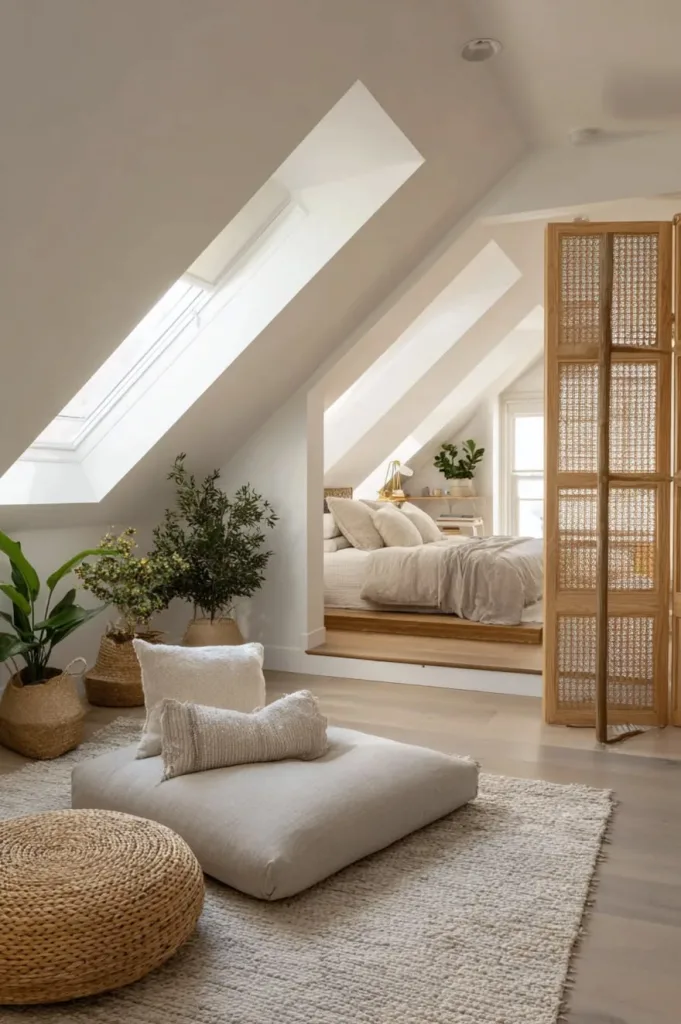
15. Keep the Main Walking Path Clear
Arrange furniture along suitable edges and keep the route between the door and essential areas unobstructed. A clear path makes a compact attic easier to navigate and use.
Small Attic Room Storage Ideas
Use the low spaces under the eaves for practical storage while keeping walkways clear.
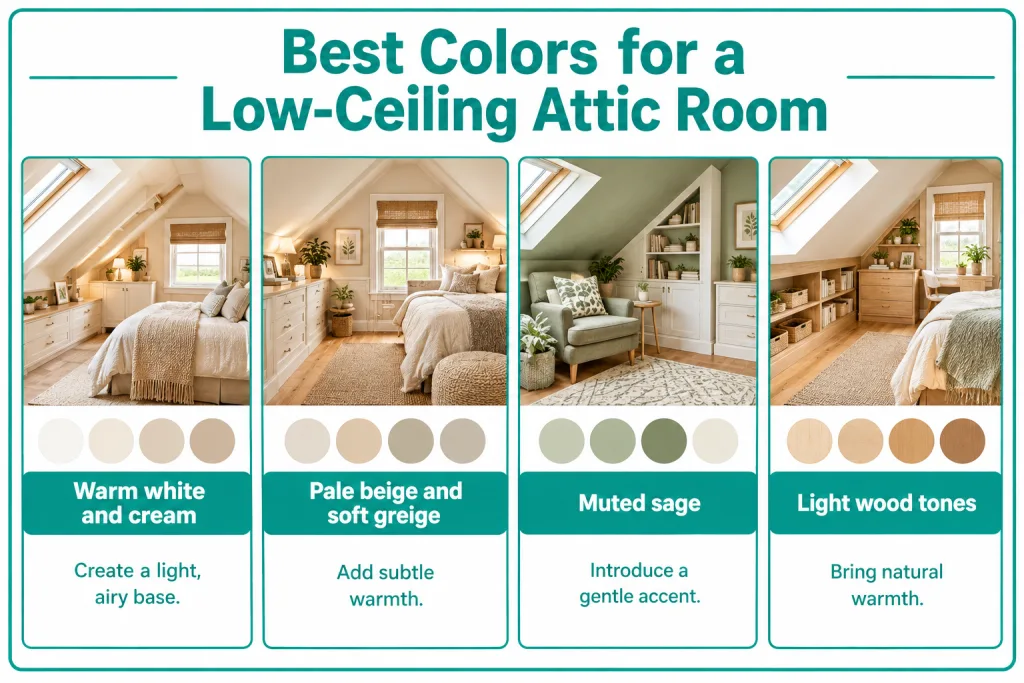
Best Colors for a Low-Ceiling Attic Room
Choose colors that complement natural light and make the space feel bright and welcoming.
Dark colors can also work in well-lit attics. Use them selectively on a wall or sloped ceiling to add depth without making the room feel enclosed. See Osmoz’s low-ceiling attic bedroom ideas for inspiration.
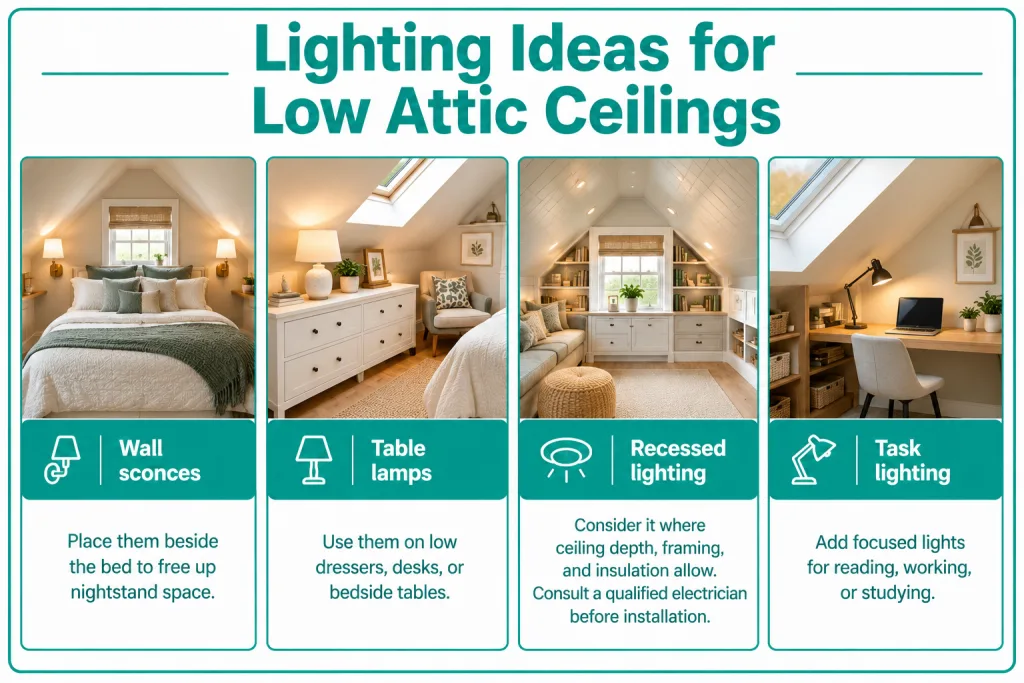
Lighting Ideas for Low Attic Ceilings
Layer ambient, task, and accent lighting to brighten a low-ceiling attic without taking up valuable space. Choose fixtures that suit the roof slope and room layout.
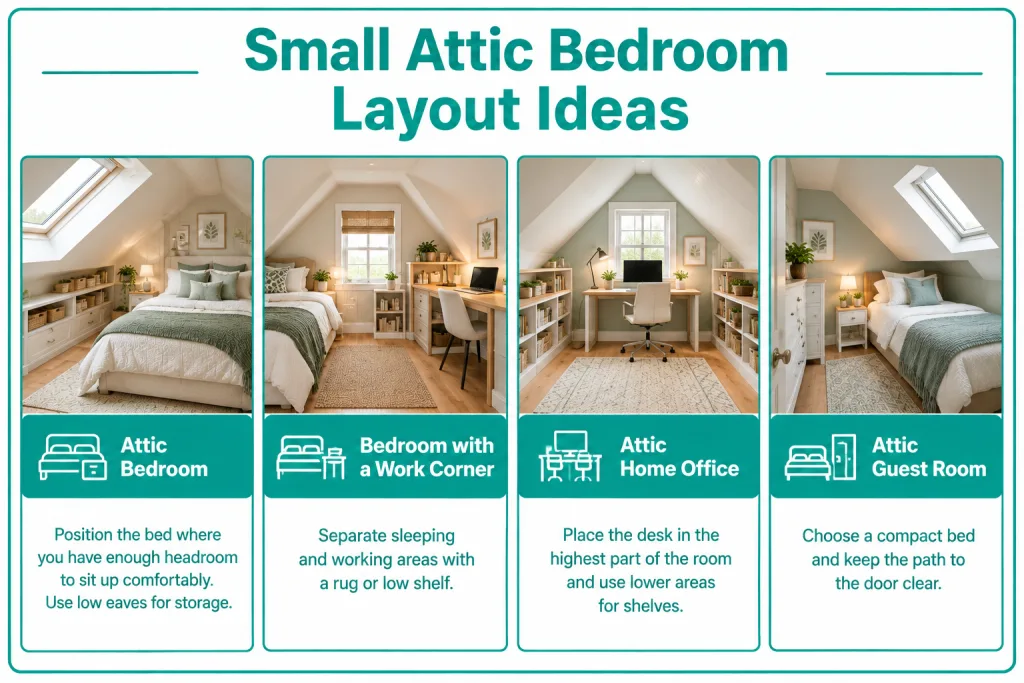
Small Attic Bedroom Layout Ideas
Plan your attic layout around how you use the space. Choose furniture that fits the roofline and keep walkways clear. For more inspiration, explore our small bedroom layout ideas.
Low-Budget Attic Room Decorating Ideas
These changes need no structural work.
- Reuse furniture that already fits
- Refresh the walls with paint
- Change the bedding and cushion covers
- Buy secondhand bedside tables
- Add one or two affordable wall decorations
How Much Does a Small Attic Room Makeover Cost?
The cost of a small attic room makeover depends on the project scope, materials, and roof condition. These factors can affect your budget.
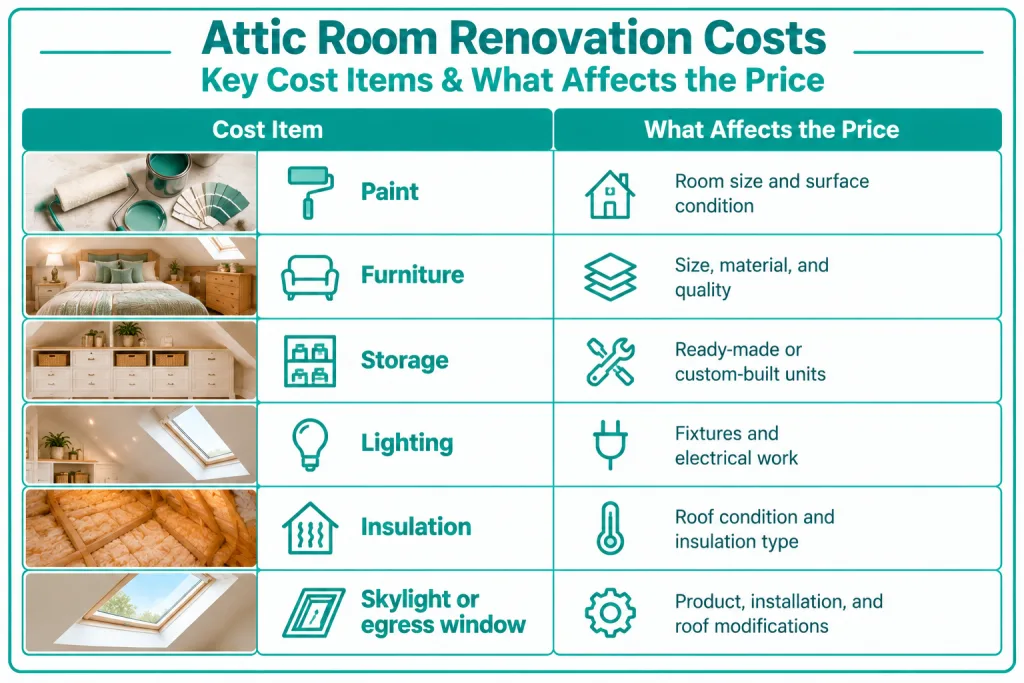
Typical Attic Makeover Costs
Your budget depends on whether you want a simple refresh or a complete attic conversion.
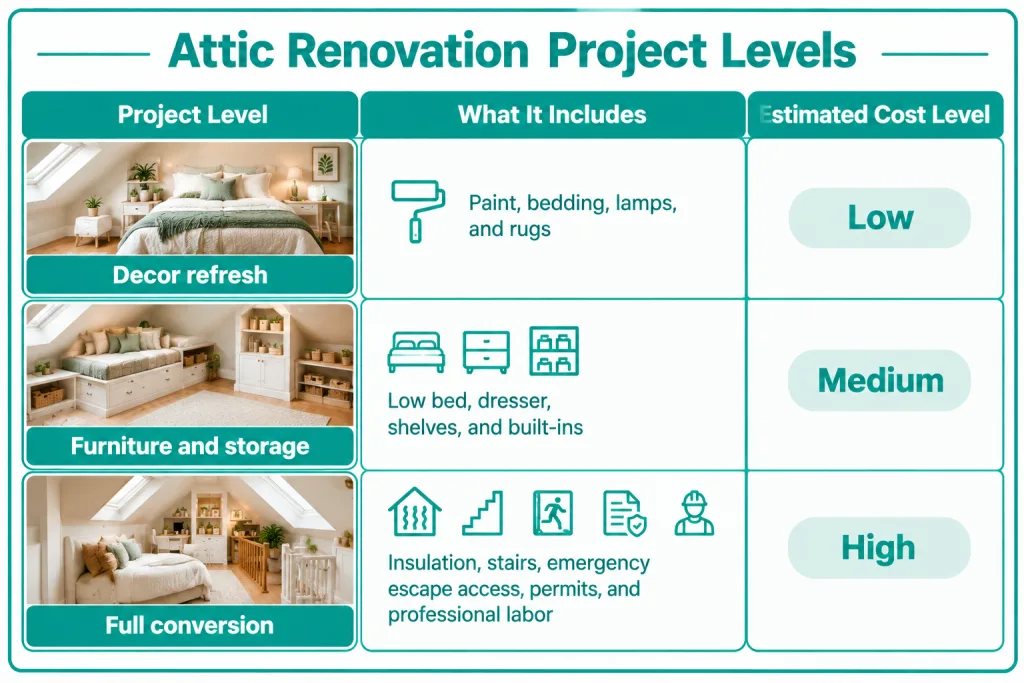
According to Block Renovation, basic attic finishing can cost 30–60 per square foot, while a full conversion may cost 100–150 or more per square foot. Small attics can have higher per-square-foot costs because stairs and window installation add substantial fixed expenses.
SoFi reports egress window costs of 700–9,500, depending on the project. Request local quotes before setting your budget, as costs vary by location, building condition, and permit requirements.
Common Low Ceiling Attic Design Mistakes
- Buying tall wardrobes before measuring the slope: they will not fit
- Blocking windows with bulky furniture: daylight drops
- Using a large hanging light in a low spot: you will hit it
- Filling every corner with decor: the room feels smaller
- Ignoring ventilation or signs of roof moisture: damp and mold can follow
What to Check Before Turning an Attic Into a Bedroom
Before converting an attic into a bedroom, check headroom, floor strength, stairs, and emergency escape access. U.S. building codes set minimum ceiling height and safety requirements, which vary by code edition and location. Consult your local building department before construction. See the ICC NTA attic egress guide.
Attic Conversion Checklist
- ☐ Usable headroom
- ☐ Floor strength
- ☐ Safe stairs
- ☐ Insulation and ventilation
- ☐ Emergency escape access
- ☐ Local codes and permits
Final Thoughts
Measure your attic, choose furniture that fits the roofline, and use low spaces for practical storage. Before major renovations, check insulation, ventilation, and local building requirements. With careful planning, even a small attic can become a comfortable and functional room.
Start by measuring the available headroom and selecting three ideas that suit your layout. For more inspiration, explore our decor tips.
Frequently Asked Questions
How do you decorate a small attic room with a low ceiling?
Use low furniture, practical storage, layered lighting, and a clear walking path.
Where should you put a bed under a sloped ceiling?
Place the bed where you have enough headroom to sit up comfortably, ideally near the higher part of the roof.
What colors work best in a small attic bedroom?
Light shades like cream, warm white, and beige help brighten the room. Darker colors work well with enough natural light.
How can you add storage under a sloped roof?
Use knee-wall drawers, low cabinets, under-bed boxes, and storage baskets.
How much does an attic room makeover cost?
Costs depend on the project. A decor refresh costs less than a full conversion involving insulation, structural work, and electrical upgrades.
Can every attic be converted into a bedroom?
No. Headroom, floor strength, safe access, emergency exits, and local building codes affect suitability.
How do you make a small attic room look bigger?
Choose compact furniture, light colors, high-hung curtains, and mirrors to make the room feel more open.
What furniture works under a sloped ceiling?
Low beds, short dressers, benches, and compact shelves fit well beneath sloped ceilings.