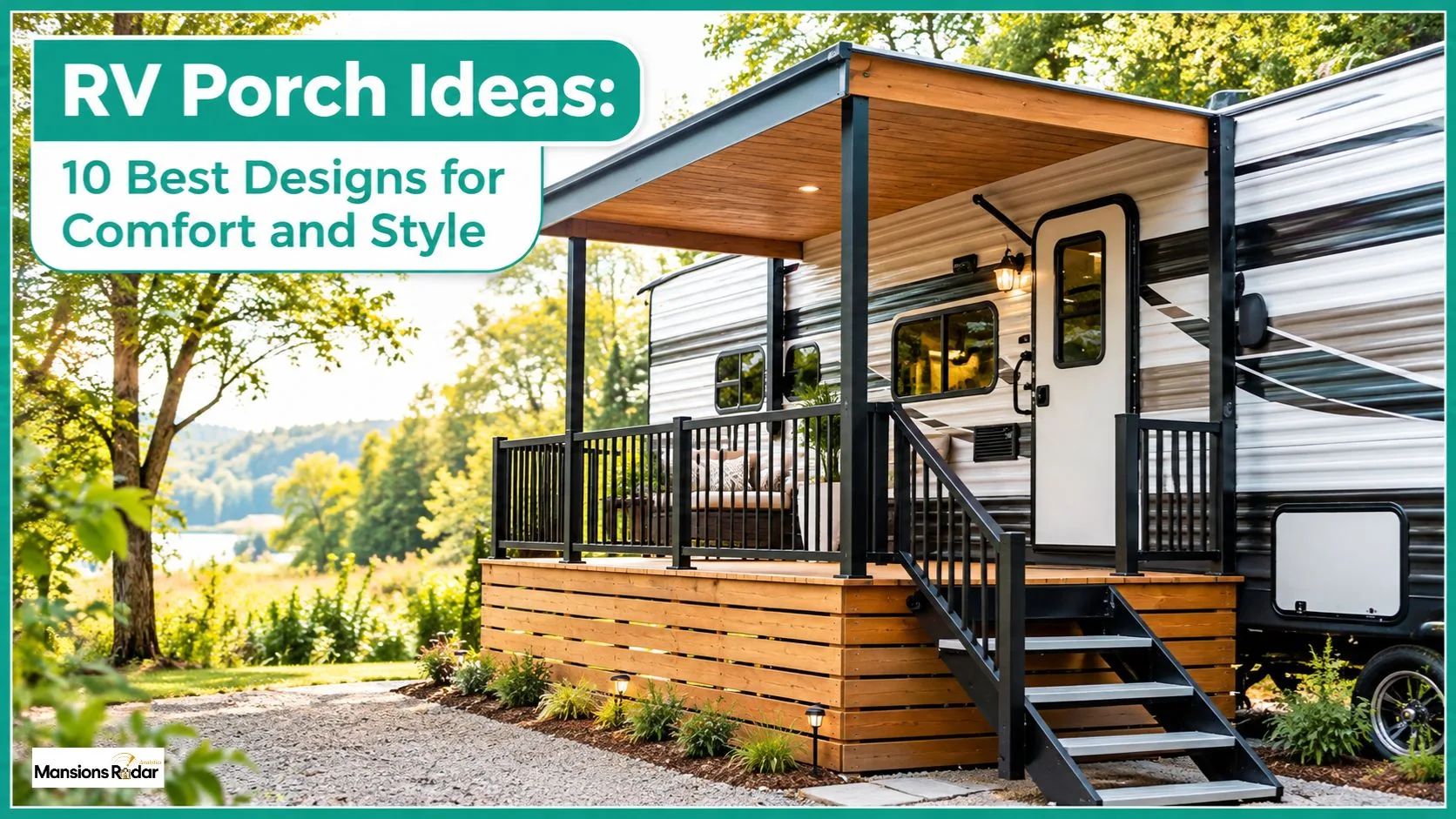
An RV porch creates a comfortable outdoor space beside your recreational vehicle for relaxing, dining, or enjoying the campsite. From portable decks and covered patios to simple seating platforms, the right setup can add comfort and functionality to your RV stay.
The best design depends on your RV type, available space, weather, budget, and campground rules. Explore these 10 RV porch ideas, along with material options, cost factors, setup tips, and safety considerations.
What to Consider Before Choosing an RV Porch
Before choosing an RV porch or deck, consider your vehicle, campsite, and intended use. These factors help you select a practical, safe setup.
- RV type: Check compatibility with your motorhome, travel trailer, or fifth wheel.
- Available space: Allow room for doors, steps, slide-outs, and emergency exits.
- Portability: Decide whether you need a removable deck or a permanent-style setup.
- Weather: Consider rain, sunlight, wind, and drainage.
- Campsite rules: Check campground restrictions on decks, platforms, and structures.
- Budget: Include materials, labor, stairs, railings, and permits where required.
10 Best RV Porch Ideas for Comfort
The right RV porch can create a comfortable outdoor living area for relaxing, dining, and enjoying your campsite. From portable RV decks to covered seating areas, these designs offer practical options for different travel styles, budgets, and campsite layouts.
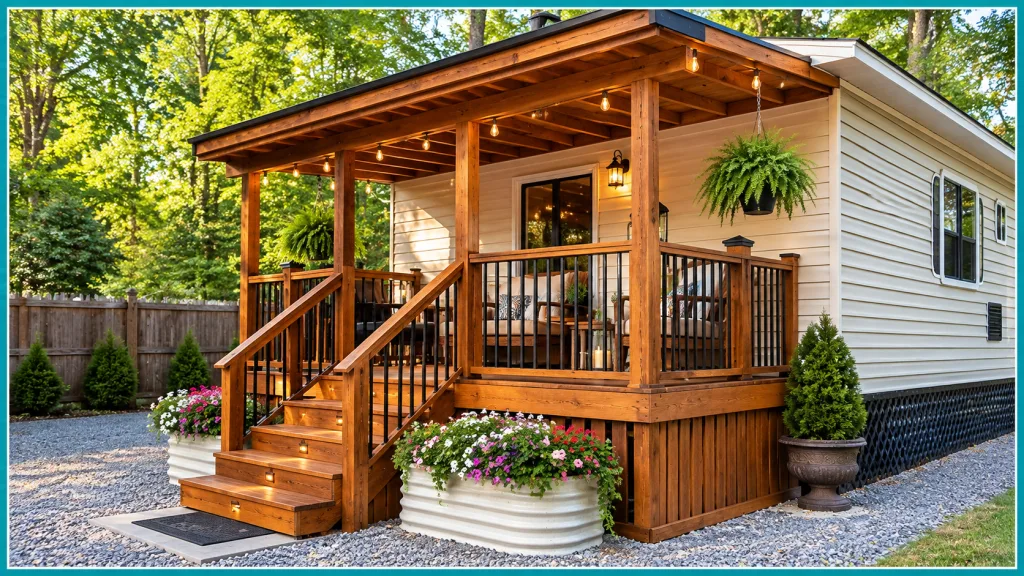
1. Small Wooden RV Porch
A compact wooden RV deck creates space for outdoor chairs and a small table without crowding your campsite. Choose weather-resistant lumber and apply a suitable outdoor sealant to protect the platform from moisture.
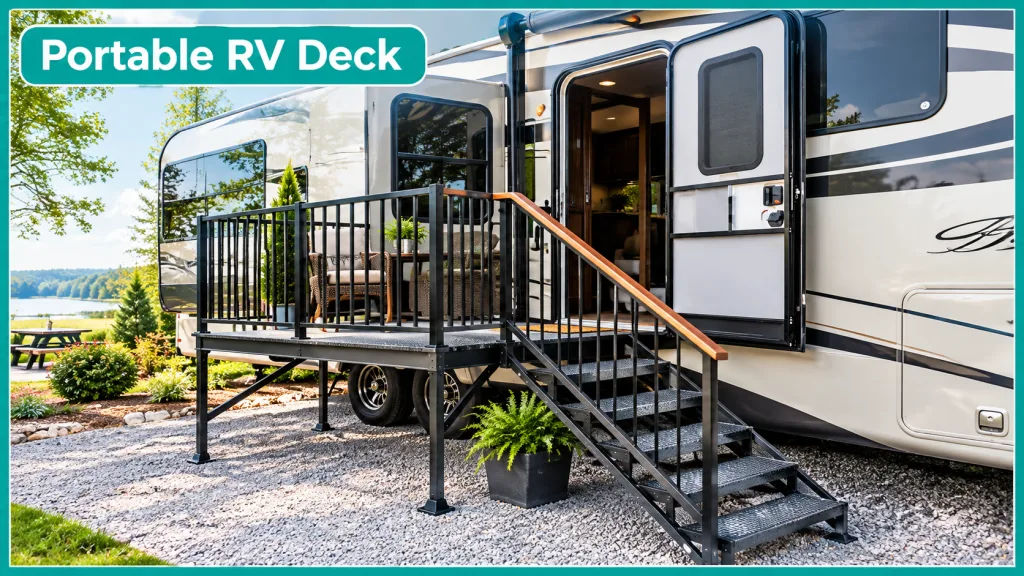
2. Portable RV Deck
A modular RV deck suits travelers who frequently change campsites. Look for lightweight panels, secure connections, a stable walking surface, and a design that is easy to assemble, dismantle, and transport.
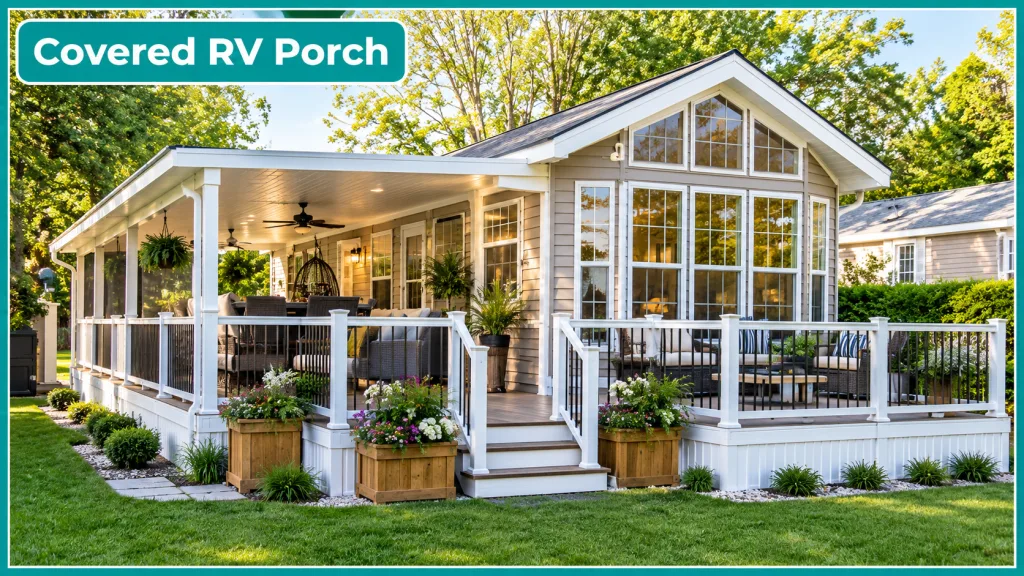
3. Covered RV Porch
An RV porch with a suitable awning or shade cover provides relief from direct sunlight and light rain. Consider wind exposure, secure installation, and campground restrictions before adding overhead coverage.
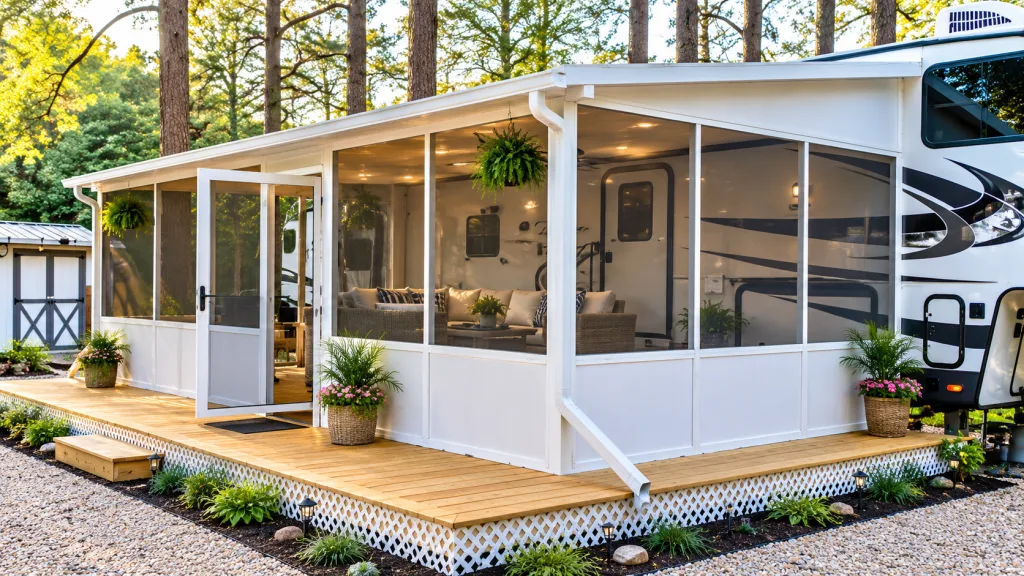
4. Screened-In RV Porch
An RV screen enclosure creates a breezy outdoor space while helping keep mosquitoes and other insects away. Removable mesh panels make this setup practical for warm-weather camping, outdoor meals, and relaxing evenings.
5. Budget-Friendly RV Porch
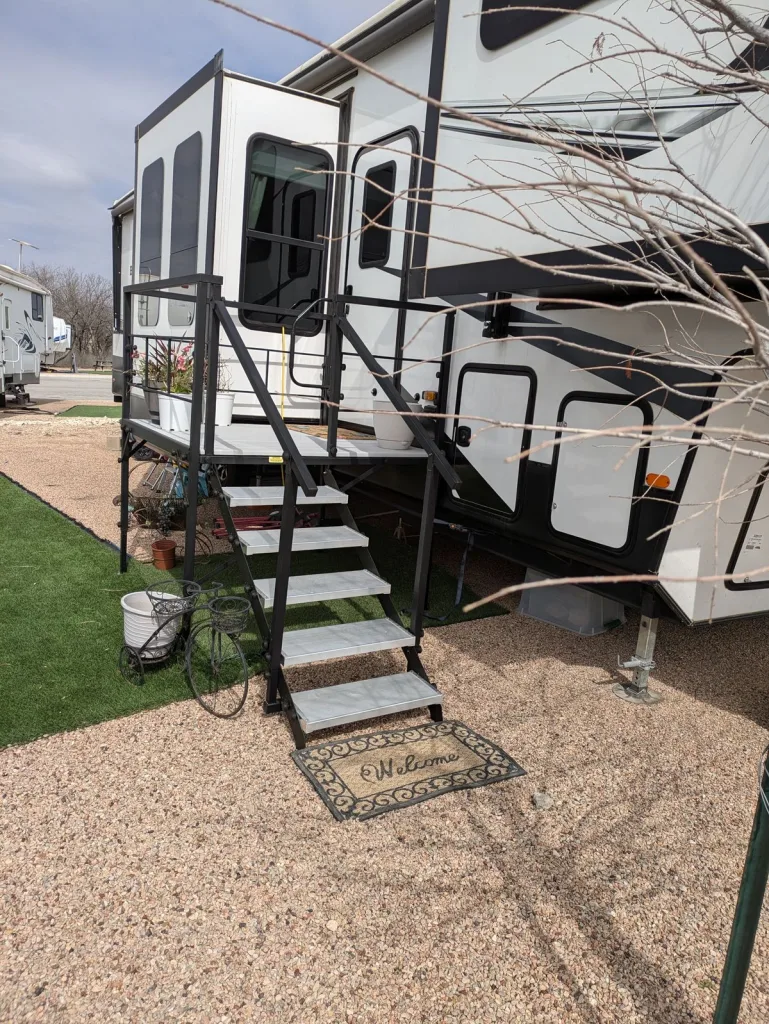
Build an affordable RV porch with a simple platform, weather-resistant materials, and a few folding chairs. A straightforward design can reduce costs, but the structure must remain stable and provide safe access.
Source: @sunrisedecks
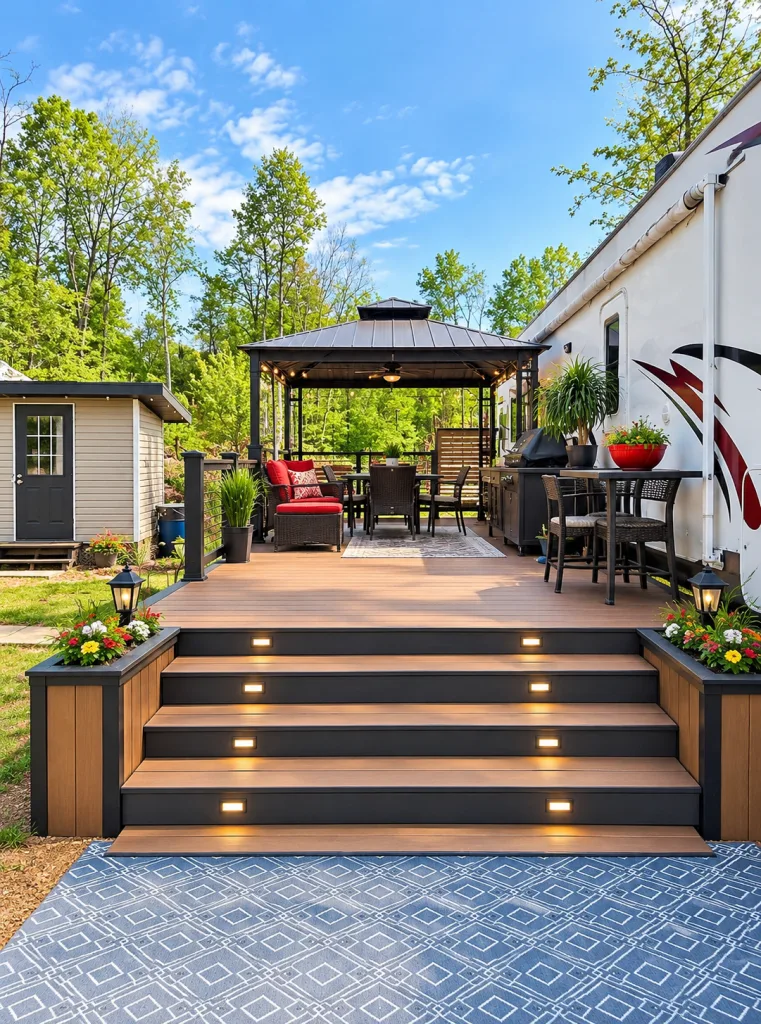
6. Composite RV Deck
Composite decking offers a low-maintenance alternative to traditional wood boards. Compare material costs, slip resistance, surface heat, and installation requirements before choosing boards for your outdoor RV space.
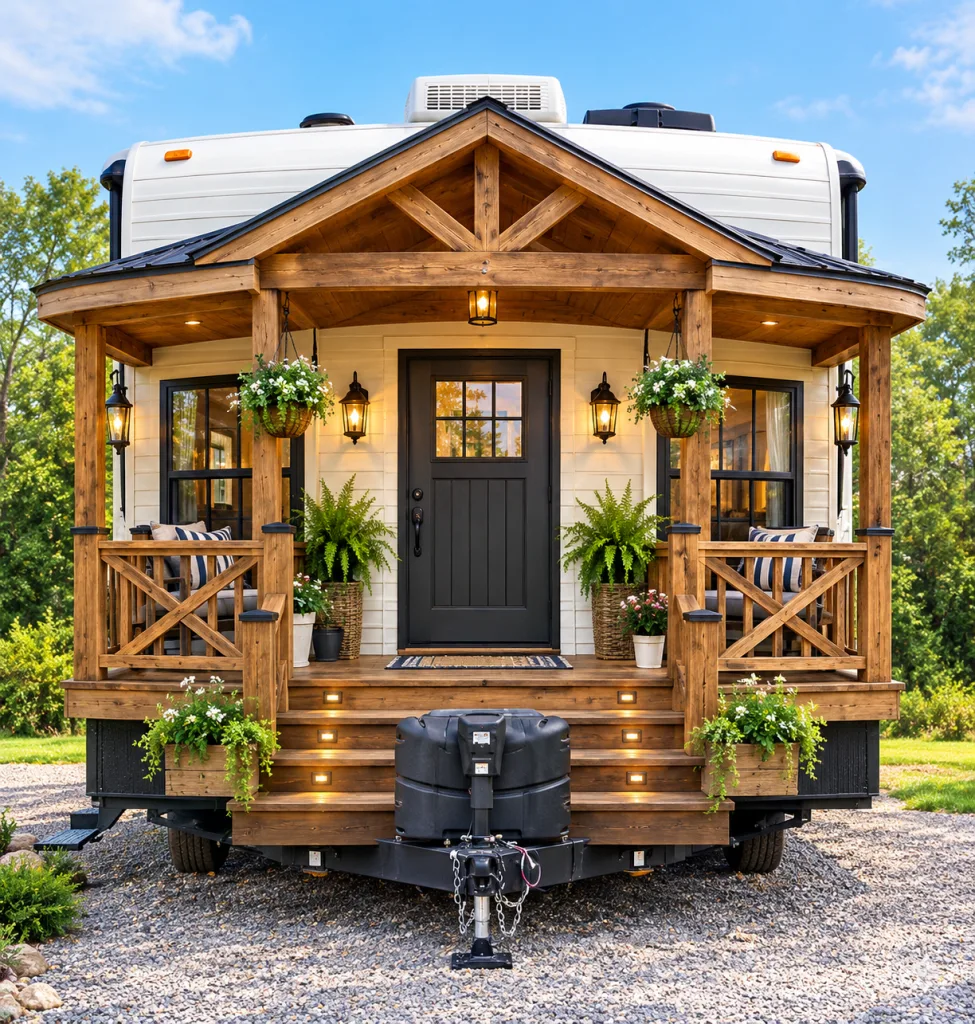
7. Rustic Camper Porch
Create a rustic camper porch with natural wood finishes, simple outdoor furniture, and understated decor. Folding chairs and weather-resistant accessories add a cozy cabin-inspired feel without cluttering the campsite.
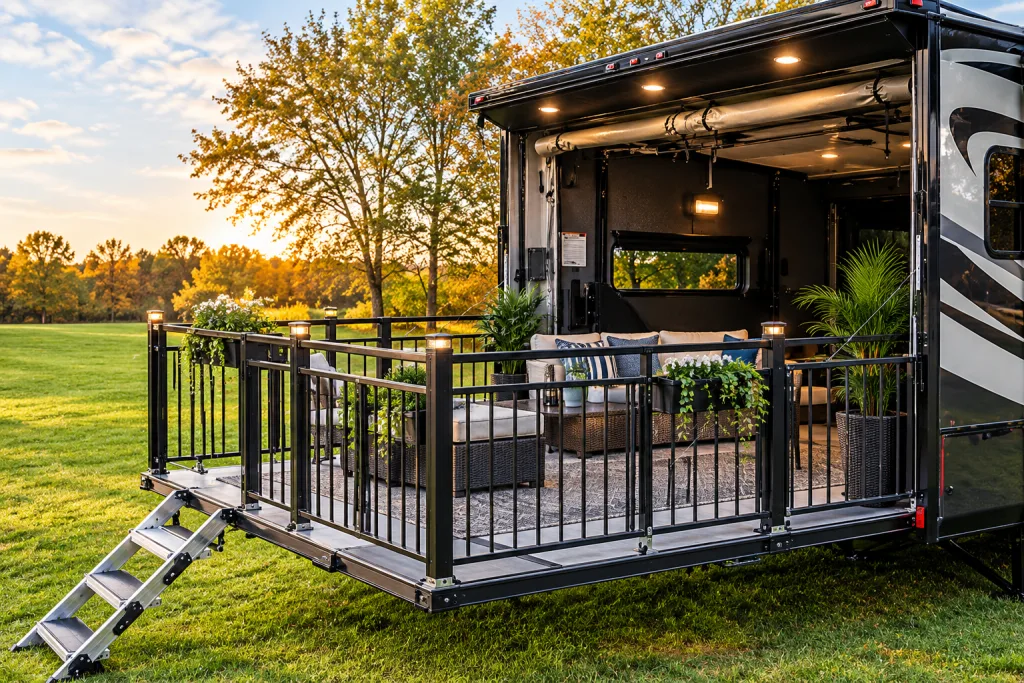
8. RV Porch With Railing
Deck railings and properly designed stairs can improve safety on raised RV porch platforms. Choose suitable guardrails based on the deck height, intended use, and applicable building or campsite requirements.
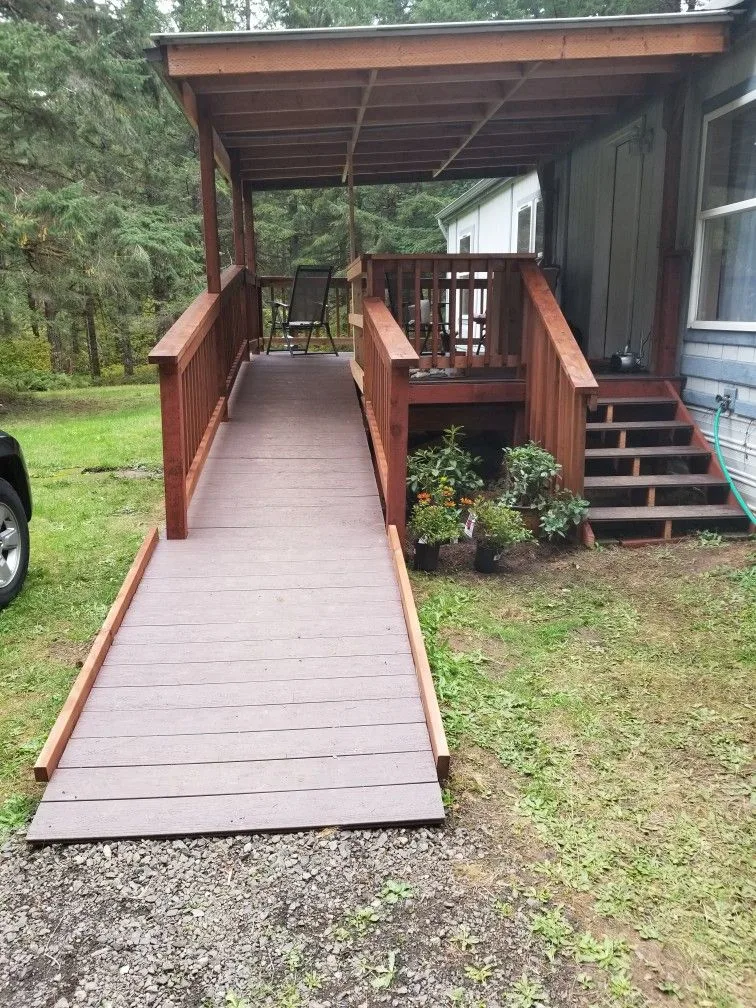
9. RV Porch With a Ramp
A ramp can make an RV porch easier to access for people who have difficulty using steps. Plan for a suitable slope, a firm nonslip surface, adequate width, and handrails where required.
Source: @jenwill33
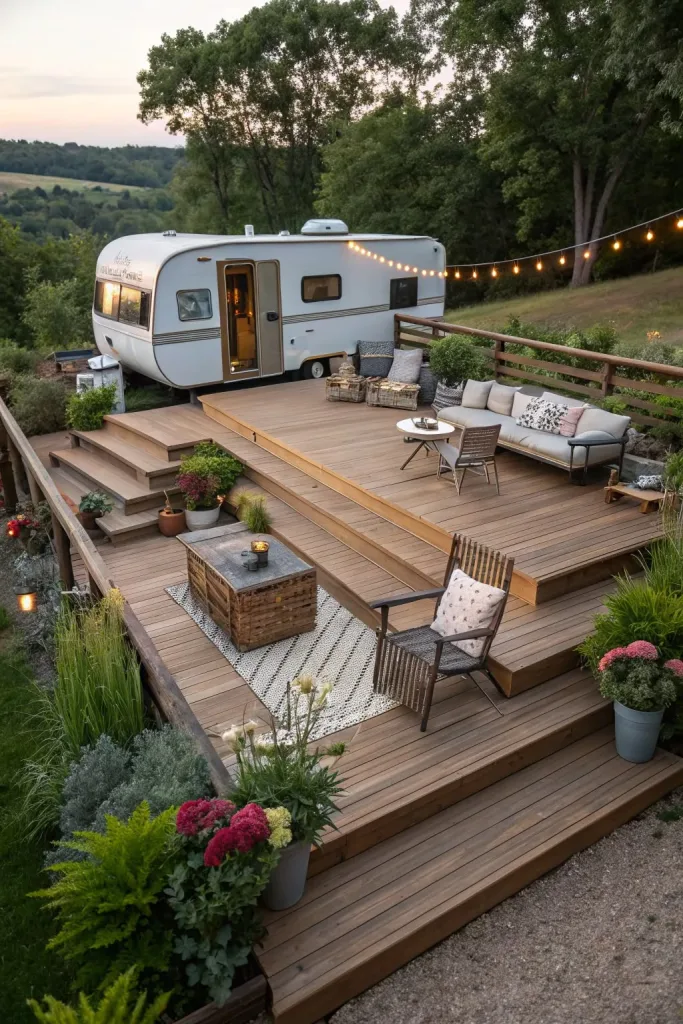
10. RV Porch With Built-In Seating
Built-in benches provide space-saving outdoor seating without the need for extra chairs. Storage beneath the seats can hold camping accessories, provided it does not block RV doors, utility compartments, or walking paths.
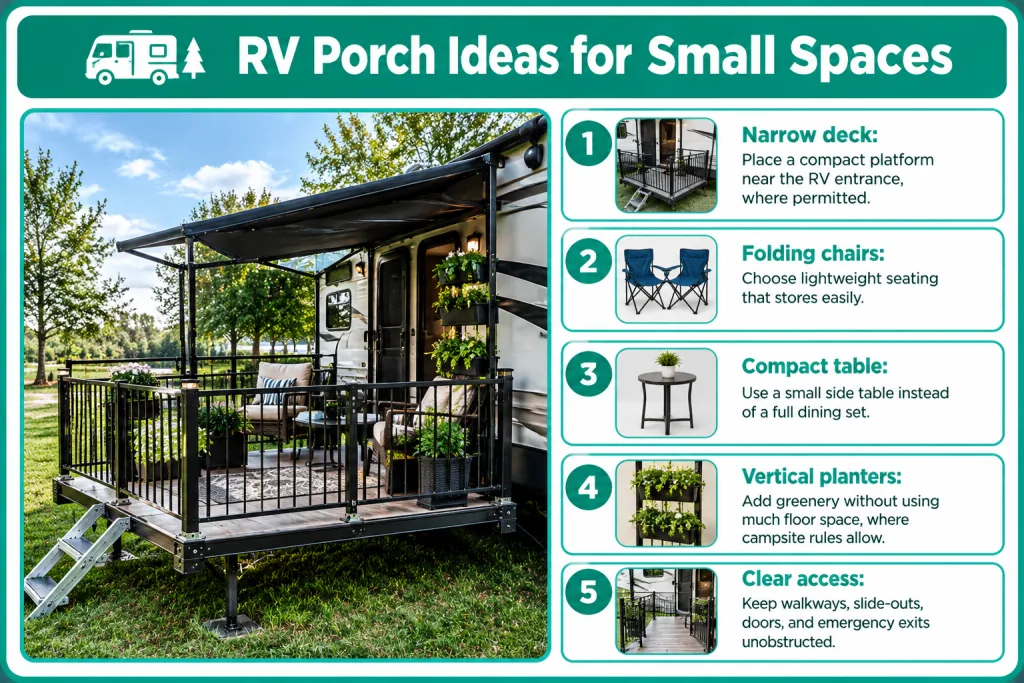
RV Porch Ideas for Small Spaces
A small RV porch can provide comfortable outdoor seating without taking up too much campsite space. Use compact furniture and keep access to your vehicle clear.
Best Materials for an RV Porch
The best RV porch material depends on your budget, climate, portability needs, and ground conditions. Compare these common options before choosing.
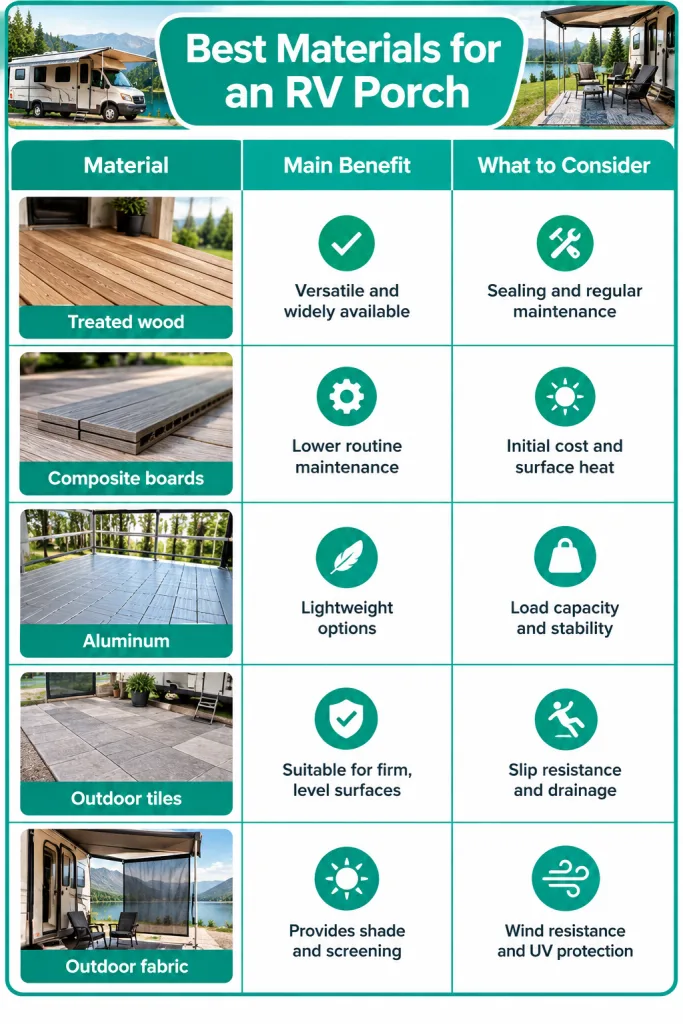
Choose materials rated for outdoor use and suitable for the intended load. For portable RV decks, prioritize easy transport and secure assembly; for stationary platforms, consider long-term durability and maintenance.
How Much Does an RV Porch Cost?
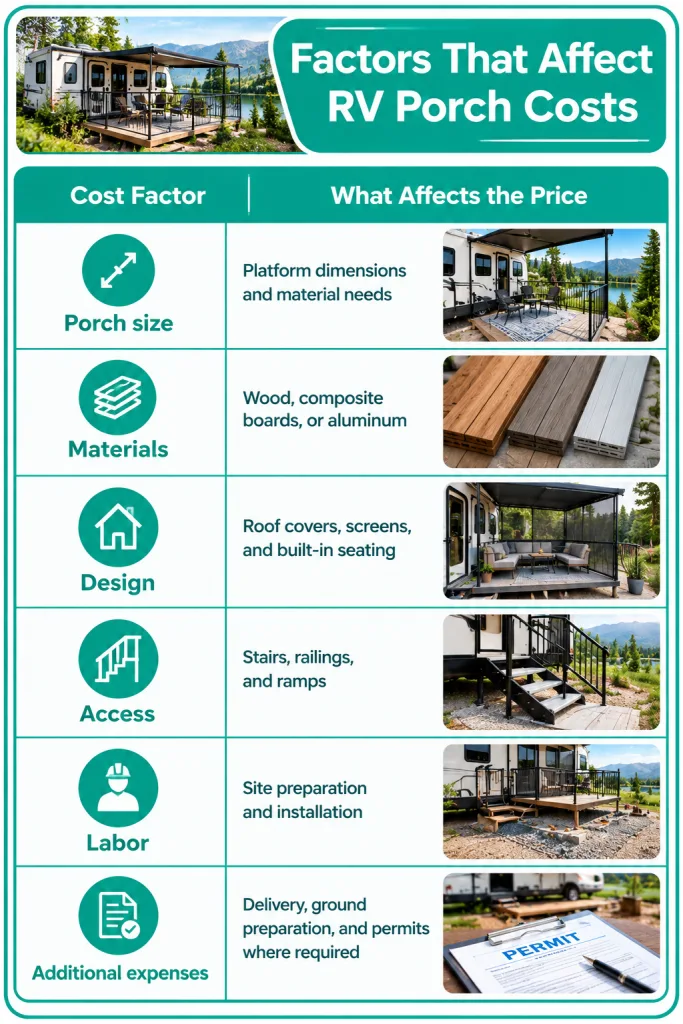
The cost of an RV porch depends on its size, materials, design, and installation requirements. A simple DIY platform usually costs less than a professionally built deck with stairs, railings, or a covered seating area.
Factors That Affect RV Porch Costs
Estimated RV Porch Costs
Exact RV porch pricing is difficult to establish because costs depend on the design and campsite. General deck and awning prices provide a useful starting point, but they are not direct quotes for RV porches.
According to Bankrate’s deck cost guide, an installed deck typically costs around 30–60 per square foot. Based on that range, an 8-by-10-foot platform could cost approximately 2,400–4,800 for professional installation.
LawnStarter reports that a small 8-by-10-foot DIY deck can cost under $1,000 in materials, while professional awning installation may cost 1,345–4,075.
| Project Type | Estimated Cost | What’s Included |
| DIY 8 × 10 ft platform | Under $1,000 | Materials only |
| Professionally built 8 × 10 ft deck | 2,400–4,800 | Estimated materials and labor |
| Installed awning | 1,345–4,075 | Awning and installation |
These figures are general estimates, not guaranteed RV porch prices. Actual costs vary by location, material choice, site conditions, and installation requirements. Get local quotes before setting your budget.
How to Set Up an RV Porch
Follow this order. It keeps you from rebuilding.
- Check campground rules and property permission.
- Measure the open space around the RV.
- Confirm clearance at the door, slide-outs, and emergency exit.
- Pick a design and weather-resistant materials.
- Prepare a stable, well-drained base.
- Assemble the platform by the product instructions.
- Test the stability, steps, railings, and access before you use it.
RV Porch Safety and Park Rules
Before building an RV porch, check campground rules and local building requirements. Rules vary by location, so confirm what applies to your site.
- Get permission: Ask the campground or property owner before building.
- Check permits: Confirm whether local rules require permits or inspections.
- Keep access clear: Do not block RV doors, slide-outs, or emergency exits.
- Secure covers: Anchor awnings and shade structures properly for expected wind.
- Prevent falls: Use stable steps, suitable railings, and slip-resistant surfaces. Some building codes require guardrails on decks about 30 inches or more above the ground.
- Manage drainage: Prevent water from collecting under or around the porch.
- Protect the RV: Never attach a porch or deck to your RV unless the manufacturer allows it.
- Plan ramps carefully: ADA guidance recommends a maximum ramp slope of 1:12 and a clear width of at least 36 inches. Handrails are required for certain ramp rises under ADA standards. These rules may not apply to every private RV porch. See the U.S. Access Board ramp guide for details.
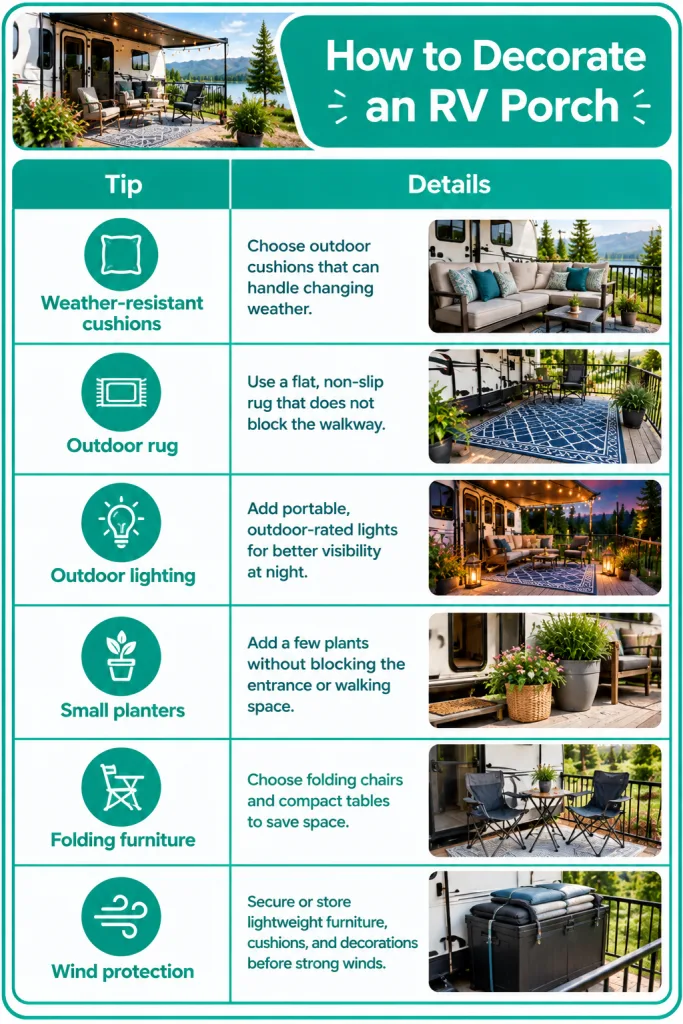
How to Decorate an RV Porch
Once your RV porch is safe and stable, add simple touches to make it comfortable and inviting.
Common RV Porch Planning Mistakes to Avoid
Avoid these common mistakes when designing and building an RV porch:
- Ignoring campground rules: Check site restrictions before building to avoid extra costs or removal.
- Blocking RV access: Keep doors, slide-outs, steps, and emergency exits clear.
- Overlooking drainage: Choose stable ground and prevent water from collecting around the porch.
- Choosing high-maintenance materials: Check cleaning, sealing, and repair needs before buying.
- Forgetting extra costs: Include stairs, railings, delivery, and installation in your budget.
- Choosing the wrong porch type: Select a portable RV deck if you need to move your setup regularly.
- Leaving items unsecured: Secure or store loose furniture and shade covers before strong winds.
Final Thoughts
The right RV porch creates a comfortable outdoor space for relaxing and enjoying your campsite. Compare RV porch designs, materials, portability, and costs to find an option that suits your needs and budget. Always check campground rules and keep RV doors and exits clear before building.
Ready to improve your outdoor space? Contact our team for professional guidance and help planning an RV porch that fits your space and budget.
Frequently Asked Questions
What is an RV porch?
An RV porch is a platform or seating area beside your RV for relaxing outdoors.
What is the best porch design for an RV?
Portable decks suit frequent travelers, while covered or composite porches suit longer stays.
Can you build a porch beside a travel trailer?
Yes, if campground rules allow it. Keep doors and slide-outs clear.
What is the cheapest type of RV porch?
A simple DIY platform with basic seating is often the most affordable option.
Can an RV porch be portable?
Yes. Modular decks and folding platforms are easy to transport and store.
Do you need a permit for an RV porch?
It depends on local codes and campground rules. Check before building.
What material works best for an RV deck?
Treated wood is budget-friendly, composite needs less maintenance, and aluminum suits lightweight designs.
Can you add a roof to an RV porch?
Yes. Use an approved awning or freestanding cover and check campground rules.