Right now, nothing is hitting harder than a sage green house. It’s not a trend. It’s a shift. Muted, earthy, and calm, sage green sits perfectly between warm and cool, bold and neutral. It works on cottages, farmhouses, Craftsmen, ranches, and modern builds alike.
In this guide, I’m breaking down 20 of the best sage green ideas from exterior paint pairings to trim combos, door colors, and interior applications, so you can get it right the first time.
15 Sage Green House Ideas
1. Sage Green with Black Trim
This is the most popular combination right now. Black trim gives the soft, muted green a sharp edge. It defines windows, rooflines, and corners with confidence. The contrast is strong without being harsh. Works beautifully on modern farmhouses and Craftsman-style homes. If you want your exterior to look current and polished, this is the starting point.

2. Sage Green with White Trim
White trim is the classic pairing. It brightens the exterior and makes the sage pop without competing with it. It’s the safest combination — but also the most timeless. Works on every architectural style. Use a soft white like Benjamin Moore White Dove rather than a stark bright white to keep the look warm.

3. Sage Green with Cream Trim
Cream sits between white and beige. It’s warmer and softer than white, which makes it particularly flattering on sage green shades with yellow or warm undertones. Great for cottage-style homes and traditional builds. Cream trim feels vintage and welcoming without feeling dated.

4. Sage Green with Brown Trim
Brown trim is underused and completely underrated. Warm wood-toned trim — think walnut or cedar stain — grounds the sage in a way that no paint color can. This combination looks gorgeous on homes with natural wood accents, exposed beams, or stone foundations. It’s earthy, layered, and deeply satisfying.
5. Dark Sage Green with Black Windows
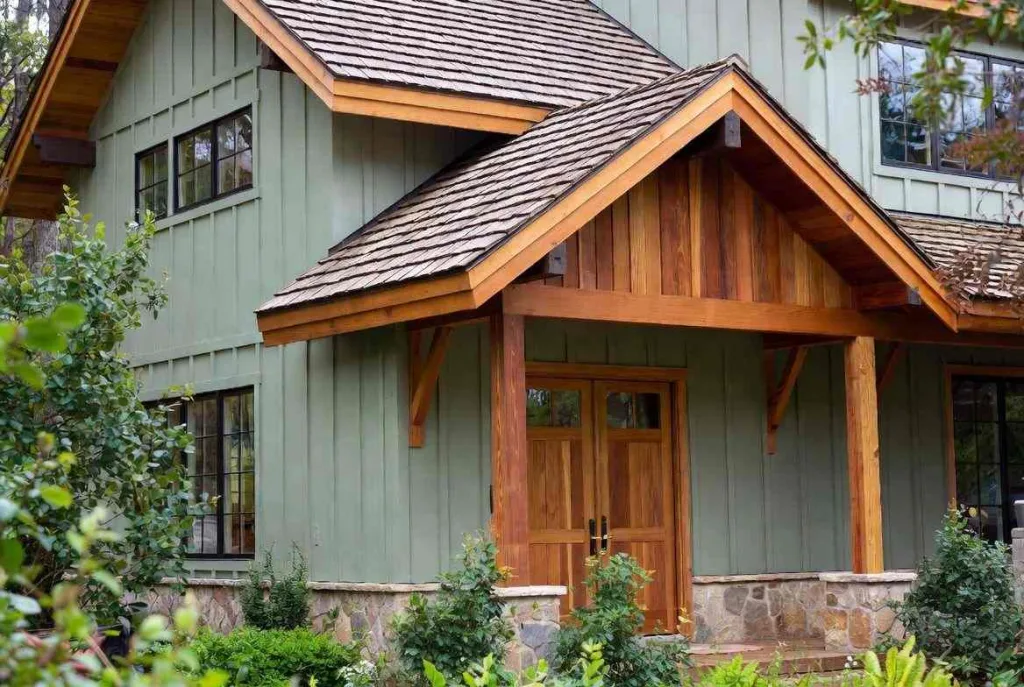
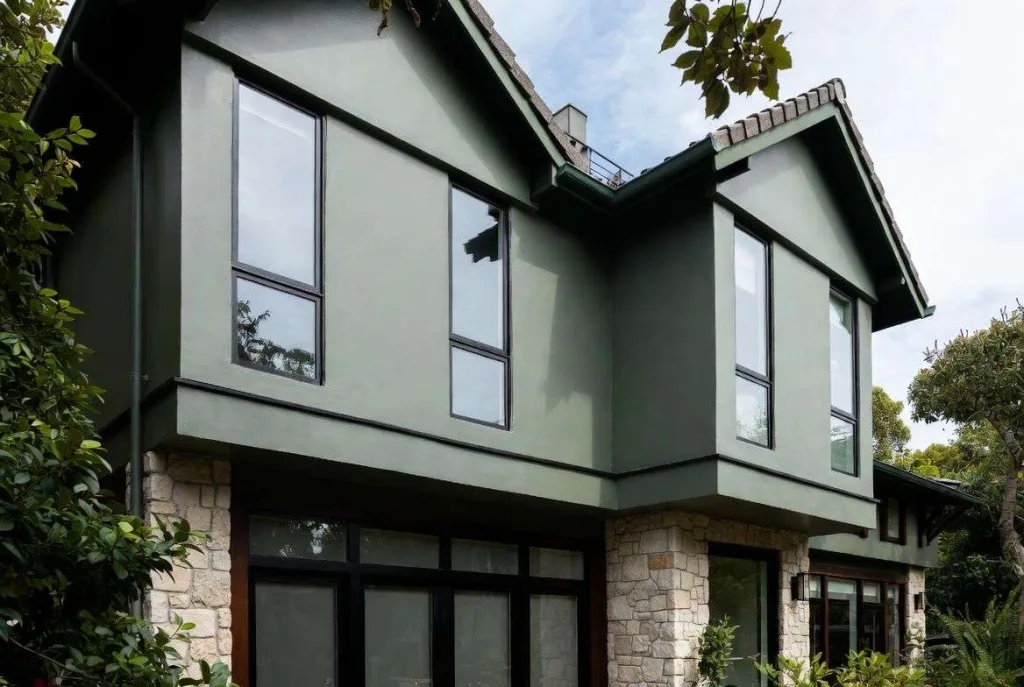
Dark sage — think Sherwin-Williams Pewter Green or Benjamin Moore Gloucester Sage — with black-framed windows is a moody, sophisticated look. The windows disappear into the color, creating a seamless dark aesthetic. Very current. Works especially well on modern and transitional architecture.
6. Sage Green with a Yellow Front Door
This is a bold, joyful combination. A warm mustard or golden yellow door against sage siding creates instant curb appeal. The yellow reads as a pop of sunshine without feeling garish. Great for cottage-style homes with garden beds out front. It makes the entry a focal point.

7. Sage Green with a Black Front Door
A matte black front door on a sage green house is clean and confident. It ties into black trim if you’re using that combo, creating a unified exterior palette. The black door reads as intentional — not stark. Pair with brushed black hardware for a cohesive look.

8. Sage Green with a Red or Burgundy Door
This is the most classic heritage look. Deep red or burgundy against sage green has been used in American architecture for over a century. It’s a traditional pairing that never goes out of style. Best on Colonial, Federal, and traditional Craftsman homes.

9. Sage Green with a Navy Blue Door
Navy and sage share the same muted, sophisticated energy. A navy blue door on sage green siding creates a refined, layered look. Both colors read as calm and considered. This combination works particularly well in coastal and Pacific Northwest settings.

10. Sage Green with Black Shutters
Black shutters frame windows with sharp definition. On sage green siding, they create a high-contrast detail that gives the exterior structure and depth. Even simple shutters instantly improve the look of windows. Pair with black door hardware to tie the details together.

11. Sage Green with Stone Accents
Natural stone and sage green are a natural pairing. Both materials share earthy, organic undertones. Stone around entryways, foundations, or columns adds texture and depth. The combination makes a home feel connected to its landscape — grounded and permanent.

12. Sage Green Board and Batten
Vertical board and batten siding in sage green adds texture and dimension that flat horizontal siding can’t match. The vertical lines make a house look taller. Pair with a darker trim color to emphasize the profile. This is especially popular on modern farmhouse builds.

13. Light Sage Green with a White Porch
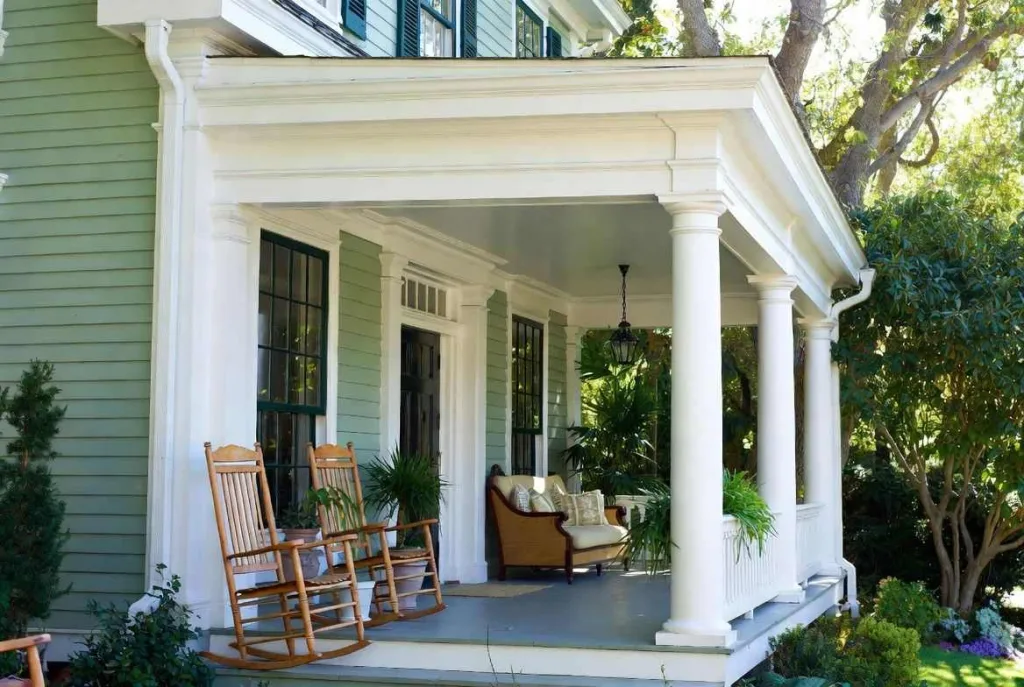
A lighter sage — like Benjamin Moore October Mist or Sherwin-Williams Contented — on a home with a classic white porch creates a soft, welcoming exterior. Rocking chairs, potted plants, and neutral cushions complete the look. It’s relaxed, beautiful, and approachable.
14. Dark Sage Green Ranch House
Ranch homes are flat and wide. A dark sage green — especially in a flat finish — gives them depth and visual weight they often lack. Use contrasting trim at the roofline and around windows to break up the horizontal mass. Dark sage on a ranch home looks serious and grounded.

15. Sage Green with Warm Taupe Trim
Taupe trim softens sage green’s cool undertones. It creates a warmer, more cohesive exterior palette than white or cream. This combination is particularly effective on homes in warm climates or sun-heavy exposures, where cool tones can wash out.

Sage Green House Interior
Sage green is equally powerful indoors. It works in kitchens, living rooms, bedrooms, and bathrooms. The key principles are the same as exterior: choose based on your light source and pair with materials that complement the undertones.
In kitchens, sage green cabinets pair beautifully with brass hardware, butcher block or white marble countertops, and white or cream upper cabinets. In living rooms, sage walls create a calm backdrop that makes every furniture piece feel intentional. In bedrooms, sage reads as restful and organic — one of the best colors for supporting good sleep.
For walls, Sherwin-Williams Contented hits a sweet spot between being too light and too dark, with an LRV of 52 — making it a great option for all four walls in a room, not just an accent wall.
For a deeper, moodier interior tone, consider Benjamin Moore October Mist or Sherwin-Williams Clary Sage. Both give you sage’s earthy calm with enough depth to feel sophisticated rather than washed out. If you’re planning a full remodel instead of just painting, you may also wonder How Long Does It Take to Build a House? The answer often depends on the project’s size and scope.
Best Sage Green House Paint Colors
Picking the right shade matters as much as the combination. Here are the best-performing options from the major brands.
| Paint Brand | Color Name | Tone | Best For |
| Benjamin Moore | Saybrook Sage HC-144 | Warm neutral gray-green | All architectural styles |
| Benjamin Moore | October Mist 1495 | Cool gray-green (2022 COTY) | Lighter, softer looks |
| Benjamin Moore | Gloucester Sage HC-100 | Deeper, richer sage | Dark sage exteriors |
| Sherwin-Williams | Evergreen Fog SW 9130 | Cool blue-green sage (2022 COTY) | Modern and coastal |
| Sherwin-Williams | Clary Sage SW 6178 | Warm yellow undertone | Traditional and Craftsman |
| Sherwin-Williams | Pewter Green SW 6208 | Dark, moody sage | Bold dark exteriors |
| Sherwin-Williams | Acacia Haze SW 9132 | Cool with blue undertones | Pacific Northwest and coastal |
| Benjamin Moore | Urban Nature AF-440 | Earthy, deeper sage | Rustic and natural settings |
Benjamin Moore Saybrook Sage is one of the most recommended true sage-gray-greens on the market. It reads beautifully on overcast days, though on bright sunny days it can appear lighter and almost gray — making it a particularly strong choice for Pacific Northwest climates.
Sherwin-Williams Evergreen Fog is a consistent top performer. It’s a beautiful mid-tone gray-green color with the sophistication and versatility of a neutral, making it a lovely pick for exteriors as well as interior rooms.
For darker applications, Benjamin Moore recommends sampling beforehand and using a darker shade like Urban Nature AF-440 or Gloucester Sage HC-100 for sage green home exteriors.
Sage Green House Exterior Tips
- Test in natural light first: Sage green shifts dramatically between morning light, afternoon sun, and overcast conditions. Always test a sample on the actual wall before committing. What looks perfect at the paint store can read gray, blue, or khaki on your specific house. If you already notice Lights Flickering in House, address the electrical issue before starting any painting or renovation work.
- Match your fixed elements: Your roof, brick, stone, and concrete are not changing. Choose a sage green that works with those tones — not against them. Warm-toned sage greens pair well with warm roofing. Cool-toned sage greens pair better with gray or charcoal roofs.
- Choose to finish carefully: Exterior siding does best in a satin or low-sheen eggshell finish. High gloss amplifies imperfections. Flat finishes show dirt more easily. A satin finish holds up against weather while still looking refined.
- Use contrasting trim strategically: Your trim color is what defines the architecture. Darker trim emphasizes lines and adds structure. Lighter trim softens the profile and opens up the exterior. Neither is wrong — it depends on what your home’s architecture needs.
How Much Does It Cost to Paint a Sage Green House?
Cost is one of the most searched questions — and one that almost no competitor covers properly. Here’s the full picture.
Exterior Painting Cost
The national average for a full exterior repaint runs between $3,000 and $8,000 for a standard single-family home. Several factors push that number up or down.
| Factor | Cost Range | Notes |
| Small home (under 1,500 sq ft) | $1,500 – $3,500 | 1–2 coats, standard prep |
| Medium home (1,500–2,500 sq ft) | $3,000 – $6,000 | Most common range |
| Large home (2,500–4,000 sq ft) | $5,500 – $10,000 | Multi-story adds cost |
| Premium paint (Benjamin Moore, SW) | Add $200 – $600 | Higher quality, better coverage |
| Labor (per hour) | $25 – $75/hr | Varies by region |
| Pressure washing / prep | $150 – $400 | Always recommended |
| Primer coat | Add $300 – $700 | Required on bare wood or major color shifts |
| Trim painting (separate) | $500 – $1,500 | Windows, fascia, soffits |
| Shutters (per pair) | $50 – $150 | Removed and repainted off-house |
Paint Cost by Brand
The paint itself is a meaningful budget line. Here’s what sage green shades cost per gallon at major brands.
| Brand | Product Line | Price Per Gallon | Coverage |
| Benjamin Moore | Regal Select Exterior | $65 – $75 | 350–400 sq ft |
| Benjamin Moore | Aura Exterior | $80 – $90 | 400–450 sq ft |
| Sherwin-Williams | Duration Exterior | $65 – $75 | 350–400 sq ft |
| Sherwin-Williams | Emerald Exterior | $85 – $95 | 400 sq ft |
| Behr Premium Plus | Exterior | $35 – $45 | 300–350 sq ft |
| Behr Marquee | Exterior | $50 – $60 | 350–400 sq ft |
For a 2,000 sq ft exterior requiring two coats, expect to use 10–14 gallons of paint. At premium brand pricing, that’s $700 – $1,260 in paint alone before labor.
DIY vs. Professional
- DIY total cost: $400 – $900 (paint, primer, brushes, rollers, tape, drop cloths, ladder rental). Saves 60–70% on labor. Requires 3–5 days of work on a medium home and proper prep or the paint won’t adhere.
- Professional total cost: $3,000 – $8,000 all-in for a medium home. Includes prep, prime, two coats, and cleanup. Most painters offer a 1–3 year warranty on workmanship.
The verdict: For single-story homes with straightforward siding, experienced DIYers can do excellent work. For multi-story, complex trim, or homes with peeling or damaged siding, a professional is worth every dollar.
Cost to Paint Trim Separately
Many homeowners paint the body themselves and hire out the trim — especially for second-story details and around windows. Trim-only professional painting typically runs $500 – $2,000 depending on linear footage and complexity.
Does Sage Green Cost More Than Other Colors?
No. Paint color doesn’t typically affect price unless you’re custom-mixing a specialty shade. Standard sage green formulas from Benjamin Moore and Sherwin-Williams are stocked at retail locations at standard pricing. Deep or highly saturated colors occasionally require a tinting surcharge, but sage green’s muted, gray-forward tone avoids that issue entirely.
Sage Green Color Schemes: Complete Pairings Guide
A color scheme is more than a trim color. It’s the full system — siding, trim, door, accents, roof, and hardscape — working together. Here are the complete schemes that work best with sage green.
Color Scheme 1: Classic Sage (Traditional / Colonial)
This is the most timeless sage green palette. It suits symmetrical, traditional homes with formal proportions.
- Siding: Benjamin Moore Saybrook Sage HC-144
- Trim: Benjamin Moore White Dove OC-17
- Front Door: Benjamin Moore Newburyport Blue HC-155 (navy) or Caliente AF-290 (red)
- Shutters: Black or deep navy
- Roof: Charcoal gray or black architectural shingles
- Accents: Brass lanterns, wrought iron railing
Mood: Formal, welcoming, heritage-rich.
Color Scheme 2: Modern Farmhouse Sage
The most searched sage green exterior look of the past five years. Clean, high-contrast, and architecturally sharp.
- Siding: Sherwin-Williams Pewter Green SW 6208
- Trim: Sherwin-Williams Black Magic SW 6991
- Front Door: Matte black or deep charcoal
- Shutters: Black board-and-batten style
- Roof: Standing seam metal in dark gray or black
- Accents: Matte black fixtures, house numbers, and door hardware
- Siding Profile: Vertical board and batten
Mood: Bold, modern, confident, graphic.
Color Scheme 3: Soft Cottage Sage
Light and welcoming. This scheme suits smaller homes, bungalows, and garden-forward properties.
- Siding: Benjamin Moore October Mist 1495
- Trim: Benjamin Moore Navajo White OC-95 (cream)
- Front Door: Sherwin-Williams Sunflower SW 6678 (mustard yellow) or white
- Shutters: Cream or sage to match siding
- Roof: Weathered wood or medium brown shingle
- Accents: Copper lanterns, window boxes with lavender and white flowers
Mood: Romantic, soft, garden-inspired, approachable.
Color Scheme 4: Dark Sage Moody Exterior
For homeowners who want something dramatic. Works on contemporary, transitional, and Pacific Northwest-style homes.
- Siding: Sherwin-Williams Acacia Haze SW 9132 or Benjamin Moore Gloucester Sage HC-100
- Trim: Iron Ore SW 7069 (dark charcoal) or matching dark sage
- Front Door: Sherwin-Williams Caviar SW 6990 (near black) or deep forest green
- Windows: Black aluminum-clad frames
- Roof: Dark charcoal or black metal
- Accents: Matte black hardware, concrete planters, dark wood decking
Mood: Dramatic, sophisticated, moody, editorial.
Color Scheme 5: Earthy Rustic Sage
Organic and grounded. Best for Craftsman, ranch, and homes with natural wood or stone elements.
- Siding: Sherwin-Williams Clary Sage SW 6178 or BM Urban Nature AF-440
- Trim: Sherwin-Williams Antique White SW 6119 or natural cedar stain
- Front Door: Sherwin-Williams Cavern Clay SW 7701 (terracotta) or warm chestnut brown
- Shutters: Deep brown or matching siding
- Roof: Rustic brown or warm gray shingle
- Stone Accent: Buff limestone or warm fieldstone at foundation or porch columns
- Accents: Bronze hardware, exposed timber, woven rattan light fixtures
Mood: Warm, natural, rooted, approachable.
Color Scheme 6: Coastal Sage
Relaxed and breezy. Works beautifully on beach cottages, Cape Cod-style homes, and Pacific Northwest builds. The soft, natural look pairs well with coastal architecture, much like the famous Goonies House Astoria, where surrounding scenery plays a major role in the home’s charm.
- Siding: Sherwin-Williams Evergreen Fog SW 9130
- Trim: Extra White SW 7006 or bright white
- Front Door: Sherwin-Williams Anchors Aweigh SW 7591 (soft navy) or coral
- Shutters: White or pale blue
- Roof: Light gray or weathered cedar shake
- Accents: Rope lanterns, driftwood-toned planters, white hydrangeas
Mood: Breezy, clean, coastal, welcoming.
Sage Green House by Architectural Style
Different architectural styles have different needs. Sage green works across all of them — but the right shade and trim combination changes significantly depending on the structure.
Craftsman / Bungalow
Craftsman homes were practically made for sage green. The style’s original color vocabulary leaned heavily into earthy greens, warm taupes, and deep reds.
- Best shade: Sherwin-Williams Clary Sage SW 6178 or Benjamin Moore Saybrook Sage HC-144. Both have the warm yellow undertone that complements Craftsman’s exposed timber and natural wood detailing.
- Trim approach: Use a warm white or cream on the wide banded trim, fascia, and rafter tails. A deeper accent color — deep brown, forest green, or burgundy — on the porch columns and decorative brackets creates authentic Craftsman layering.
- Door color: Deep red, forest green, or warm wood stain. Avoid black — it’s too modern for this style.
What to avoid: Cool blue-toned sage greens read too contemporary on Craftsman homes. Stick to shades with warm or neutral undertones.
Modern Farmhouse
Modern farmhouse architecture is where dark sage green really shines. The style’s clean lines, metal roofing, and board-and-batten siding profile create a perfect canvas for bold, moody sage.
- Best shade: Sherwin-Williams Pewter Green SW 6208 or Benjamin Moore Gloucester Sage HC-100. Both are dark enough to read with confidence against black trim and metal roofing.
- Trim approach: Black trim on everything — fascia, window surrounds, corner boards. No variation. The graphic contrast between dark sage and black is what makes this look work.
- Door color: Matte black or a matching dark sage. This door color make entry should feel seamless, not like an accent.
What to avoid: White trim on dark sage farmhouses looks dated immediately. The whole point of this palette is controlled contrast, not light-and-airy softness.
Colonial / Traditional
Colonial homes are symmetrical, formal, and proportioned. Sage green works here as a sophisticated alternative to the typical white or gray.
- Best shade: Benjamin Moore Saybrook Sage HC-144 or October Mist 1495. Both read as dignified and historically appropriate without feeling costume-like.
- Trim approach: Bright or soft white on all trim, shutters, columns, and window surrounds. The symmetry of a Colonial exterior needs clear definition — white delivers it without drama.
- Door color: Deep red, navy blue, or glossy black. The front door on a Colonial is an architectural statement. It needs presence.
What to avoid: Dark trim on a traditional Colonial reads as out of character. The style demands lighter trim that reflects its formal proportions.
Cottage / Cape Cod
Cottage-style and Cape Cod homes are small, charming, and usually surrounded by landscaping. Lighter sage greens work best here.
- Best shade: Benjamin Moore October Mist 1495 or Sherwin-Williams Contented SW 6191. Both are soft enough to feel cozy rather than heavy on a smaller structure.
- Trim approach: Cream or warm white. The trim should feel like a natural extension of the siding, not a sharp contrast. Softer trim keeps the home feeling cohesive and intimate.
- Door color: Yellow, soft teal, or white. Something cheerful and welcoming that draws you toward the entry.
What to avoid: Dark sage on a small cottage can feel oppressive. Light always wins on smaller structures.
Ranch
Ranch homes are wide and low. The challenge is preventing the exterior from reading as flat and uninteresting.
- Best shade: A medium-to-dark sage — Sherwin-Williams Acacia Haze or Benjamin Moore Gloucester Sage — adds visual weight and prevents the home from disappearing into the landscape.
- Trim approach: Contrasting trim at the roofline and window surrounds is essential. It’s the only way to add the architectural definition that ranch homes lack by default. Black or deep charcoal trim is the strongest choice.
- Door color: Black, deep red, or navy. The front door is the only vertical focal point on a ranch — it needs to be strong.
What to avoid: Light sage on a ranch disappears. Go darker to give the home presence from the street.
Tudor / English Cottage
Tudor-style homes with their half-timbering, steeply pitched rooflines, and brick or stucco elements pair naturally with earthy sage green tones.
- Best shade: Benjamin Moore Urban Nature AF-440 or Sherwin-Williams Clary Sage SW 6178. Both have the warmth and earthiness that complements exposed timber and brick.
- Trim approach: Use the existing timber tones as your trim anchor. Painted trim in cream or warm white should complement, not compete with, the exposed wood framing.
- Door color: Deep forest green, chestnut brown, or warm burgundy — colors that feel aged and European.
What to avoid: Black trim on Tudor architecture looks grafted on from another style. This style needs organic warmth, not sharp contrast.
Final Thoughts
A well-chosen sage green house is one of the most satisfying exterior decisions you can make. It’s timeless without being boring. It’s bold without being aggressive. It connects your home to the natural landscape in a way that few other colors can manage.
Start with the right shade for your light exposure and fixed elements. Choose your trim color based on what your architecture needs. Pick a door color that gives the entry a focal point. Then commit.
Sage green doesn’t need to fight for attention. It earns it.
Frequently Asked Questions
What front door color works with a sage green house?
Yellow and black are the two strongest choices. Yellow creates warmth and energy. Black creates drama and polish. Red and burgundy are classic heritage options.
What color is sage green, exactly?
Sage green is a muted, gray-toned green inspired by the herb. It sits between green and gray, with undertones that can shift warm (toward yellow) or cool (toward blue) depending on the specific shade and lighting.
What is the best sage green color scheme for a modern farmhouse?
Sherwin-Williams Pewter Green SW 6208 on board-and-batten siding, black trim on all details, black-framed windows, a matte black or dark sage front door, and a standing seam metal roof in dark gray or black.
What is the best sage green color scheme for a traditional home?
Benjamin Moore Saybrook Sage HC-144 on the siding, Benjamin Moore White Dove OC-17 on all trim and shutters, a deep navy or red front door, and charcoal gray architectural shingle roofing. Brass or oil-rubbed bronze hardware completes the look.