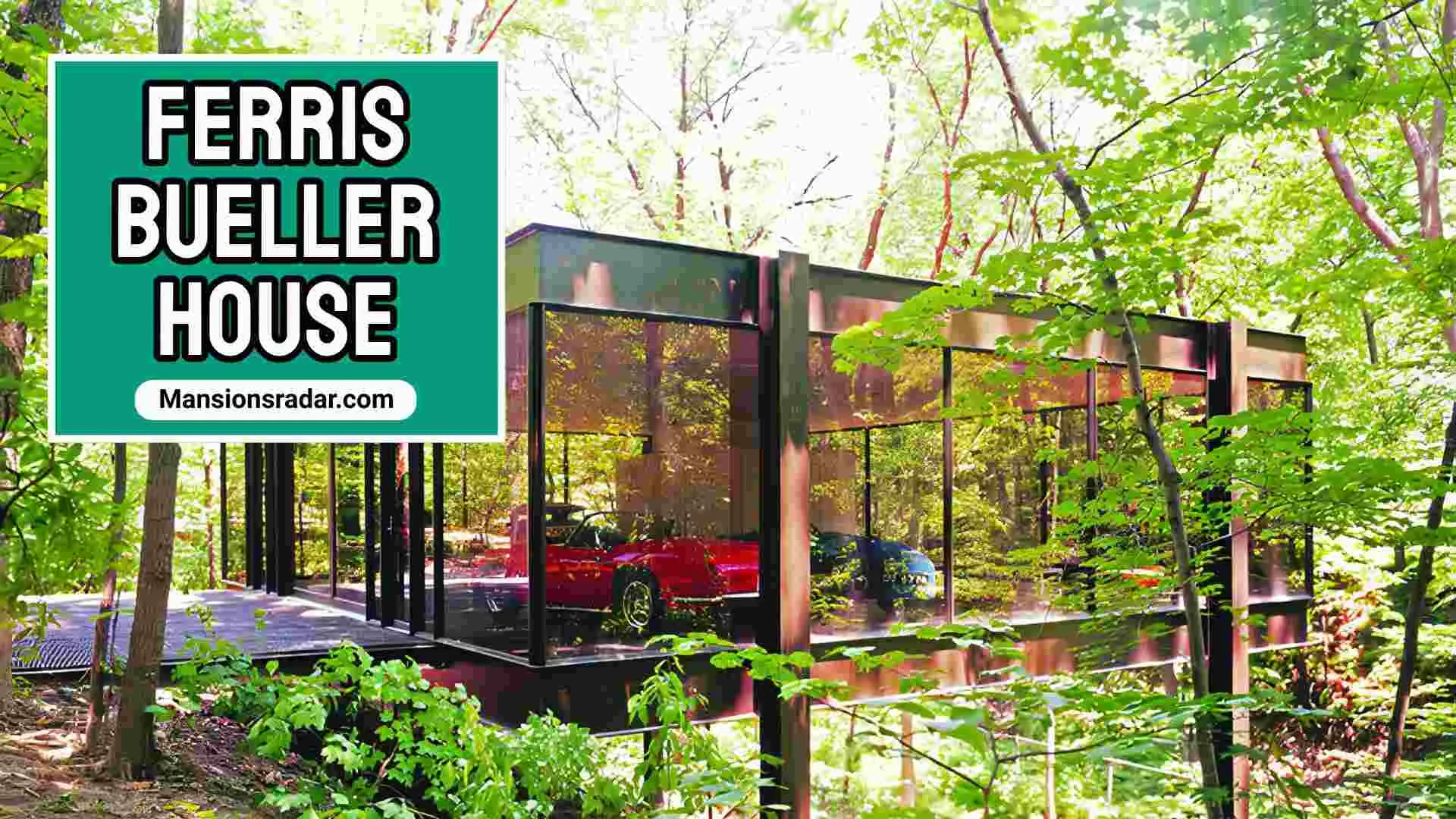
It starts like a scene out of a film. Quiet suburbs. A hidden ravine in Highland Park, Illinois. At 370 Beech Street, a 1953 modernist home sits above the trees. Ferris Bueller House is designed by A. James Speyer, a student of Mies van der Rohe; it feels more like a sculpture than a house. Steel lines. Glass walls. A dramatic cantilever floating over the landscape.
This is the Cameron Frye house from Ferris Bueller’s Day Off. John Hughes didn’t build a set. He chose a real architectural landmark. Later, a glass garage pavilion was added to display exotic cars, including Ferrari replicas used in filming.
Decades later, the home became just as famous as the movie itself. It was listed for $2.3 million in 2009. It lingered on the market for years. Then it sold for $1.06 million in 2014. My name is Ramon Weber. Let me take you through every inch of it.
Who Was Ben Rose?
Ben Rose was a Chicago textile artist who commissioned Speyer in 1953. He added the glass pavilion in 1974 through architect David Haidt to display his personal classic car collection. The Roses lived there for decades — 60 years of real residential history before a film gave it cultural fame.

Ferris Bueller House Location & Google Maps
I went to the Ferris Bueller house with a friend who knows architecture well. I felt amazed standing above the wooded ravine where the house seemed to float over nature. The experience felt cinematic and calm like I was inside a movie scene.
I could clearly see how carefully the site was chosen for privacy, views, and design harmony with the landscape. It remains unforgettable for me even today, always memorable.
- Address: 370 Beech Street, Highland Park, Illinois 60035
- City: Highland Park — affluent North Shore suburb of Chicago
- County: Lake County
- Distance from Chicago: ~25 miles north along Lake Michigan
- Setting: Cantilevered over a wooded ravine
Ferris Bueller House Pictures
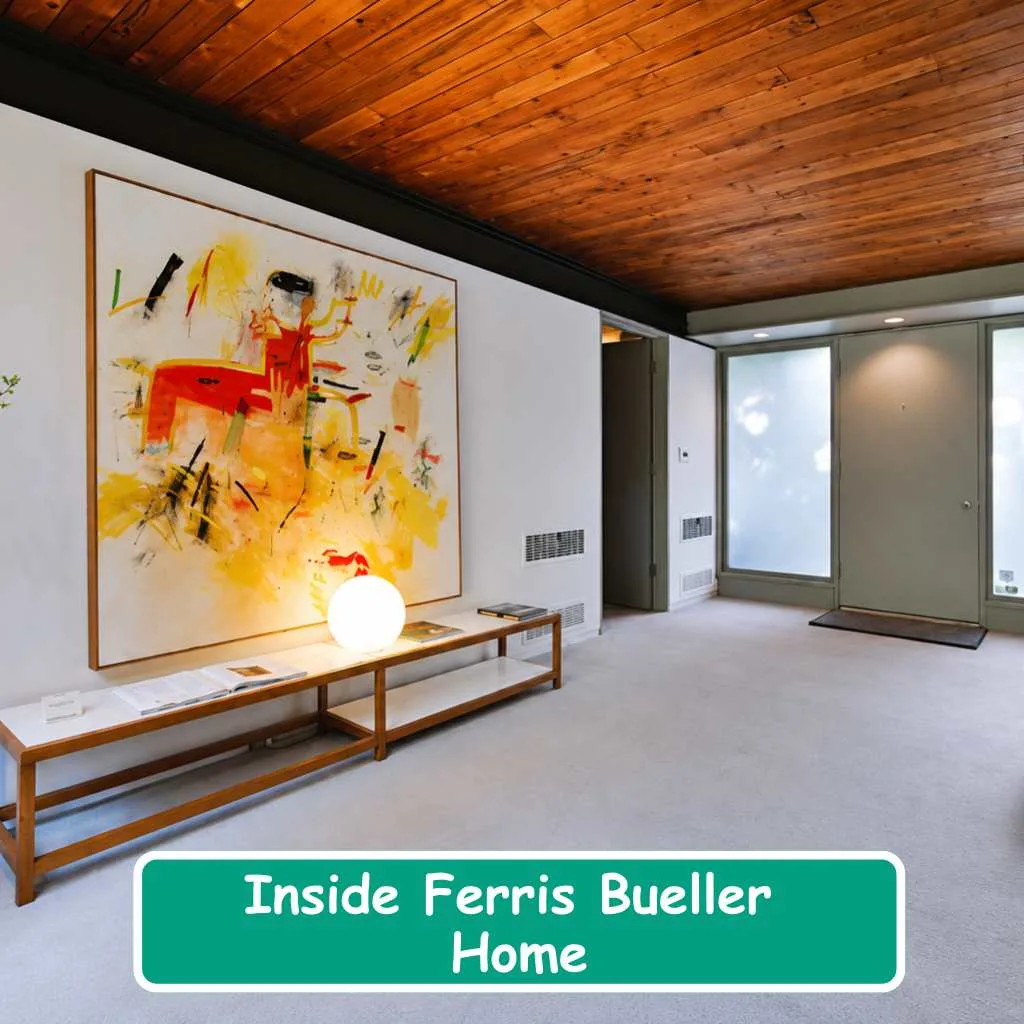
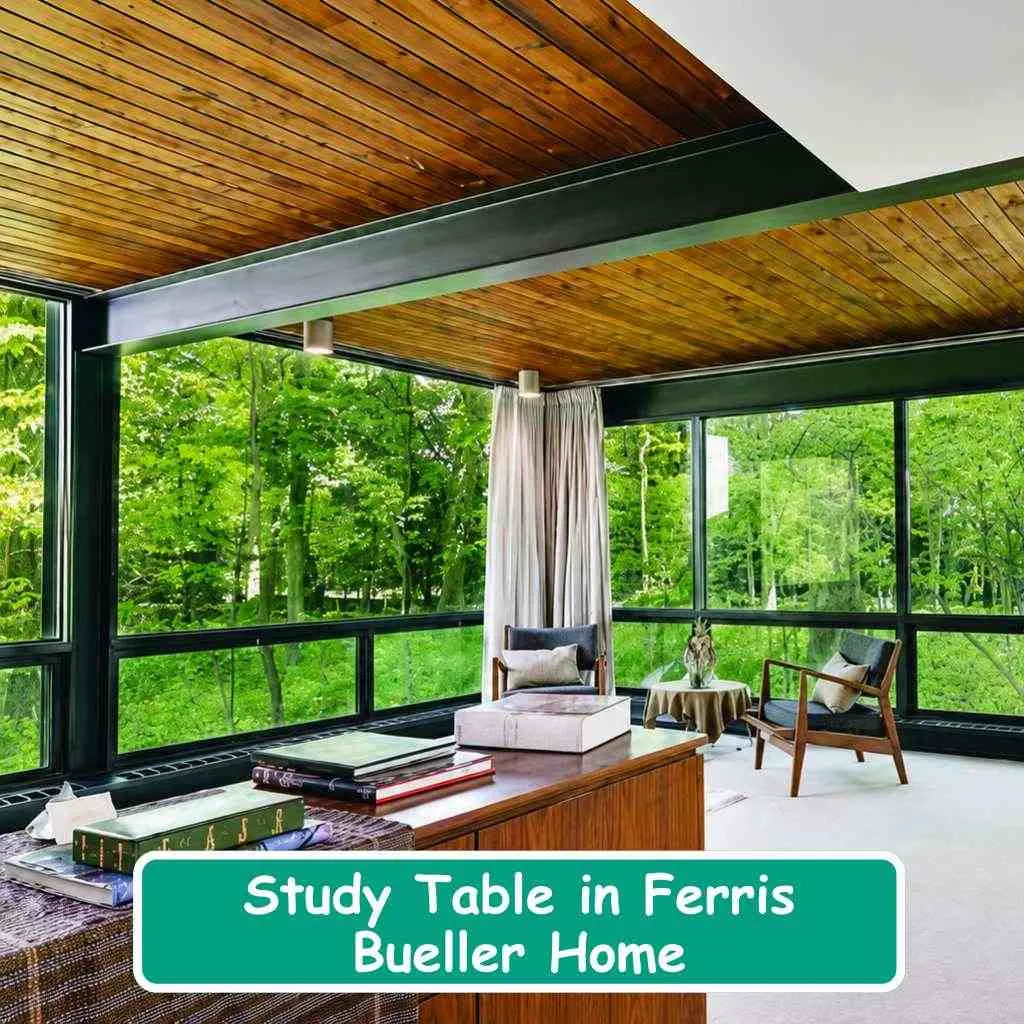
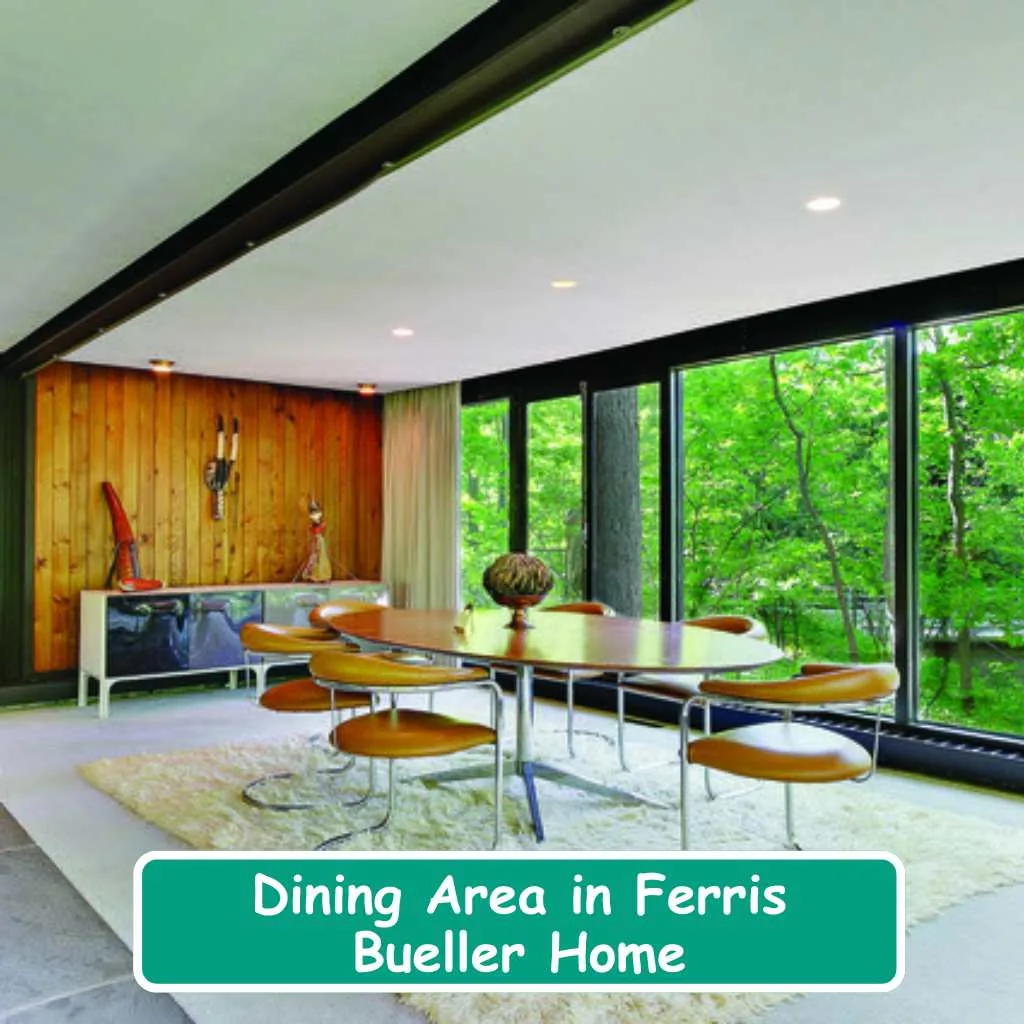
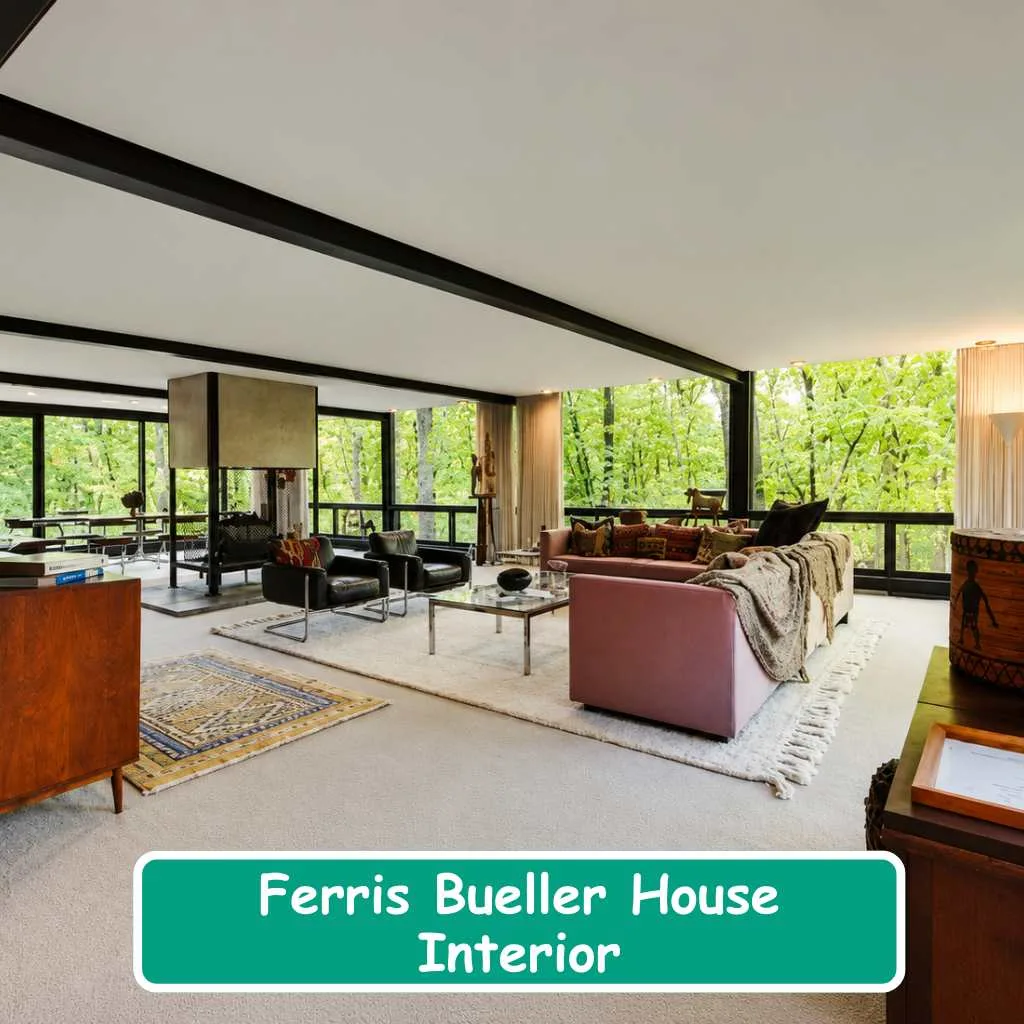
Inside the Ferris Bueller House: Full Tour
Let’s have a tour to Ferris Bueller’s home.
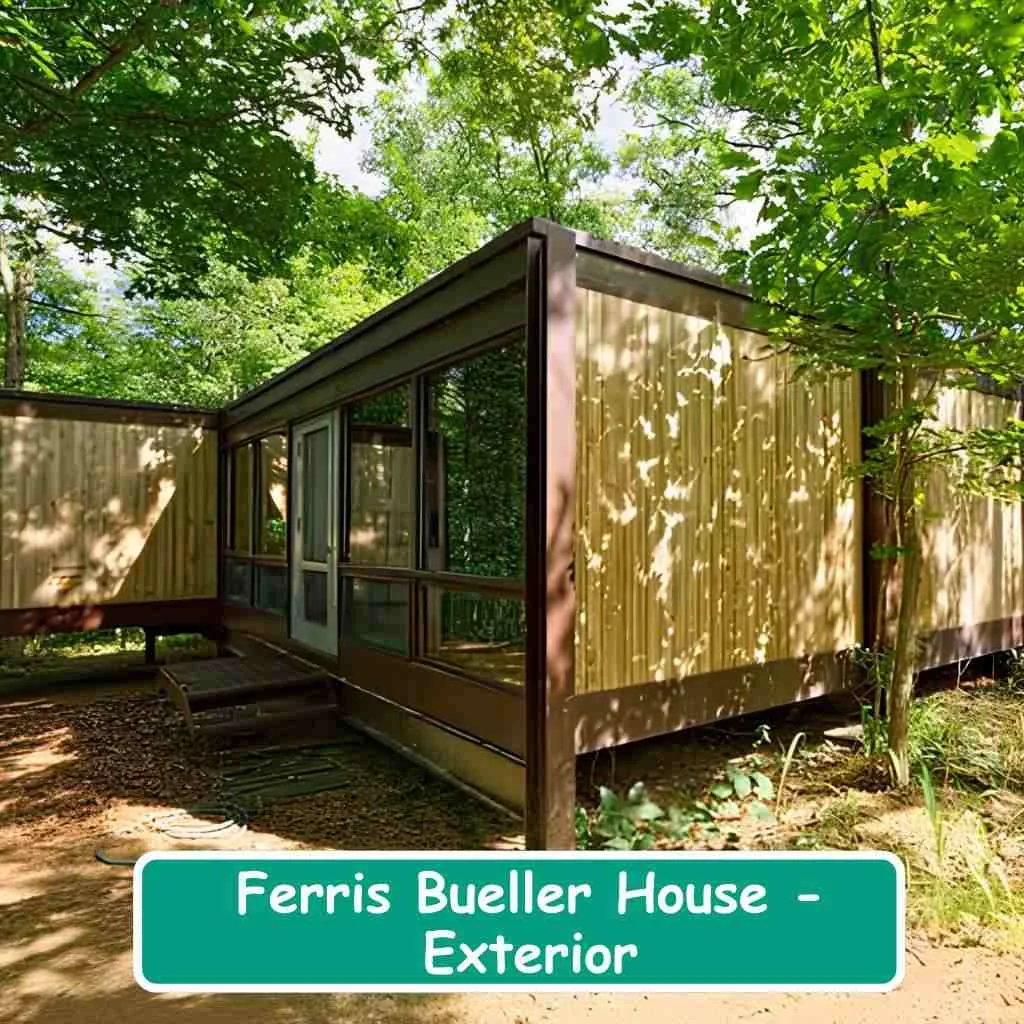
Exterior: Steel, Glass, Ravine
The property includes two separate structures — the main house and the glass pavilion — on a half-acre lot. Both read as a unified composition through their shared steel-and-glass language.
No solid walls face the ravine. Glass panels run floor to ceiling with steel framing as the only visual interruption. In winter, with snow on the branches below — extraordinary. In summer, you’re living inside the forest canopy.
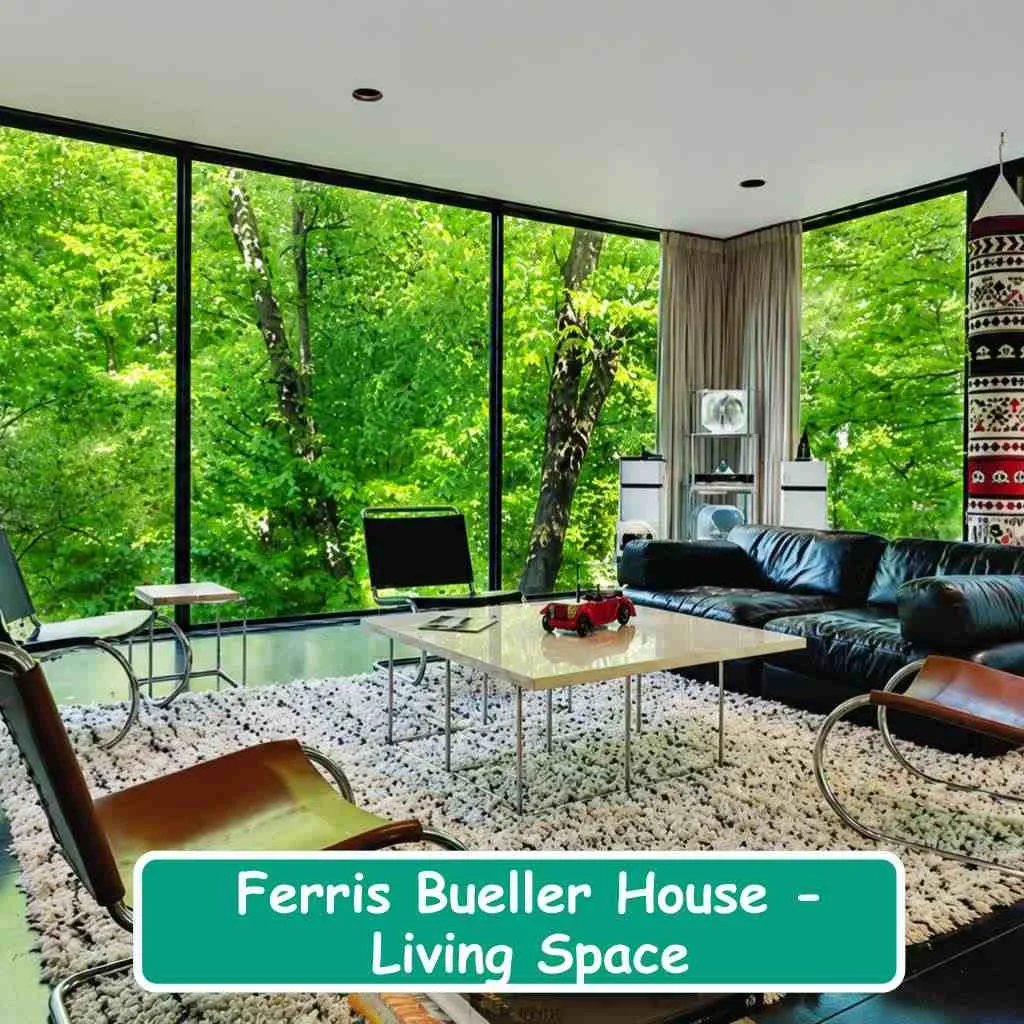
Main Living Space: 42-by-35 Feet of Modernist Air
The interior follows Miesian principles throughout. An open floor plan. No unnecessary walls. Spaces defined by volume and furniture, not partitions.
The primary social space — a family room reportedly measuring 42 by 35 feet — is the largest and most dramatic interior space. Visually spectacular from every seating position. Glass on three sides.
Forest on every view. The Sean Hannity House is another example of a private celebrity home that gets public attention. These homes often stay private but remain widely searched.
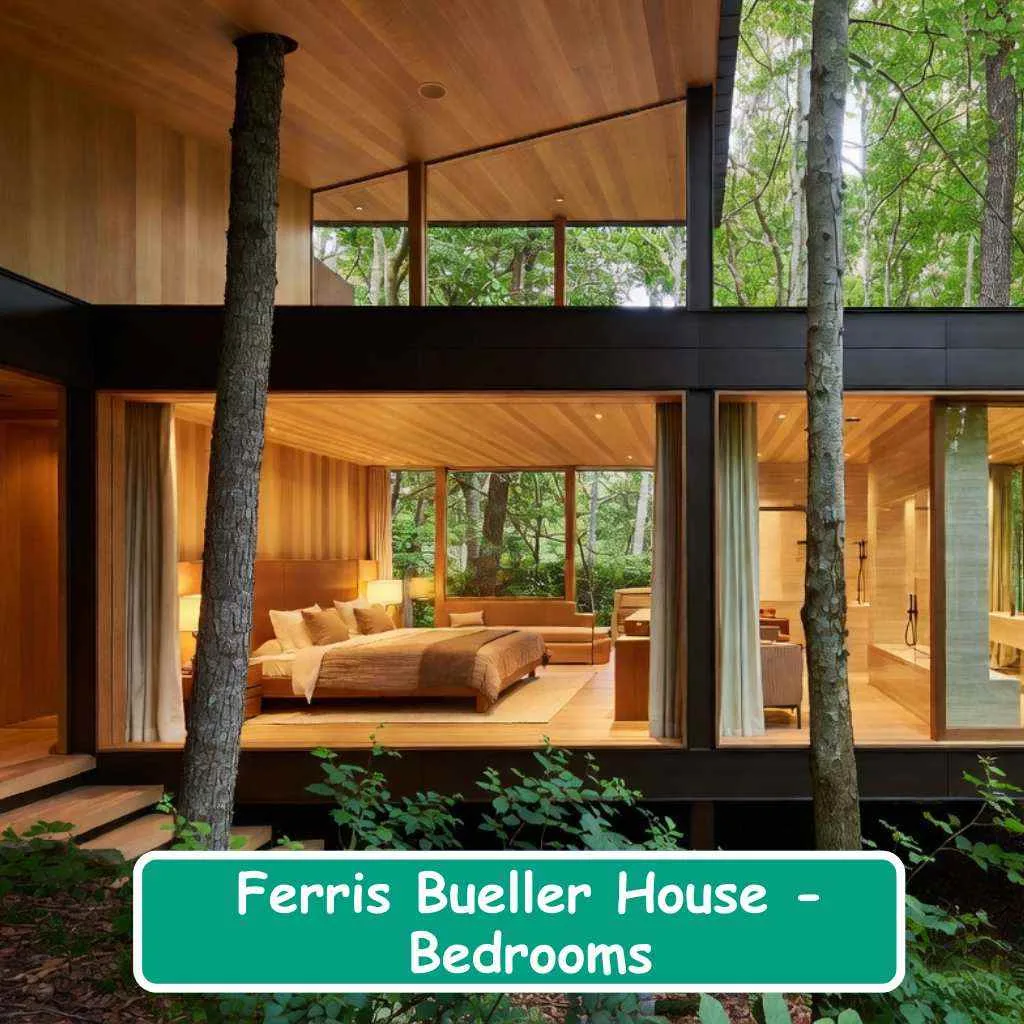
Bedrooms
Four bedrooms occupy a more private zone of the floor plan. Still glass-walled. Still forest-facing. But separated enough from the main living area to function as genuine retreat spaces.
The Ferris Bueller house interior has quality photographs rarely captured: the glass walls make you feel embedded in the landscape rather than exposed by it.
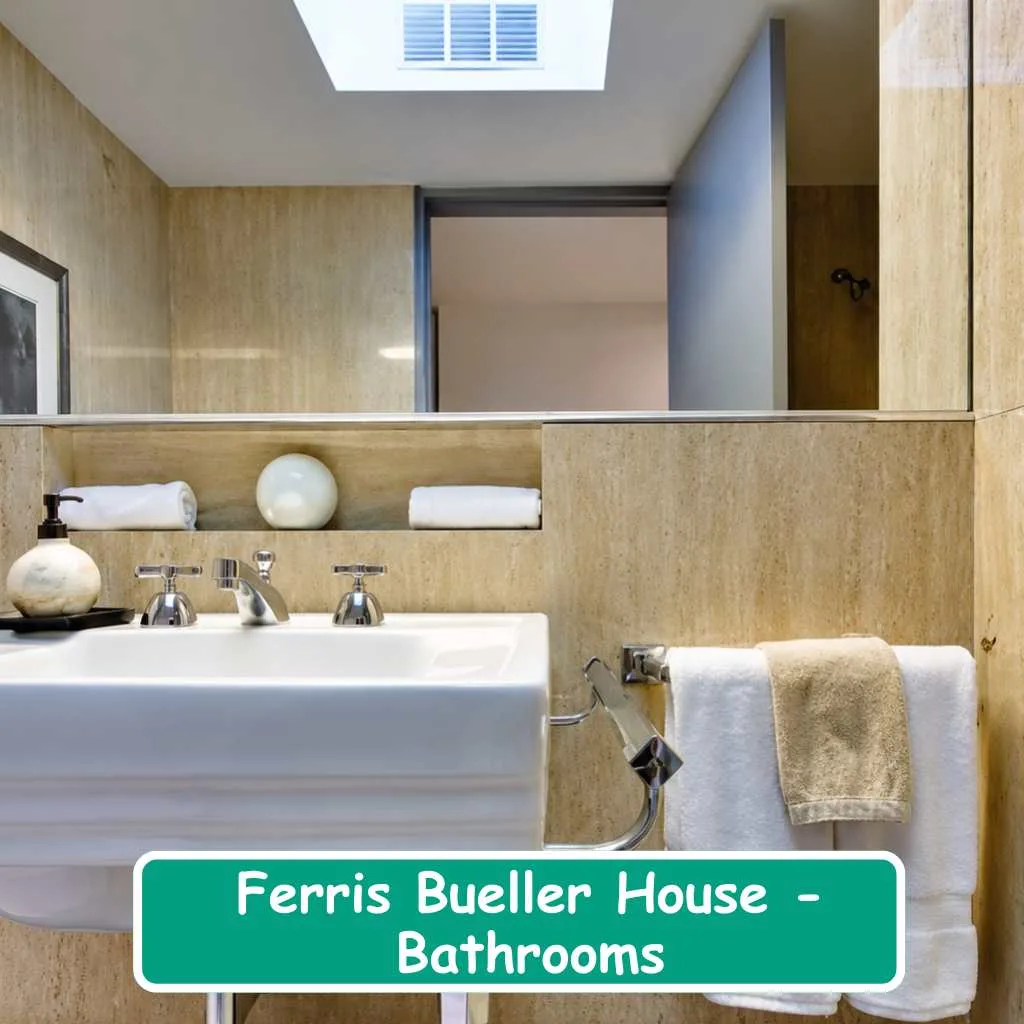
Four bathrooms complete the home — clean, functional, designed to defer to the architecture rather than compete with it.
Bathrooms
The house includes four bathrooms designed for daily family use. Each bathroom offers enough space for comfort and privacy. Large mirrors, simple fixtures, and practical layouts help create a functional environment.
The bathrooms match the home’s overall style while providing convenience for residents and guests. Their design reflects the comfortable suburban living seen throughout the property.
Kitchen
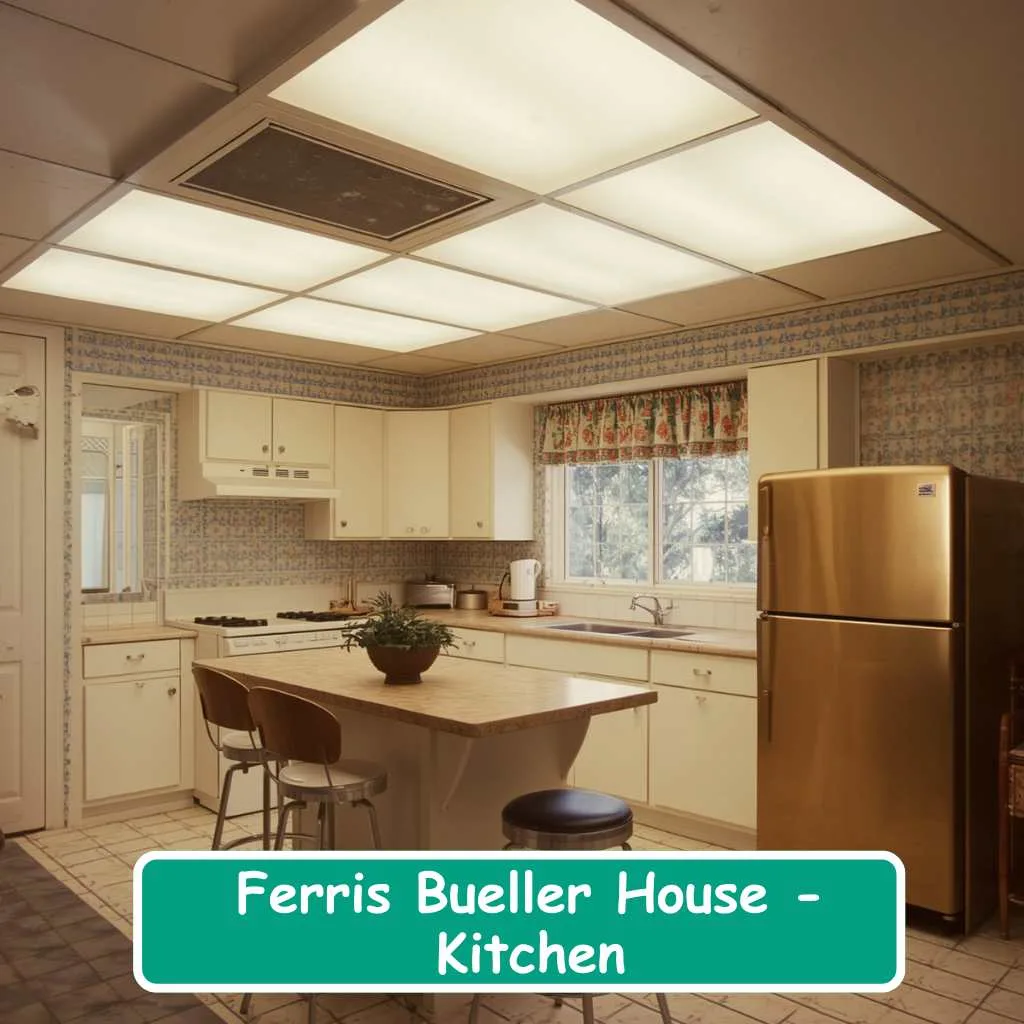
The kitchen is one of the most memorable parts of the home. It features classic 1980s design elements, including fluorescent ceiling panels, patterned wallpaper, and a gold refrigerator. These details give the space a nostalgic look.
The kitchen scenes from Ferris Bueller’s Day Off were filmed inside a private residence at 4160 Country Club Drive in Long Beach, California. Today, it remains a fascinating example of vintage home design.
Children’s Play Area
The children’s play area provides a dedicated space for fun and recreation. It offers room for games, toys, and family activities. The area helps keep children entertained while staying close to home.
Its layout encourages creativity and active play. Designed with family living in mind, this space adds warmth and functionality to the property, making it more welcoming for households with young children.
The Glass Pavilion: Where the Ferrari Lived
The 1974 glass pavilion by David Haid is the most cinematic space on the property — and the most architecturally significant addition.
In the film, the Ferrari rotates on a motorized platform. That platform was added for production. The glass walls, the ravine drop visible below, the forest beyond — entirely real. When Cameron kicks the Ferrari through the glass and it falls into the ravine, that ravine is real. The house genuinely cantilevers over it.
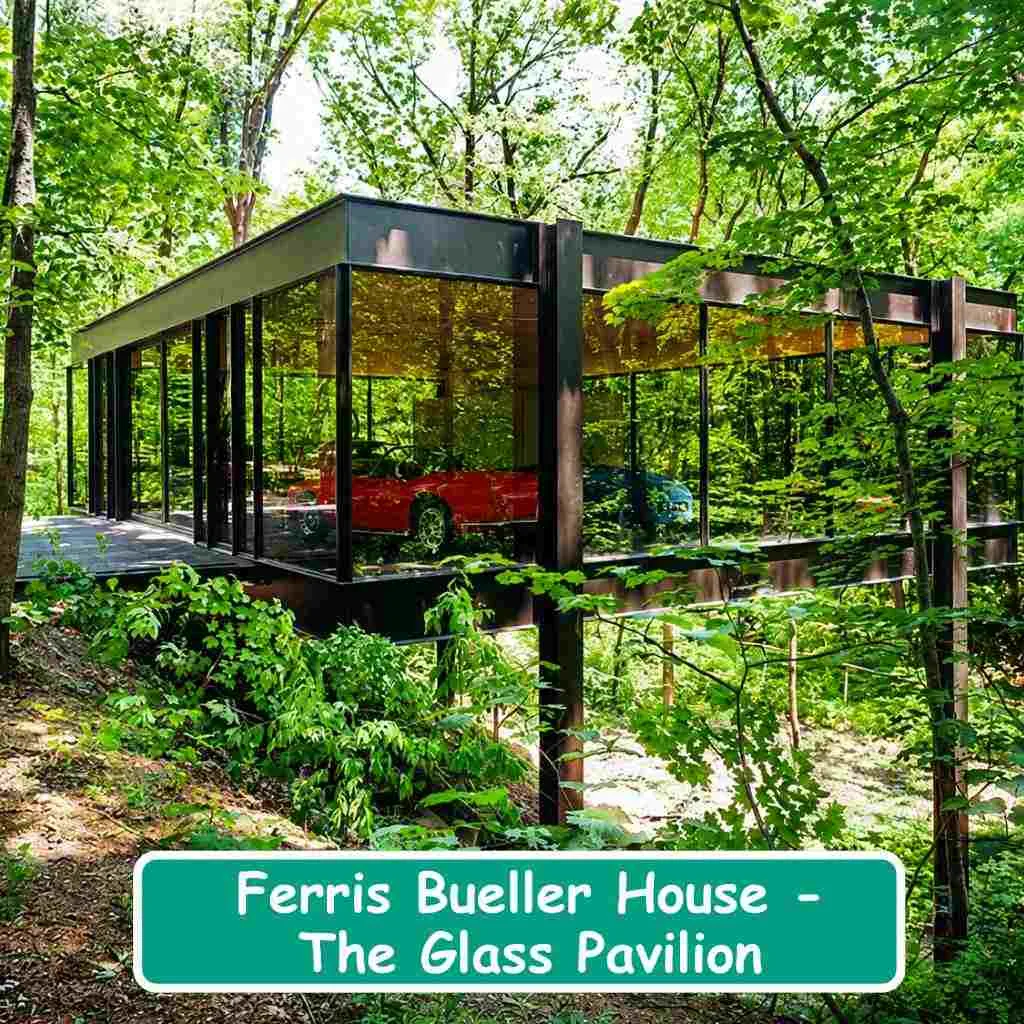
The pavilion in daily life was simply a beautiful car showroom. Ben Rose used it for his classics. The film used it for one of cinema’s most iconic moments. The Walter White House is another example of a home that became iconic through television. Both homes show how film and TV can shape real estate fame.
Subterranean Garage
A unique feature of the property is its subterranean garage. Built below ground level, the garage helps preserve the home’s exterior appearance while providing secure vehicle storage.
The design also saves surface space and adds privacy. This hidden area blends practicality with architectural creativity. It reflects the thoughtful planning used throughout the property and contributes to its distinctive character.
Ferris Bueller House Architect: A. James Speyer
The Ben Rose House stands out because of its powerful architectural lineage. Designed in 1953 by A. James Speyer, a student of Ludwig Mies van der Rohe, it reflects true modernist ideals.
The home features floor-to-ceiling glass, exposed steel beams, flat rooflines, and an open layout. In 1974, David Haid added a glass pavilion with space for four cars, plus a kitchen and bathroom.
It later appeared in Ferris Bueller’s Day Off, highlighting its simple, modern, and transparent design. Homes like the Tony Stewart House also show how architecture can mix lifestyle and personal passion. Garage space often becomes a key feature in such properties.
Ferris Bueller House Price: The Long Sale
| Year | Price | Event |
| 2009 | $2,300,000 | Listed for sale |
| 2009–2014 | — | On market 5 years, no buyer |
| 2014 | $1,060,000 | Sold — restoration begins |
| 2026 | $2M+ est. | After careful restoration |
The house was listed in 2009 at $2.3 million. No buyer for five years. Sold in 2014 for $1.06 million — 54% below asking. The new owners immediately began a careful restoration documented by DNAinfo in 2017.
The long sale is not unusual for mid-century steel-and-glass architecture. Flat roofs, exposed steel, and all-glass walls create maintenance demands that limit the buyer pool to people who specifically want this experience.
This is a house for someone who understands and values Miesian modernism — not a house for everyone.
Ferris Bueller House Price: The Long Sale
*2026 value is an estimated market value following restoration.
Ferris Bueller House for Sale: Current Status
The Ferris Bueller house is not for sale as of 2026. It remains a private residence. It has not been publicly listed since the 2014 sale. Fans are asked to respect the owners’ privacy and view the property only from the street.
Additional Properties of Ferris Bueller House
The house used for Ferris’s own home is not in Illinois. It’s at 4160 Country Club Drive in Long Beach, California — built 1928, 7 bedrooms, 5 bathrooms, 4,900 square feet. Every exterior shot of “Ferris’s home” was filmed in Southern California.
| Property | Address | Film Use |
| Ferris’s Colonial | 4160 Country Club Dr, Long Beach, CA | Ferris’s home exterior |
Ferris’s Colonial Home
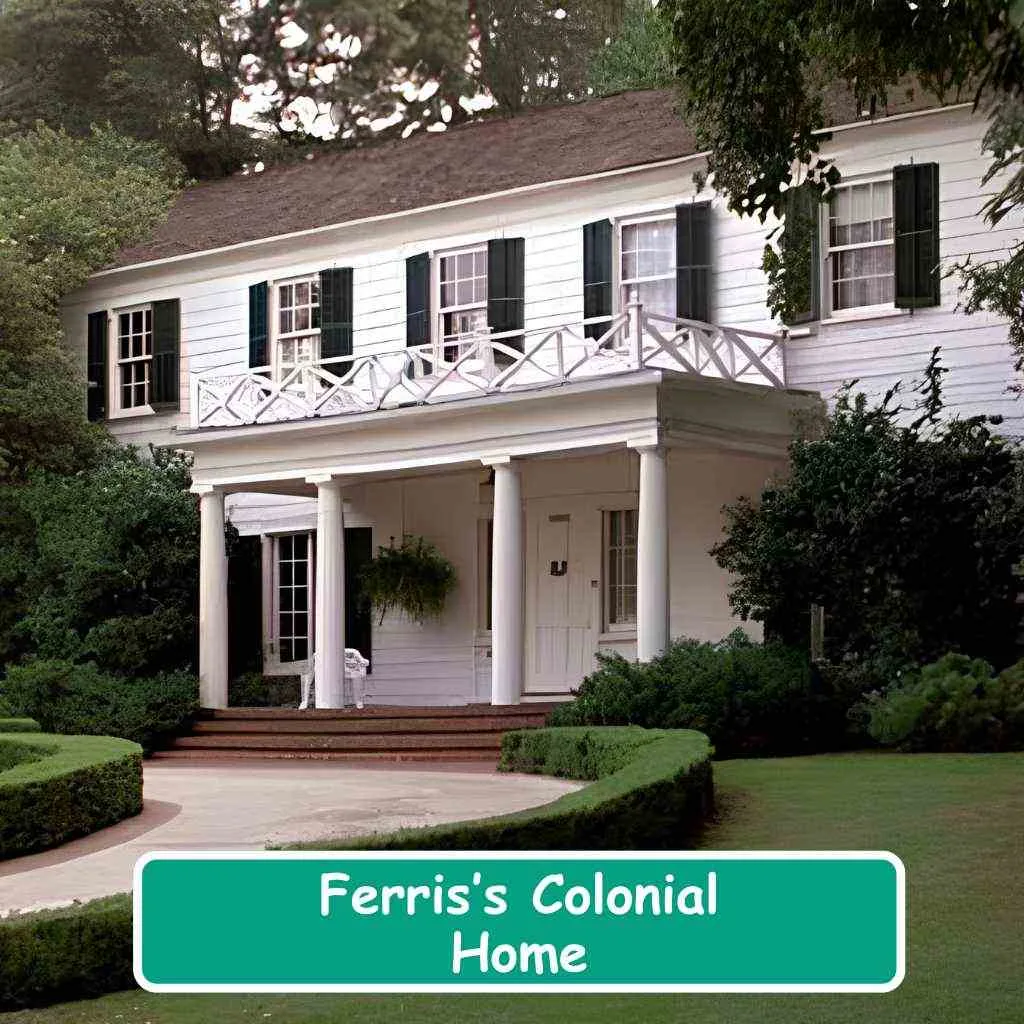
Ferris Bueller’s house is a classic Colonial-style home in Long Beach, California. It has a clean, traditional exterior with a neat front lawn. The design feels warm and suburban.
In the movie, it represents Ferris’s everyday life before his big day of adventure begins. The Sabrina Carpenter House reflects a similar idea of modern celebrity living. It blends privacy, design, and natural surroundings.
Fun Facts
- The Ferrari 250 GT Spyder was never real. Three replicas were built for production.
- A. James Speyer was a direct student of Mies van der Rohe — the architect of the Seagram Building.
- The glass pavilion was designed 21 years after the main house, in 1974, by a different architect.
- The ravine the Ferrari falls into is completely real — the house genuinely cantilevers over it.
- The house sat on the market for 5 years and sold for 54% below its asking price.
- Ferris Bueller’s Day Off turned 40 in June 2026.
Frequently Asked Questions
Who designed the Ferris Bueller house?
A. James Speyer designed the 1953 main house. David Haid designed the 1974 glass pavilion.
Was the Ferrari real?
No. Three replicas were made for the film.
What did Ferris Bueller house sell for?
$1.06 million in 2014, after listing at $2.3 million in 2009.
Conclusion
370 Beech Street in Highland Park. Steel and glass over a wooded ravine. Designed in 1953 by a Mies van der Rohe student. Used once in a 1986 film. Recognized worldwide ever since.
The Ferris Bueller house is one of the rare properties where the architecture genuinely earns the fame — where the building would matter with or without the film that made it famous. A. James Speyer built something extraordinary on a Highland Park ravine. John Hughes filmed it. The rest of the world noticed.
It’s still there. Still private. Still cantilevered over the same forest. And still one of the most significant pieces of mid-century residential architecture in Illinois. Want to discover more celebrity homes and iconic properties? Explore our services for detailed house guides and insights.