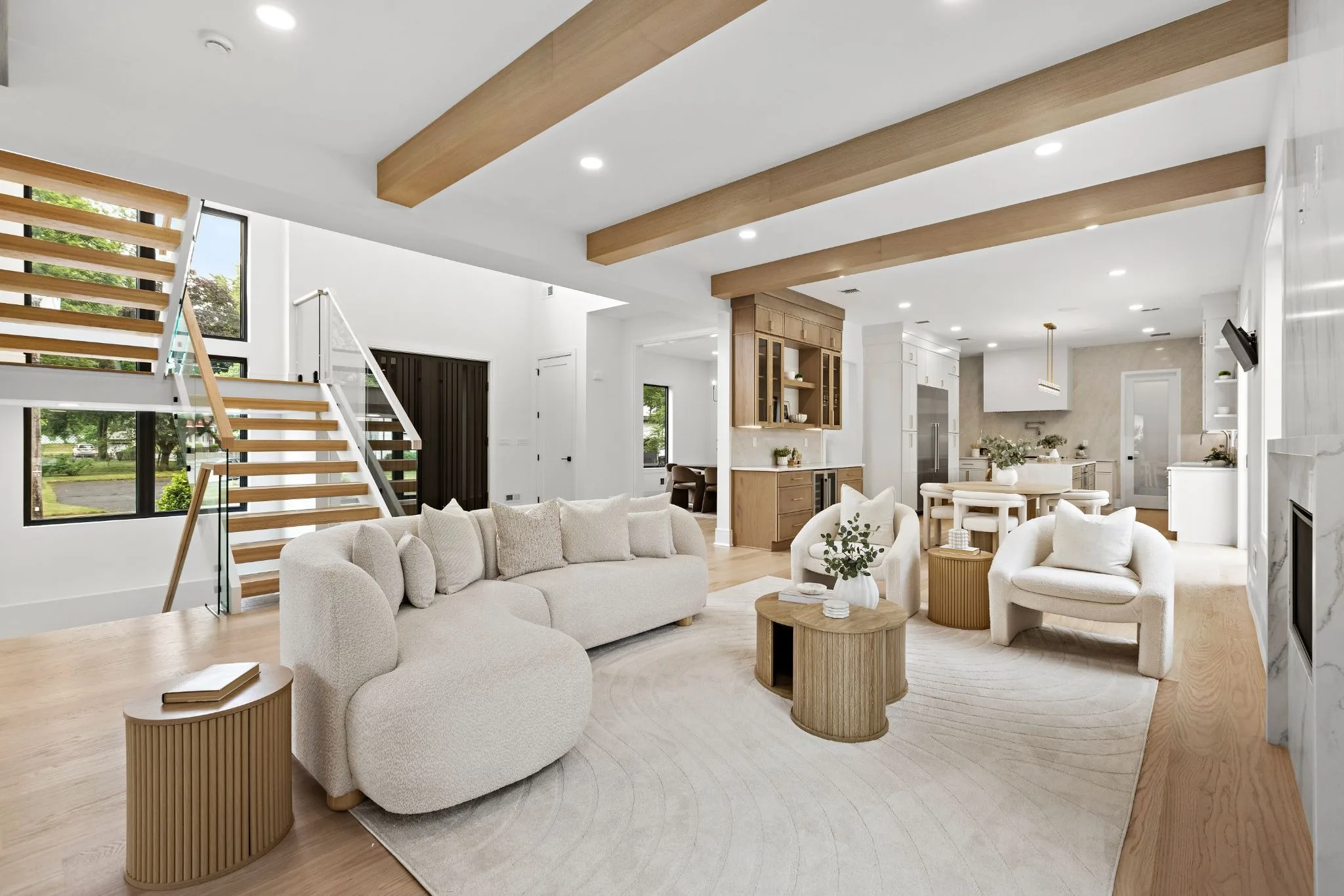
Home buyers often form their first impression of a property long before they walk through the front door. In many cases, their introduction to a home happens through a collection of listing photographs viewed on a phone, laptop, or tablet.
Those images do more than make a property look attractive. When photographed carefully, they can help buyers understand the layout, condition, architectural features, and overall character of a home before deciding whether to schedule a showing.
For sellers and real estate professionals, this makes photography an important part of presenting a property accurately and effectively.

Buyers Need to Understand the Space
A property listing typically provides basic information such as square footage, bedroom count, bathroom count, and lot size. Those numbers are useful, but they do not always explain how the home actually feels.
Two homes with identical square footage can have completely different layouts.
One might have an open kitchen connected to the living and dining areas, while another divides the same amount of space into several individual rooms. Photography helps communicate these differences visually.
A thoughtful series of photographs can show how rooms connect, where windows are located, how large pieces of furniture fit within the space, and which architectural features define the home.
This context can help potential buyers determine whether a property matches what they are looking for before arranging an in-person visit.
Composition Can Make a Listing Easier to Follow
Good property photography is not simply about taking the widest possible photograph of every room.
Composition plays an important role in helping viewers understand what they are seeing.
An effective photograph should have a clear purpose. A wide image might establish the overall layout of a living room, while another photograph could show how that room connects to the kitchen or outdoor area.
The order of the images matters as well.
When listing photographs follow a logical progression through the property, buyers can more easily create a mental picture of the home. Moving from the exterior to the main living areas, kitchen, bedrooms, bathrooms, outdoor spaces, and other features can make the online viewing experience feel more natural.
Randomly arranged photographs can make even a relatively simple floor plan difficult to understand.
Natural Perspective Creates a More Accurate Impression
Wide-angle lenses are commonly used in real estate photography because they allow more of a room to appear within the frame. However, using an extremely wide perspective can sometimes make rooms appear significantly larger than they really are.
That may initially attract attention, but it can also create unrealistic expectations.
A buyer who arrives at a showing and discovers that the rooms feel substantially smaller than they appeared online may immediately become more cautious about the rest of the listing.
Professional property photography generally works best when it balances the need to show the room with the need to represent its proportions realistically.
Straight vertical lines, appropriate camera height, and careful lens selection can all contribute to a more natural representation of the space.
Lighting Helps Reveal the Character of a Home
Lighting can dramatically affect the way a room appears in photographs.
A dark photograph may hide finishes and architectural details, while an excessively bright image can remove depth and make materials appear washed out.
Professional photography attempts to balance those extremes.
Windows, interior lighting, and supplemental photography techniques can be used together to maintain detail throughout the room. The objective is to create an image that is bright enough to understand while still looking believable.
This becomes particularly important in homes where natural light is a major feature.
Large windows, skylights, glass doors, and open living spaces can all contribute to the character of a property. Photography should communicate those qualities without making the images feel artificial.
Details Can Help Differentiate Similar Homes
Not every photograph needs to show an entire room.
Detail images can draw attention to features that might otherwise be overlooked when buyers are quickly browsing a listing.
Depending on the property, these might include custom cabinetry, stone countertops, fireplaces, original woodwork, lighting fixtures, built-in storage, high-end appliances, tilework, or architectural details.
These features can be particularly important when several similar properties are available in the same neighborhood or building.
A buyer comparing multiple homes may remember the property with the distinctive kitchen, restored architectural details, landscaped outdoor space, or carefully designed primary bathroom.
Detail photographs help ensure those features are not lost within a larger set of listing images.
Exterior Photography Establishes Context
The exterior of a home is another important part of the visual story.
A primary exterior photograph usually establishes the property’s overall appearance, but additional images can provide useful context.
Depending on the home, buyers may want to see the backyard, patio, deck, driveway, garage, landscaping, pool, or relationship between the house and surrounding property.
For condominiums and other multifamily properties, exterior and amenity photographs may help buyers understand the building and community rather than just the individual residence.
These images help answer questions that interior photographs alone cannot address.
Floor Plans and Photography Can Work Together
Photography is excellent at communicating appearance, but it does not always provide a complete understanding of spatial relationships.
This is where floor plans can complement listing photographs.
A buyer may see a photograph showing a kitchen connected to a living area but still wonder where that space sits in relation to the bedrooms or entrance. A floor plan provides that additional context.
When photographs and floor plans are used together, buyers can move between seeing what a room looks like and understanding where it is located within the property.
This combination can be particularly useful for larger homes, unusual layouts, multi-level properties, and apartments where room relationships may not be immediately obvious from photographs alone.
Choosing Photography That Fits the Property
Different properties may require different approaches to photography.
A small condominium does not necessarily need the same coverage as a large luxury home with extensive outdoor areas. Similarly, a historic property with original architectural details may benefit from a different photographic approach than a newly constructed modern residence.
Real estate professionals and property owners can work with photographers who understand these differences and know how to document a property according to its individual characteristics.
Resources focused on real estate photography can also help property professionals find photographers who specialize specifically in real estate and property imagery.
Specialization matters because photographing a home involves more than technical camera knowledge. The photographer also needs to understand how people evaluate property listings and which visual information is most useful to potential buyers.
Good Photography Helps Buyers Make Better Decisions
The purpose of real estate photography should not be to create an unrealistic version of a property.
Its most important role is to give buyers an accurate visual understanding of the property.
Buyers should be able to look through a listing and develop a reasonable understanding of the property’s layout, major features, architectural character, and overall condition. When the photographs accomplish that, buyers can make more informed decisions about which homes deserve an in-person visit.
That can benefit everyone involved.
Buyers spend less time visiting properties that clearly do not meet their needs, while sellers and real estate professionals can attract people who already have a meaningful understanding of what the property offers.
In an increasingly digital home search, professional photography has therefore become more than a collection of attractive images. It is one of the primary ways a property communicates with potential buyers before they ever step inside.