In the winter of 2019, a homeowner in Mississauga noticed a faint brown ring forming on her bedroom ceiling. She dabbed it with a towel, assumed it was a one-time thing, and moved on. By spring, the drywall had buckled. The insulation was saturated. A structural engineer later confirmed the roof deck had been rotting silently for at least two seasons. The final repair bill — including remediation for mold that had crept into the wall cavity — landed just north of $34,000. The roof itself had been “only” 14 years old. For anyone still treating a roof replacement as a distant someday problem, that story should feel like a cold splash of water. The truth is that investing in quality metal roofing from a qualified contractor is not a luxury upgrade. In Ontario’s climate, it is one of the smartest capital decisions a property owner can make.
This is not a scare tactic. It is a pattern. And it is playing out in homes across the Greater Toronto Area every single winter.
Why Ontario Winters Destroy Roofs Faster Than You Think
Most homeowners think about roof damage in terms of visible storms. A big wind event. A tree branch. But the real damage happening across the GTA is slower and far more insidious. It starts with something called the freeze-thaw cycle, and it is relentless.
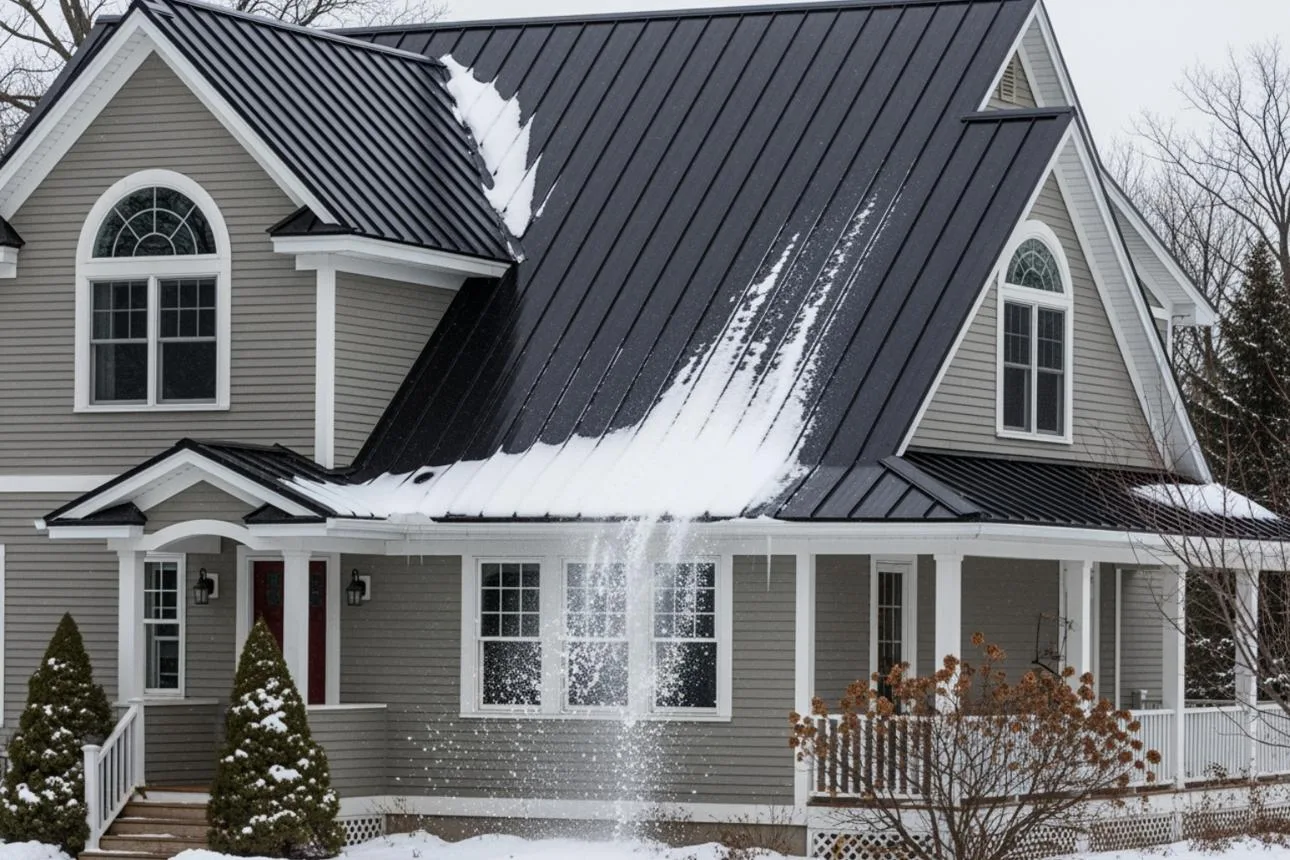
Here is how it works. Snow accumulates on a roof. Daytime temperatures nudge above zero. That snow melts and runs toward the eaves. But the eaves are colder than the rest of the roof — often below freezing — so the water refreezes. That refrozen water is an ice dam. And once an ice dam forms, meltwater has nowhere to go except backward, under the shingles, and into the building envelope.
The National Research Council of Canada has documented that Ontario sits in one of the most climatically aggressive zones in North America for roofing systems. The region experiences an average of 65 to 80 freeze-thaw cycles per year in a typical winter season. Each one of those cycles expands and contracts roofing materials. It widens micro-cracks. It loosens sealants around flashings. It accelerates granule loss on asphalt shingles to the point where a 15-year-old roof can be functionally compromised well before a homeowner notices anything visible from the street.
Add heavy snow loads and you compound the problem. The Ontario Building Code specifies minimum roof load requirements for a reason. According to Natural Resources Canada, parts of the GTA regularly experience ground snow loads that translate directly into significant dead weight on roofing structures. For roofs already compromised by freeze-thaw cycling, that weight is not just a structural concern. It accelerates every existing failure point simultaneously.
And yet, nearly half of homeowners in a 2022 survey conducted by the Insurance Bureau of Canada admitted they had not had their roof professionally inspected in more than five years. A significant portion had never had one at all.
The Financial Trap Nobody Warns You About
Deferring a roof replacement feels financially rational. A new roof is expensive. Waiting another season seems harmless. But this logic has a structural flaw that ends up costing homeowners far more than the replacement they were avoiding.
When a roof fails — not gradually, but fails — the damage rarely stops at the roof itself. Water infiltration moves fast. It saturates insulation, which loses nearly all its thermal resistance when wet. It reaches wall cavities where mold begins colonizing within 24 to 48 hours, according to Health Canada’s residential mold guidelines. It warps OSB sheathing. It compromises structural rafters. In worst-case scenarios, it reaches electrical systems.
And here is the part insurance companies do not advertise prominently: deferred maintenance is a documented grounds for claim denial. The Insurance Bureau of Canada’s policyholder guidance explicitly notes that insurers can reject water damage claims when evidence suggests the underlying cause was a known and unaddressed maintenance deficiency. That 14-year-old roof that a homeowner knew was aging? That is exactly the kind of scenario that ends with an adjuster citing “pre-existing deterioration.”
The financial logic flips completely when you look at full lifecycle costs. A mid-grade asphalt shingle roof on a typical GTA home costs somewhere between $8,000 and $15,000 installed. It carries a manufacturer warranty of 25 to 30 years but realistically degrades faster under Ontario climate conditions. Factor in one or two resealing jobs, flashing repairs, and possibly a full replacement before the warranty period ends, and the 40-year cost of an asphalt roof is not one payment. It is a series of escalating ones.
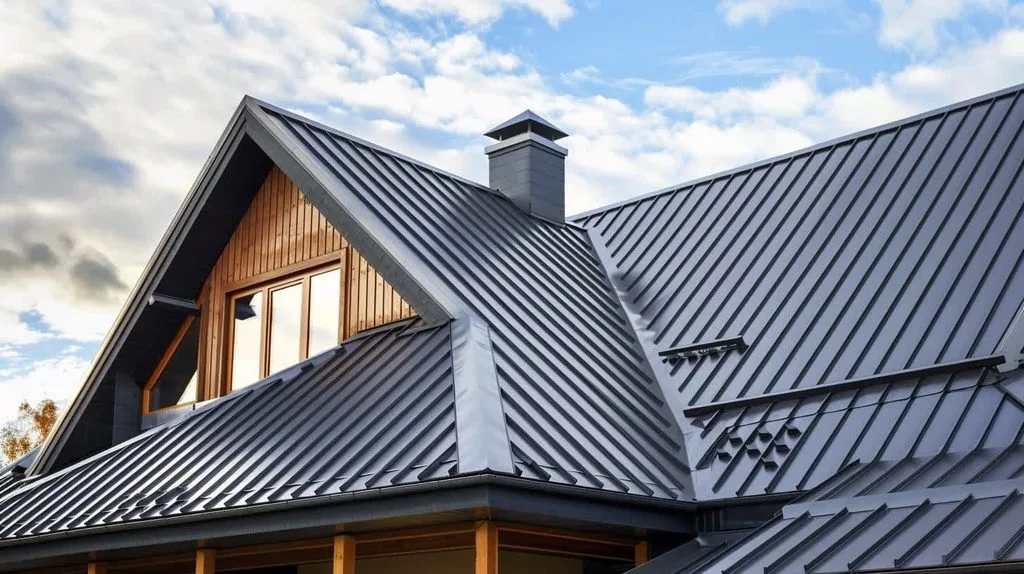
A standing seam metal roofing system costs more upfront. The premium is real. But a properly installed metal roof carries a lifespan of 40 to 70 years under the same Ontario conditions. It does not lose granules. It does not curl. It does not absorb moisture. When you model the same 40-year window and account for the replacement cycles avoided, the math shifts dramatically in metal’s favor.
Metal Roofing vs. Asphalt Shingles: The GTA Decision Framework
This is not an argument that asphalt shingles are always wrong. They are not. But the conversation deserves more honesty than the roofing industry typically offers.
Asphalt shingles are the default because they are familiar and because the upfront cost is lower. Those are legitimate considerations. If you are planning to sell within five to seven years, a quality asphalt replacement may well make more sense than a premium metal installation. If your budget is constrained right now, asphalt buys you time. These are real scenarios where asphalt is a reasonable answer.
But for homeowners planning to stay in a GTA property for 15 years or more? The calculus changes substantially. Metal roofing outperforms asphalt on nearly every performance metric that matters for Canadian climates. Wind resistance. Fire rating. Impact resistance. Thermal performance. Snow shedding. Standing seam systems in particular — where fasteners are concealed beneath interlocking panels — eliminate the exposed screw failure points that are common in older metal roofing designs and that remain a persistent vulnerability in asphalt systems.
There is also an insurance angle that does not get nearly enough attention. Some Ontario insurance providers offer reduced premiums for homes with Class A fire-rated or impact-resistant roofing systems. Metal roofing consistently achieves both ratings. A modest premium reduction of even a few hundred dollars annually compounds meaningfully over a 40-year ownership period. It is not the primary reason to choose metal. But it is a financial benefit that should be part of the honest comparison.
The GTA real estate market adds another dimension. Agents and appraisers increasingly flag roofing material as a resale factor. A home with a documented metal roofing system and a transferable lifetime material warranty is a quantifiably different asset than a comparable property with a 12-year-old asphalt roof approaching replacement age. Buyers know what a roof replacement costs. Sellers with metal roofing have a legitimate negotiating advantage.
The Warranty Trap Most Homeowners Walk Right Into
Here is a scenario that plays out more often than it should. A homeowner gets a roof replaced. The contractor hands over a “lifetime warranty” certificate. Five years later, a seam fails around a chimney flashing. Water gets in. The homeowner calls the contractor. The contractor is either out of business, unresponsive, or points to a clause in the manufacturer warranty that excludes installation-related failures. The homeowner discovers, at the worst possible moment, that their “lifetime warranty” covered the shingles but not the work.
This is not a hypothetical edge case. The distinction between a manufacturer’s material warranty and a contractor’s labor warranty is one of the most misunderstood aspects of roofing, and the industry has historically done very little to clarify it proactively.
A manufacturer warranty covers the roofing material itself — it protects against premature granule loss, delamination, or manufacturing defects. What it does not cover is how the roof was installed. Improper flashing at a valley intersection is not a material defect. A poorly sealed pipe boot is not a material defect. These are installation failures. And they are the most common causes of post-replacement leaks.
A contractor’s labor warranty is the coverage that fills this gap. It is the contractor’s commitment that their workmanship will hold. A one-year labor warranty — which is unfortunately common in the GTA market — offers almost no meaningful protection given that most installation failures manifest in the two-to-five-year window as materials cycle through their first Ontario winters. A ten-year labor warranty is a genuinely different level of protection. It signals that the contractor has enough confidence in their installation quality to back it for a decade.
Before signing anything, ask these specific questions. Does the labor warranty transfer to a new owner if you sell? What is the documented response time when a warranty issue is reported? Are there specific installation steps that void coverage if not followed? A contractor who cannot answer these questions clearly is a contractor whose warranty is worth less than the paper it is printed on.
What a Quality Installation Actually Requires
The most dangerous assumption in roofing is that all contractors do roughly the same thing. They do not.
Flashing is where roofs most commonly fail. Flashing refers to the metal components installed at every point where the roof surface meets a vertical element — chimneys, dormers, skylights, wall intersections, and valleys. These junctions are geometrically complex. They expand and contract at different rates than the surrounding roofing material. Done correctly, they are watertight for decades. Done poorly, they are the first place water finds its way in, often within the first two winters.
Standing seam metal roofing adds another layer of installation complexity. The concealed-fastener system that makes standing seam so durable — panels that interlock without exposed screws — requires crews specifically trained in that system. It is not interchangeable with general roofing labor. A crew experienced in asphalt installation does not automatically transfer that skill set to standing seam metal. The panel alignment, clip spacing, thermal expansion allowances, and seaming technique are all system-specific and unforgiving of improvisation.
Underlayment and ventilation requirements are another area where corners get cut invisibly. Metal roofing systems require specific underlayment products to prevent condensation between the metal panel and the roof deck — a failure mode that can cause significant structural damage within three to five years without showing any exterior symptoms until it is advanced. Ventilation design under metal roofing is similarly non-negotiable. These are not optional upgrades. They are prerequisites for a system that performs as warranted.
The pre-installation process matters just as much as the installation itself. Satellite measurement technology allows crews to calculate precise material quantities and identify geometric complexities before a single panel is cut. Architectural consultation before installation ensures that the chosen system is compatible with the existing structure’s load tolerances and ventilation configuration. Skipping these steps is how projects end up with material shortages, structural surprises, and callbacks.
How to Vet a GTA Roofing Contractor Without Getting Burned
The Greater Toronto Area roofing market has a contractor availability problem that works against homeowners. Demand is high. Entry barriers are low. And the gap between a licensed, properly insured contractor and someone operating with minimal coverage is not always obvious from a quote sheet.
Start with WSIB clearance. The Workplace Safety and Insurance Board of Ontario maintains a public clearance certificate system. You can verify a contractor’s current standing directly through the WSIB website. This matters beyond compliance for one specific reason: if an uninsured or non-WSIB-registered worker is injured on your property, Ontario law can expose the homeowner to financial liability. Checking WSIB clearance takes three minutes. Skipping that check can cost significantly more than the roof itself.
Liability insurance coverage should be verified, not assumed. Ask for the certificate directly and confirm the coverage amount. The practical minimum for a residential roofing project in the GTA is $2M in general liability. Coverage up to $10M represents a contractor operating at a professional level that reflects both the scale of their work and their commitment to protecting clients from worst-case scenarios. This level of coverage is not standard in the market. It is a meaningful differentiator.
Evaluate the proposal document itself as a credibility signal. A vague scope of work — “replace roof, install shingles” — is a warning sign. A professional proposal should specify material brands and grades, underlayment type, flashing material and method, ventilation approach, cleanup protocol, and warranty terms in explicit detail. If a contractor cannot or will not put these details in writing before you sign, that tells you something important about how disputes will be handled after.
Watch for pressure-based tactics. Roofing projects are significant investments. Any contractor pushing a same-day decision or offering discounts that expire in 24 hours is using sales tactics calibrated to prevent you from doing due diligence. Legitimate contractors with strong work records do not need to create artificial urgency. Their reputation and pipeline speak for themselves.
What the Replacement Process Should Actually Look Like
A well-run roofing project does not feel chaotic. That sounds obvious, but it is not the universal experience in the GTA market.
The process should begin before any contract is signed. A professional site assessment covers the existing roof condition, underlying structure, ventilation system, drainage configuration, and any pre-existing issues that will affect the new installation. Satellite measurement technology should eliminate the imprecision of manual estimates. Material specifications should be presented in writing with brand names, product grades, and warranty documentation.
Once the contract is signed, a dedicated project manager should be your primary contact. Not a salesperson who hands off to a crew and disappears. A coordinator who tracks material delivery, manages crew scheduling, and is reachable when you have questions. The installation itself — for a typical residential project — should be measurable in days, not weeks. Prolonged timelines on standard residential roofing work are usually a sign of either crew scheduling problems or scope management issues, neither of which should be your problem to absorb.
The final walkthrough is not a formality. It should include a flashing inspection at all penetration and junction points, confirmation of gutter clearance after debris removal, a clean site check, and physical handoff of all warranty documentation. That documentation — both manufacturer material warranty and contractor labor warranty — should be in your hands before the crew leaves the site.
Ongoing maintenance after installation is minimal for metal roofing systems but not zero. A visual inspection every two to three years — checking for any debris accumulation in seams, verifying flashing condition, and confirming sealant integrity at penetrations — keeps minor issues from becoming warranty events. This is a different maintenance posture than asphalt, which requires more frequent attention as it ages. It is part of what the lower long-term cost profile of metal roofing actually looks like in practice.
The Decision You Have Been Delaying Has a Cost
The Mississauga homeowner from the beginning of this story eventually replaced her roof. She chose a standing seam metal system from a contractor with documented credentials, a ten-year labor warranty, and a transparent project process. She said the installation was completed in two days. The crew left her property clean. The documentation was in her hands that evening.
What she could not get back was the $34,000 she had spent on structural and mold remediation before she made that decision. Or the three weeks of disruption while trades worked inside her home. Or the conversation with her insurance adjuster.
Ontario’s climate does not negotiate. Freeze-thaw cycles do not care whether it is a convenient year for a roof replacement. The question is not whether a failing roof will create consequences. It is whether you will be in a position to address it on your terms, with a contractor you chose deliberately, or on the roof’s timeline, with whatever contractor can show up quickly enough to stop the immediate bleeding.
Property owners across the GTA who have made this investment with a qualified, properly insured roofing contractor consistently report the same thing: they wish they had done it sooner. Not because the process was difficult. Because it turned out to be far less disruptive than they expected, and because the alternative — waiting — was quietly becoming the more expensive choice with every winter that passed.
If your roof is more than ten years old, has never been professionally inspected, or is showing any of the early warning signs covered here, the timeline on this decision is shorter than it looks from the street.