When I started looking into Johnny Rodriguez house, I expected a big, flashy Texas ranch. But what I found was very different.
It’s a quiet limestone home near San Antonio, simple and private. It shows a calm and grounded life, not fame or show-off luxury.
Johnny Rodriguez was born Juan Raoul Davis Rodriguez in 1951 in Sabinal, Texas, became the first major Hispanic star in country music. He had 45 hit songs, 6 of them No. 1, and even performed for three U.S. presidents.
But his home doesn’t focus on fame. It reflects who he was—down-to-earth, family-focused, and deeply connected to music.
I’m Ramon Weber, and in this full tour, I’ll take you through every detail of this legendary artist’s home, life, and legacy.
Johnny Rodriguez Quick Property Snapshot
A quick snapshot of Johnny Rodriguez’s standout property highlights, showcasing style, scale, and signature luxury at a glance.

Who Was Johnny Rodriguez?
Rodriguez grew up the second-youngest in a family of ten children, all living in a four-room house in Sabinal. His father died of cancer when Johnny was just 16. His older brother Andres died in a car accident the very next year.
That kind of early grief either breaks you or builds something harder. For Johnny, it built music, similar to how fans often contrast grounded celebrity lifestyles like Jason Kelce House when talking about simplicity and family-centered living.

He ended up in jail at 18 — not for stealing a goat, as country legend often claims, but for an unpaid fine. Texas Ranger Joaquin Jackson heard him singing from his cell, was struck by the raw talent, and connected him to promoter “Happy” Shahan.
Johnny was hired to perform at the Alamo Village tourist attraction, and that single lucky break set off a chain reaction that would take him to Nashville with only a guitar and $14 in his pocket.
Before we walk through the door, you need to know the man behind the music — and the home.
| Detail | Information |
| Full Name | Juan Raoul Davis Rodriguez |
| Date of Birth | December 10, 1951 |
| Date of Death | May 9, 2025 |
| Age at Death | 73 |
| Birthplace | Sabinal, Texas, USA |
| Nationality | American (Mexican-American heritage) |
| Profession | Country music singer, songwriter |
| Years Active | 1972–2025 |
| Net Worth (Est.) | $1 million – $5 million |
| Spouse (Final) | Debbie McNeely (m. 1998) |
| Children | Aubry Rae Rodriguez (b. April 1998) |
| Current Residence | San Antonio, Texas (until passing, May 2025) |
| Famous For | First major Hispanic artist in country music; 6 No. 1 hits |
| Labels | Mercury, Epic, Capitol, Paula Records |
Johnny Rodriguez House Location & Google Maps
I had the chance to visit the area with a friend who knows San Antonio’s real estate scene extremely well, and the location immediately stood out to me.
The Johnny Rodriguez house sits in a peaceful part of the Far West Side, where the city slowly gives way to open Texas landscapes.
As we drove through the neighborhood, I noticed the quiet streets, rolling terrain, and natural surroundings that felt far removed from busy downtown life.
It was easy for me to see why someone who loved nature, privacy, and his Texas roots would feel at home here.
- Location: 1829 Paseo Real, El Paso, TX 79936
- General Area: Far West San Antonio / West Bexar County
- Area Type: Hill Country terrain meets suburban streets
- Proximity to Sabinal: Quick drive west on US-90 to his hometown
- Proximity to Medical Center: 20–30 minutes east
- Natural Setting: Near the Medina River and the Sabinal-area pickin’ grounds he loved
- Privacy Level: Quiet residential neighborhood, far from downtown traffic
Johnny Rodriguez House Pictures: A Visual Tour



Inside the Johnny Rodriguez House: Full Room-by-Room Tour
Step inside the Johnny Rodriguez House for a full room-by-room tour of this quiet Texas Hill Country home. From its simple limestone exterior to its warm, lived-in interiors, every space reflects the country legend’s grounded lifestyle, love for family, and deep connection to music rather than luxury or show. Let’s Go.

Exterior Tour: First Impressions of the Home
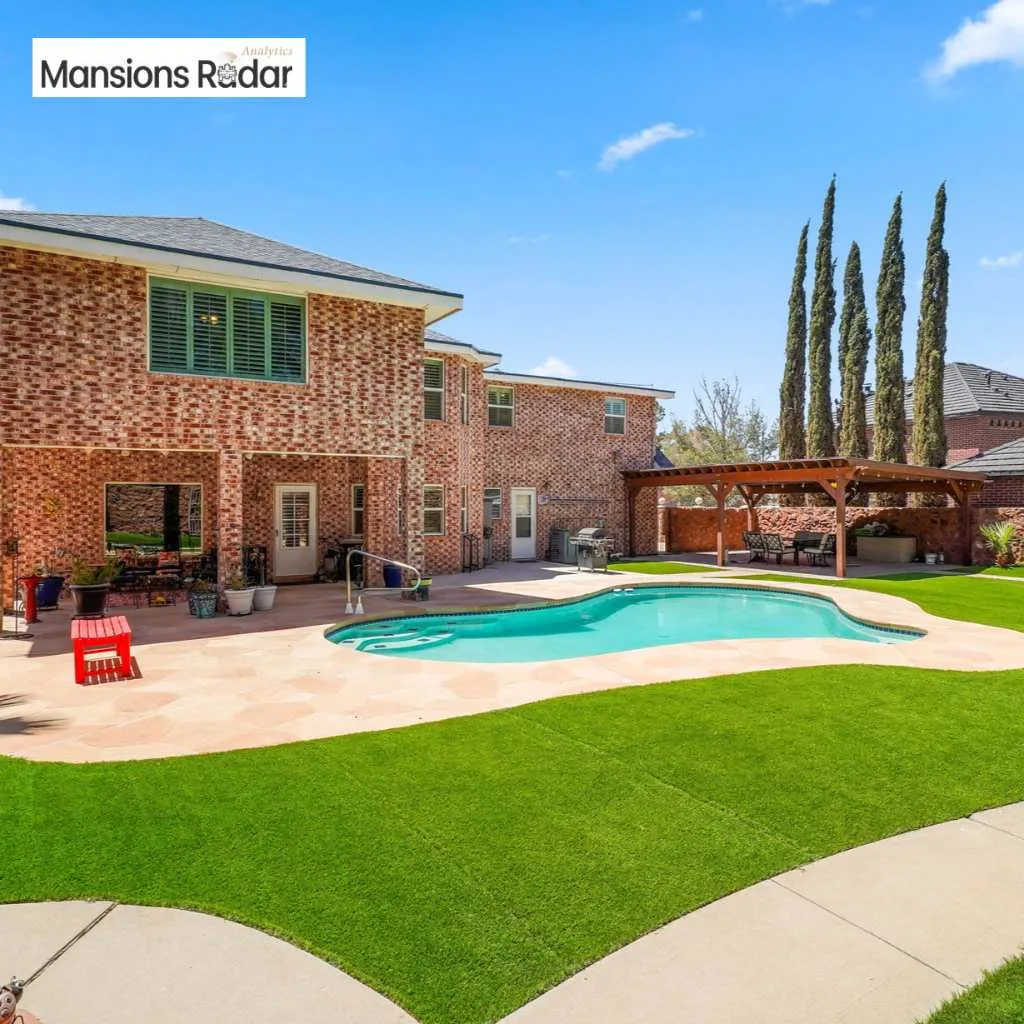
As you approach the home, the first thing that catches your eye is the traditional Texas limestone exterior. It’s not trying to impress you.
It has a quiet authority that comes from good materials and honest craftsmanship — the kind you find in ranch homes and Hill Country estates throughout this part of Texas.
The surroundings are peaceful. Natural landscaping frames the property without the manicured formality you’d see on a Beverly Hills estate. The pathway to the entrance moves at the pace of the house itself: unhurried.

There’s no grand fountain. No ornamental gate with the family crest. Just good Texas stone, cedar, and sky — the same palette that defines the land between Sabinal and San Antonio.
The exterior sets a tone that carries through every room inside: this is a home, not a stage set.
The Entrance & Foyer
Stepping through the front door, the first feeling is calm. The entrance is welcoming without being theatrical.
Natural light comes in early from the east-facing windows, and the atmosphere shifts immediately from the outdoor Texas heat to something cooler and quieter.
There’s no marble chandelier. No floating staircase. But there is intention in how the space is arranged — a quiet entry that says “come in” rather than “look at what I have.”

The Living Area
The living area is the heart of this home. The open layout lets the space breathe. Natural light pours in from multiple directions, and the overall effect is calmer and more welcoming than you might expect from a 4-bedroom Texas home.
This is where Johnny spent his easy hours. You can picture him here with Debbie and Aubry — coffee in the morning, guitar in the afternoon, the television on low in the evenings. The room doesn’t perform for visitors. It just lives.
The furnishings lean toward comfortable over impressive. Soft textures, warm earth tones, the kind of interior choices that prioritize how a room feels over how it photographs.

The Bedrooms
The home has four bedrooms, each with its own character.
- Bedroom 1 — Simple, restful, built for sleep. Nothing ornate, nothing unnecessary.
- Bedrooms 2 & 3 — Larger, with a calm, lived-in warmth. These were likely used as guest space for family — the Rodriguez family ran deep, and visitors were frequent.
- Bedroom 4 — The most private of the four. A personal retreat within a personal retreat. If you wanted to disappear from the world for a few hours, this was the room.
All four bedrooms share the same DNA: comfort over style, quiet over drama.

The Bathrooms
Three bathrooms serve the household, each designed with practicality and ease in mind.
The main bathroom is clean and functional, with a layout that welcomes you without demanding your attention.
The second has more space and a relaxed atmosphere. The third is the most tucked away — private, calm, built for long showers and quiet mornings.
None of them feel like a luxury spa feature you’d see in a celebrity home tour. All of them feel like somewhere a real family starts their day.

Kitchen
Johnny Rodriguez’s kitchen is simple and warm, just like his lifestyle. This traditional kitchen features off-white raised-panel cabinetry contrasted by a warm, ochre-toned backsplash.
Distinguishable elements include speckled granite countertops, a built-in black dishwasher, and large-format travertine floor tiles.
Recessed lighting illuminates the space, while a breakfast bar and neighboring arched doorway provide a functional flow into the home’s living areas.

The Music & Memorabilia Room
This is the room that makes the house extraordinary.
Dedicated entirely to Johnny’s life in music, this space is filled with instruments, awards, photographs, and the kind of memorabilia that takes decades to accumulate.
Gold records on the walls. Guitars in their stands. The physical evidence of a career that began in a jail cell and ended with performances at Carnegie Hall.
Walking into it feels different from the rest of the house — charged, alive, like the walls themselves carry the frequency of music played inside them for years.

This was where Johnny would sit, play guitar for a few close friends, and talk about old songs for hours.
His music room wasn’t a trophy case. It was a working space — a place to remember, to create, and to connect. The vaulted wood-beam ceilings overhead gave the room height and warmth, letting sound move the way it should.
The Vaulted Wood-Beam Ceilings
Throughout the main living spaces, vaulted wood-beam ceilings add architectural character that feels native to this part of Texas.
They echo the old Hill Country ranch homes Rodriguez grew up around — honest materials, honest craftsmanship, a space that doesn’t need to embellish itself.
The beams make every room feel larger and more open without the coldness you sometimes get from high ceilings in modern homes. They add warmth. They add Texas.

Natural Setting: Proximity to the Medina River and Sabinal Grounds
One of the home’s understated strengths is its relationship to the natural world just beyond its walls.
The property sits near the Medina River and the Sabinal-area pickin’ grounds — the open, quiet stretches of South Texas where Rodriguez spent some of his most meaningful hours.
This wasn’t incidental. Rodriguez chose his location specifically to stay close to the landscapes and communities that fed his music.
Friends recalled how, whenever he returned to the Sabinal area, he sought out just two or three close companions, a guitar, and open sky.
The Hill Country terrain around his San Antonio home offered exactly that — cedar-covered hills, river bottomland, and the kind of silence that lets a songwriter hear what needs to be said.
How Much Is Johnny Rodriguez’s House Worth?
Johnny Rodriguez’s house is worth around $560,000. While that may seem modest compared to the luxury estates owned by many country music stars, it reflects the simple and grounded lifestyle Rodriguez preferred.
The home’s value has grown over time thanks to the strong real estate market in San Antonio and its desirable location near the Texas Hill Country.
Rather than investing in a flashy mansion, Rodriguez chose a comfortable family home that matched his personality—practical, welcoming, and focused on what truly mattered instead of fame and luxury.
Johnny Rodriguez’s Hometown: Sabinal, Texas
Sabinal, Texas, was the heart of Johnny Rodriguez’s story. This small town shaped his values and character. He grew up in a close-knit community where neighbors knew each other by name.
Even after becoming a country music star, he never forgot where he came from. His family remained deeply connected to Sabinal for decades.
The town stayed close to his heart throughout his life. For Johnny, Sabinal was more than a hometown. It was the place that made him who he was. It’s not the kind of scale you see with places like the Shaquille O’Neal House.
Where Does Johnny Rodriguez Live Now?
Johnny Rodriguez no longer lives in San Antonio. The country music legend passed away on May 9, 2025, at his home on the Far West Side of San Antonio, Texas.
During his final years, he chose a quiet life surrounded by the rolling hills, limestone terrain, and open skies of South Texas. The location kept him close to his hometown of Sabinal, where he enjoyed spending time with family, friends, and music.
His San Antonio home reflected the simple, peaceful lifestyle he valued most. In some ways, it mirrors the understated, quiet lifestyle often associated with Nikola Jokic House, far from flashy celebrity excess.
Johnny Rodriguez Net Worth
Johnny Rodriguez net worth was around $1 million at the time of his death. His earnings came from a long music career that lasted over five decades. He released 26 studio albums and had 45 charted country singles.

Several of his songs reached No. 1 on the Billboard country charts. He also earned from touring, royalties, and TV appearances. His wealth stayed modest because he focused more on music and family than money.
Johnny Rodriguez’s Illness and Cause of Death
Johnny Rodriguez passed away on May 9, 2025, in San Antonio, Texas, at the age of 73. He had recently entered hospice care due to ongoing health complications. The exact medical condition was not publicly shared, respecting his family’s privacy.
In his later years, he showed signs of declining health, including noticeable weight loss during performances. Despite this, he continued to perform for as long as he could. He spent his final days surrounded by family and loved ones.
House Controversy: The Sabinal Shooting Incident
The most dramatic chapter in Johnny Rodriguez’s relationship with the homes he owned happened not at his San Antonio residence, but at his mother’s house on North Pickford Street in Sabinal, Texas — a house he had built himself after tearing down the four-room shack where he grew up.
At 4:17 a.m. on August 29, 1998, Rodriguez returned home unexpectedly to find an intruder inside. He shot 26-year-old Israel “Bosco” Borrego in the abdomen. Borrego died at Uvalde Memorial Hospital that morning.
Rodriguez had called the police himself. He maintained from the start that he mistook the man for a burglar. Johnny was charged with murder and arrested.
In October 1999, after a full trial, a jury acquitted him of murder, accepting his self-defense claim. He walked free.
The incident added another layer of complexity to a life already full of struggle — the loss of his father and brother in his teens, his struggles with drug addiction in the 1980s, three marriages, and the constant pull between Nashville’s music machine and the Sabinal dirt road where he truly belonged.
Fun Facts About the Johnny Rodriguez House and Property
- The home’s traditional limestone exterior links it directly to the Hill Country ranch architecture Rodriguez grew up around in Sabinal.
- The dedicated music room holds decades of memorabilia — gold records, guitars, photographs, and the personal archive of a 50-year career.
- The property’s location near the Medina River was not accidental — Rodriguez loved sitting near water, playing guitar, and “hearing music,” as friends described it.
- After his career’s peak, Rodriguez spent much of his time in Sabinal specifically because, as close friend Carlos Tovar said, “all he wants is two or three guys around him and to play music and talk about old songs.”
- His daughter Aubry Rae Rodriguez grew up in this household and has now followed her father into music.
- Rodriguez arrived in Nashville with only a guitar and $14 in his pocket — making the $560,000 San Antonio home a monument to how far one man’s talent and determination can take him.
Frequently Asked Questions
Q. Where did Johnny Rodriguez live when he passed away?
Johnny Rodriguez passed away on May 9, 2025, in San Antonio, Texas, at the age of 73. In his final years, he lived on the Far West Side of San Antonio, near the Helotes border, in a limestone exterior home valued at approximately $560,000.
Q. What was Johnny Rodriguez accused of?
Johnny Rodriguez was accused of murder after shooting and killing Israel Borrego, later claiming self-defense in a Texas case trial acquitted.
Q. How many times was Johnny Rodriguez married?
Three times. First to Linda Diann Patterson, second to Lana Nelson (1995, seven months), and third to Debbie McNeely in 1998, with whom he remained married until his death.
Final Thoughts
The Johnny Rodriguez house isn’t the most expensive celebrity home I’ve covered on MansionsRadar.com. It doesn’t have a home theater, an infinity pool, or a six-car garage. What it has is something rarer: integrity. Every detail of it — the limestone walls, the quiet neighborhood, the proximity to Sabinal, the music room — reflects a man who knew exactly who he was and never tried to become something else for the cameras.
He arrived in Nashville with a guitar and $14. He recorded six No. 1 hits, toured the world, played for presidents, and paved the road for every Hispanic artist who followed him into country music. Then he came home to Texas, built a comfortable house near the landscape that formed him, and spent his final years with his wife Debbie and daughter Aubry — playing music, talking about old songs, and living quietly.
That’s the story the Johnny Rodriguez house tells. And it’s a better story than any mansion I’ve ever toured—homes like this are exactly where our services come in, preserving and presenting stories with the respect they deserve.